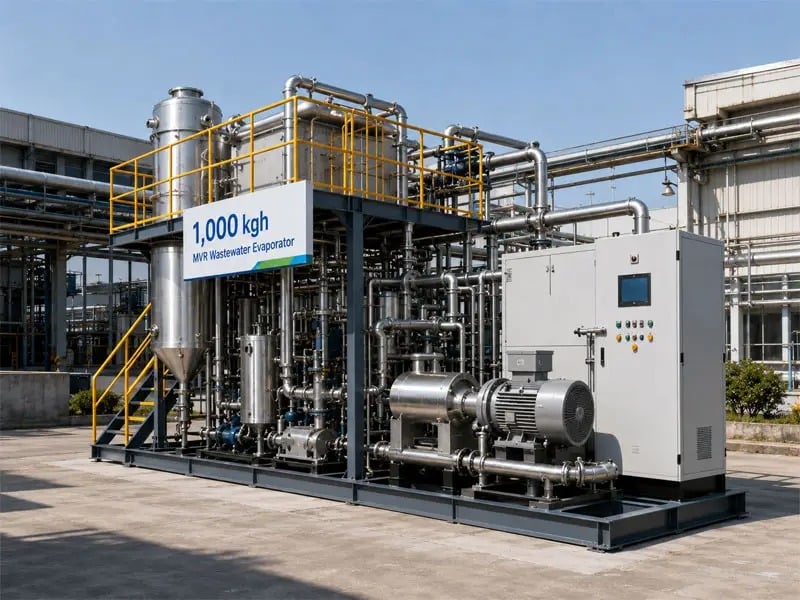
A brine crystallizer represents a critical final stage in modern zero liquid discharge systems, where concentrated saline streams are converted into solid salt crystals and purified water. Understanding where this equipment sits within a complete ZLD process train is essential for industrial operators, environmental engineers, and facility planners who need to design or optimize wastewater treatment workflows. The brine crystallizer is not simply an add-on component; it is a strategic endpoint that determines whether a ZLD system achieves true zero discharge or merely postpones the disposal challenge.
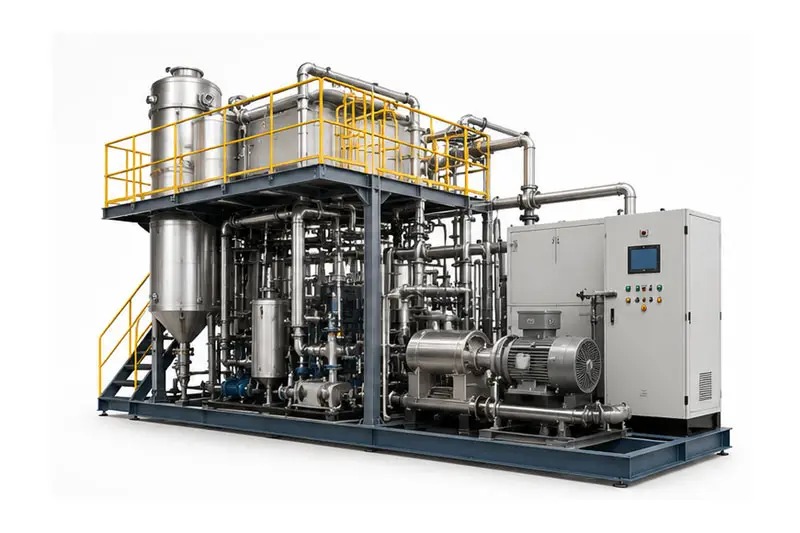
In industrial environments, wastewater contains dissolved salts, minerals, and organic compounds that standard treatment cannot fully remove. A complete ZLD process train systematically concentrates these contaminants through multiple sequential stages, ultimately delivering them to the brine crystallizer as a highly concentrated brine stream. This final positioning of the brine crystallizer is not arbitrary; it reflects the thermodynamic and chemical logic that underpins modern zero liquid discharge design.
The ZLD Process Train Structure and Brine Crystallizer Position
Understanding Complete Process Train Sequence
A typical ZLD process train begins with primary treatment stages such as screening, coagulation, and sedimentation to remove suspended solids. Following this, conventional biological or physical treatment processes reduce organic load and other contaminants. As the wastewater moves through the process train, dissolved solids accumulate, requiring membrane-based technologies like reverse osmosis or nanofiltration to concentrate the remaining contaminants into a smaller volume of brine. This concentrated brine represents the culmination of the entire process train's separation work and contains dissolved salts at saturation or near-saturation levels.
The brine crystallizer sits at the endpoint of this cascade, positioned after all other concentration and treatment stages have been completed. By this stage in the process train, the wastewater has been stripped of most organic matter, suspended particles, and treatable contaminants. The residue entering the crystallizer is predominantly mineral salts in dissolved form, making the crystallizer the logical and necessary final conversion technology. Without this terminal stage, the process train would produce a concentrated brine that still represents potential environmental liability and regulatory non-compliance.
Why Brine Crystallizer Comes Last in the Process Train
The placement of a brine crystallizer at the end of the ZLD process train follows fundamental chemical engineering principles. Earlier stages in the process train use technologies optimized for removing suspended solids, organic matter, and dilute dissolved contaminants. Applying a brine crystallizer prematurely would be thermodynamically inefficient and economically wasteful, as it would process large volumes of water containing low concentrations of salts. Instead, the process train concentrates the brine to levels where crystallization becomes energetically viable and where the residue can be efficiently separated into crystalline salt and purified water.
The brine crystallizer's position also ensures that mechanical and thermal stresses are applied only to the final, most concentrated stream. Early-stage crystallization attempts would encounter fouling, scaling, and equipment degradation from the diverse chemical compounds present in raw wastewater. By allowing the full process train to pre-treat and concentrate the stream, the crystallizer operates on a more chemically stable brine, extending equipment life and reducing maintenance complexity.
Integration of Brine Crystallizer Within the Larger ZLD Framework
How Brine Flows Into the Crystallizer
The brine entering a crystallizer from upstream in the ZLD process train is typically produced by reverse osmosis membranes or other advanced separation technologies. This reject stream from the process train membranes contains 10 to 15 times the salt concentration of the feed water, sometimes even higher depending on the industrial application. The brine arrives at the crystallizer pre-characterized in terms of salt composition, pH, and temperature, allowing the crystallizer to be configured specifically for the anticipated residue profile. The process train essentially prepares the brine to specifications that optimize the crystallizer's performance and recovery rate.
Temperature and residence time within the process train also influence the brine's properties by the time it reaches the crystallizer. Evaporative or mechanical concentration stages within the process train may have already removed volatile components or adjusted the salt saturation state. This pre-conditioning reduces unexpected behavior in the crystallizer and improves the consistency of the residue recovered. The seamless transition of brine from the upstream process train to the crystallizer represents a well-engineered ZLD system where each stage sets up the next for optimal performance.
Residue Handling After Crystallization
Once the crystallizer separates the brine into solid salt crystals and purified water, the residue management phase begins, marking the true completion of the ZLD process train. The solid salt residue can be dewatered, dried, and stored or sold depending on purity and regulatory acceptance. The purified water exits the crystallizer clean enough to be recycled back into operations or safely discharged, satisfying the zero liquid discharge mandate. This dual output structure is fundamental to why the crystallizer must be positioned at the very end of the process train; any liquid residue escaping the crystallizer would violate the ZLD objective that the entire process train was designed to achieve.
The handling of residue exiting the crystallizer determines whether the overall ZLD system is truly closed-loop or merely shifts the disposal burden to solid waste management. Advanced ZLD configurations may include secondary dewatering, thermal drying, or recovery processes to maximize the value or minimize the volume of the solid residue. These post-crystallizer steps are considered part of the extended process train and ensure that the final residue is truly minimal and manageable, validating the investment in the complete system including the crystallizer.
Operational Considerations for Brine Crystallizer Positioning
Temperature and Energy Implications
The brine crystallizer's position at the end of the process train has major implications for energy consumption and operating costs across the entire ZLD system. Crystallization typically requires heating, cooling, or evaporation to supersaturate the brine and trigger salt precipitation. The temperature of the brine arriving from the process train influences the energy required to shift it to conditions favoring crystallization. A well-designed ZLD process train may integrate heat recovery from cooling stages or industrial processes, using that thermal energy to power the crystallizer more efficiently. This energy integration is only possible because the crystallizer is positioned where it can capture and utilize residual heat from earlier treatment stages.
The positioning also affects the overall ZLD system's capital and operating costs. Placing the crystallizer at the terminal stage means the entire process train must be sized and operated to deliver the specific quality and quantity of brine that the crystallizer expects. This integration drives the design of upstream technologies and influences decisions about membrane types, evaporation equipment, and concentration strategies throughout the process train. Operators must consider whether the cost and complexity of a full-scale brine crystallizer justify the investment for their specific wastewater composition and zero liquid discharge requirements.
Regulatory and Compliance Drivers
Environmental regulations in many jurisdictions now mandate ZLD compliance for high-salinity industrial wastewater, effectively requiring that a brine crystallizer or equivalent technology sit at the end of the process train. This regulatory landscape has shaped the standard architecture of modern wastewater treatment systems, where the crystallizer is no longer optional but rather a compliance requirement. The positioning of the crystallizer as the final barrier ensures that no liquid discharge escapes the system without authorization, meeting stringent environmental standards. Facilities that fail to include a crystallizer in their ZLD process train risk violations, penalties, and operational shutdowns if their treatment cannot achieve true zero liquid discharge.
FAQ
What is the primary role of a brine crystallizer in a ZLD system?
A brine crystallizer converts concentrated saline brine into solid salt crystals and purified water, representing the final stage where a ZLD process train achieves its core objective of eliminating liquid discharge. By crystallizing dissolved salts, the technology transforms what would otherwise be a problematic liquid residue into manageable solid waste, satisfying environmental and regulatory requirements for true zero liquid discharge.
Why cannot the brine crystallizer be positioned earlier in the process train?
Positioning the crystallizer earlier would be inefficient because the early stages of a ZLD process train contain dilute wastewater with low salt concentrations, diverse contaminants, and unstable chemistry. Crystallization requires concentrated brine to be energy-effective and operationally stable. The process train must first remove suspended solids, organic matter, and other contaminants, then concentrate dissolved salts to saturation levels where the crystallizer can function optimally, making its terminal placement both technically sound and economically justified.
How does the residue from a crystallizer affect overall ZLD compliance?
The solid residue produced by the crystallizer is typically the only waste output from a complete ZLD system, making it critical to the compliance profile. If the crystallizer successfully converts all concentrated brine into dry salt, the system achieves true zero liquid discharge. However, if residue moisture or secondary liquid streams escape the crystallizer, the system fails to meet ZLD standards, requiring additional downstream treatment or disposal management to maintain regulatory compliance.

 EN