Designing industrial water systems requires forward-thinking infrastructure that accommodates growth without requiring complete system overhauls. Many facility managers face the challenge of building water management solutions that serve current operational demands while remaining flexible enough to handle future production increases, additional processing lines, or expanded operational footprints. The key to achieving this balance lies in understanding how modular design principles, thoughtful layout planning, and realistic capacity projections work together to create systems that scale smoothly over time.
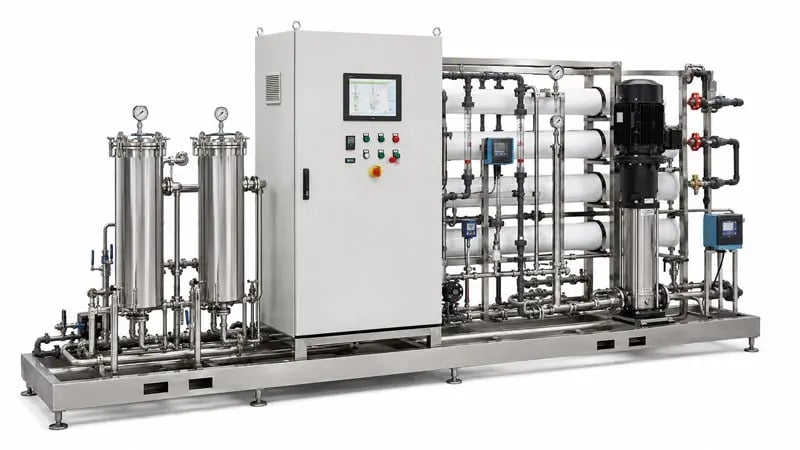
Strategic expansion planning begins during the initial design phase, not after growth pressures force reactive changes. When your facility's water infrastructure is built with modularity and flexibility as core design principles, adding capacity becomes a matter of integrating compatible components rather than decommissioning and replacing entire subsystems. This approach reduces downtime, minimizes capital reinvestment, and allows your operations to grow at their natural pace while maintaining consistent water quality and system reliability.
Foundation Principles for Scalable Water Infrastructure
Understanding Modular Design in Water Systems
Modular design in industrial water systems means breaking the overall infrastructure into self-contained, interchangeable units that function independently yet integrate seamlessly with one another. Each module handles specific treatment, storage, or distribution functions and can be expanded or replaced without disrupting the entire system. This approach contrasts sharply with monolithic system designs where all functions are tightly coupled, making any modification complex and costly.
When you design with modularity in mind, you create natural expansion points throughout your infrastructure. Water treatment modules, storage vessels, pump stations, and distribution networks all become incrementally scalable. The capacity of your entire system grows proportionally as you add compatible modules, and each new addition builds upon existing foundations rather than requiring architectural reinvention. This strategy is particularly valuable in industrial settings where production demands fluctuate or where phased growth aligns with capital availability.
Capacity Planning and Load Forecasting
Effective capacity planning requires understanding not just your current water demands but also realistic growth scenarios over five to ten-year horizons. Industrial water systems must account for peak demand periods, seasonal variations, process-specific flow requirements, and quality standards that may become more stringent as regulations evolve. By forecasting these variables early, you can size your initial infrastructure to accommodate intermediate growth stages without overbuilding or underestimating future needs.
Calculate your baseline consumption by measuring actual usage across all processes, then project realistic expansion percentages based on production targets, market forecasts, and facility goals. This data informs the size of your primary treatment units, storage tanks, and main distribution lines. Critically, you should design these core components to handle approximately 60–70% of your ten-year projected capacity, leaving room for modular expansion without pushing existing infrastructure beyond efficient operating ranges.
Layout Strategy for Seamless Expansion
Spatial Planning and Component Positioning
The physical layout of your industrial water systems directly affects your ability to expand without operational disruption. Arrange primary treatment facilities, storage tanks, pump stations, and distribution nodes with intentional spacing that accommodates future modules. Reserve adjacent plots or designated areas within your facility footprint for additional treatment units, backup storage, or redundant pump capacity. This forward-looking layout eliminates the need to relocate existing equipment or undertake costly site reconfiguration when growth demands expansion.
Vertical stacking and compartmentalized zoning also support expansion efficiency. Modular treatment trains can be installed in parallel, allowing you to add processing capacity without replacing your current units. Standardize connection points, pipe diameters at expansion interfaces, and electrical infrastructure so that new modules integrate quickly and reliably. Good layout strategy treats future expansion as an embedded design feature, not an afterthought squeezed into leftover space.
Infrastructure Redundancy and Flexibility
Build redundancy into your layout by creating bypass loops, dual distribution pathways, and flexible interconnection points between system modules. Redundancy ensures that maintenance or expansion activities on one component do not halt water supply to critical processes. When your layout includes alternative flow routes and multiple pump stations or treatment trains, you can isolate sections for upgrade or modification while maintaining operational continuity. This flexibility is essential for facilities that cannot afford production downtime during infrastructure modifications.
Equally important is oversizing main distribution lines and storage interconnects slightly during initial installation. A distribution manifold designed to handle 30% more flow than current demand provides a buffer for expansion without requiring pipe replacement. Similarly, reserving 20–30% excess capacity in primary storage tanks allows you to phase in additional tank modules gradually rather than upgrading storage infrastructure in large, disruptive increments.
Implementation Strategies for Future-Ready Systems
Component Standardization and Interface Design
Standardization across all system components ensures that expansion modules integrate smoothly and predictably. Specify identical pipe standards, flange types, control interfaces, and quality monitoring equipment throughout your initial design so that future additions use the same specifications. When all components follow common standards, procurement becomes simpler, installation faster, and troubleshooting more straightforward. Avoid proprietary designs that lock you into single-vendor solutions or make future modifications expensive and complicated.
Document these standards in detailed system design specifications that will guide future expansion phases. Include electrical ratings, communication protocols, sensor compatibility, and treatment chemistry parameters. This documentation becomes invaluable when your operations team or external engineers plan system upgrades years later. Clear interface definitions also reduce installation errors and accelerate the commissioning of expanded sections, minimizing the time between module addition and full operational capability.
Phased Implementation and Pilot Testing
Rather than installing your complete modular infrastructure at once, implement your industrial water systems in phases aligned with anticipated growth. Begin with core treatment and distribution capacity matching current needs, then add modules as demand increases or capital becomes available. This approach reduces upfront investment, allows you to validate performance of modular components before scaling, and spreads implementation risk across multiple deployment stages. Pilot testing of new modules before full-scale expansion also identifies potential integration issues while solutions remain cost-effective and non-disruptive.
Track system performance metrics throughout each implementation phase, documenting flow rates, quality parameters, energy consumption, and operational challenges. This performance data informs decisions about how to size and configure subsequent expansion modules. If your initial treatment modules consistently perform below design capacity, you can adjust future module specifications to better match your actual operational patterns. Conversely, if you approach capacity limits faster than projected, you can accelerate expansion timelines and adjust long-term growth forecasts.
FAQ
What makes modular design different from traditional monolithic water system approaches?
Modular design breaks water infrastructure into independent, scalable units that function together, while monolithic systems integrate all functions into one rigid structure. Modular systems allow you to add capacity incrementally without replacing existing equipment, reduce downtime during modifications, and match your infrastructure investment to actual growth rates. Traditional monolithic designs require complete system replacement or extensive modifications to accommodate significant expansion, making them inflexible and costly to upgrade.
How should I determine the capacity of my initial industrial water systems installation?
Begin by measuring your current water consumption across all processes, then project realistic growth scenarios over five to ten years based on production targets and business plans. Size your primary treatment and storage infrastructure to handle approximately 60–70% of your projected ten-year capacity. This approach provides immediate operational capability while reserving room for modular expansion through additional components that integrate with your existing foundation without overbuilding or underutilizing initial investments.
Can I modify the layout of an existing industrial water system to support future expansion?
Modifying an existing system for expansion becomes significantly more complex and expensive than planning for expansion during initial design. However, you can often add parallel treatment trains, backup storage tanks, or redundant distribution pathways if your facility has available space and your current infrastructure includes oversized main lines or interconnects. The best time to design for expansion remains during the initial system design phase, but strategic retrofits may still enable some level of future scalability if carefully planned.

 EN






