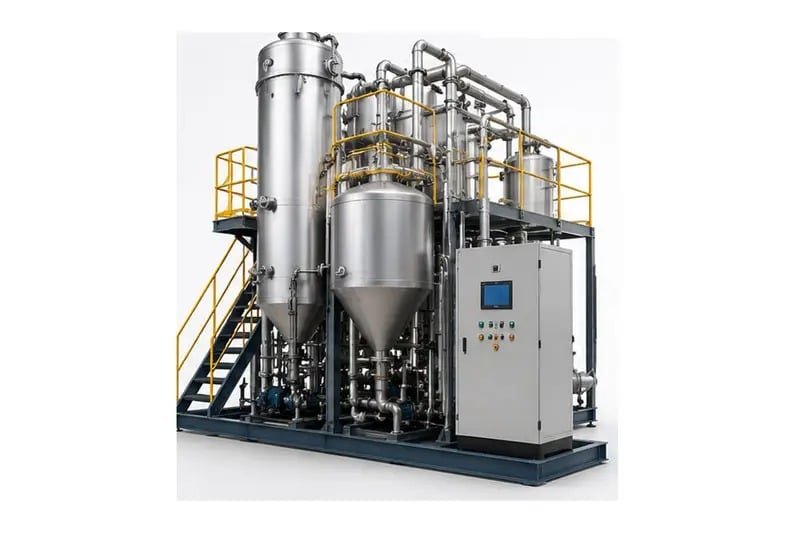
An evaporative crystallizer represents a significant capital investment for industrial wastewater treatment and salt recovery operations. Selecting the right system requires careful assessment of multiple technical and operational factors that directly impact treatment efficiency, uptime, and long-term profitability. Buyers who rush through vendor selection without thorough evaluation often face performance shortfalls, unexpected downtime, and escalating maintenance costs that exceed the original equipment cost within just a few years.
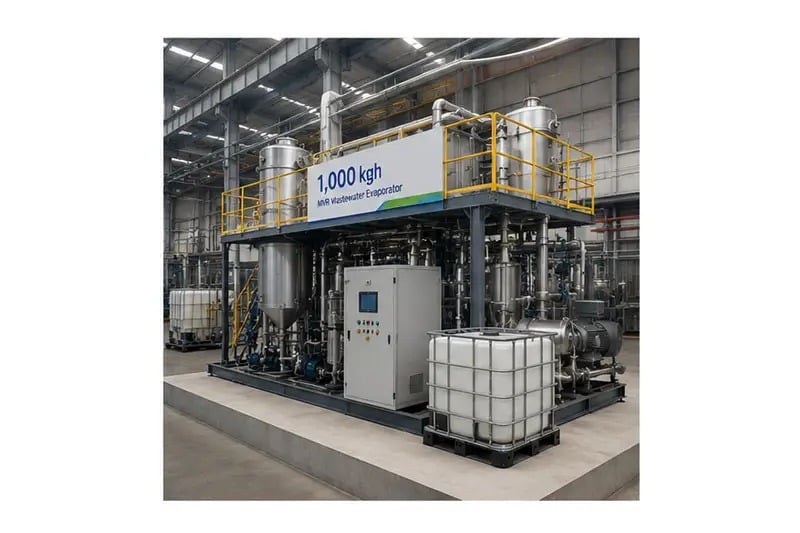
The distinction between a mediocre evaporative crystallizer installation and an excellent one often comes down to how thoroughly a buyer evaluates technical specifications, vendor experience, and system design during the procurement phase. Understanding what to examine—from crystal growth kinetics to feed quality requirements, scaling mitigation strategies, and daily operation protocols—positions your organization to make informed decisions that align with your specific wastewater composition, production volume, and regulatory environment.
Understanding Crystal Growth Performance
Crystal growth within an evaporative crystallizer is not a simple or uniform process. The rate and quality of salt crystal formation depend heavily on temperature control, residence time, supersaturation levels, and the crystallization mechanism employed by the specific equipment design. Different vendors use varying approaches—some emphasize rapid cooling crystallization, while others rely on evaporative concentration followed by selective precipitation—and these choices directly affect both the purity of recovered salt and the stability of the process over extended operating periods.
Evaluating Crystal Formation Rates
When evaluating an evaporative crystallizer, request detailed crystal growth curves and performance data specific to your feed chemistry. Ask the vendor to demonstrate how crystal growth behaves under your expected flow rates and salt concentration ranges. The speed of crystal growth is not always desirable if it leads to irregular, poorly-formed crystals that increase downstream dewatering and washing costs. Slower, more controlled crystal growth typically produces denser, more uniform crystals that require less processing and generate higher-quality recovered salt products.
Feed Quality Requirements and Compatibility
Feed quality is perhaps the most underestimated factor in evaporative crystallizer performance. The incoming wastewater composition—dissolved salts, organic matter, suspended solids, oils, and trace metals—directly determines how the crystallization process proceeds and how frequently the system requires maintenance or chemical cleaning. Vendors often provide 'typical' feed specifications, but your actual wastewater may contain unexpected contaminants or variable salt ratios that degrade crystal growth rates and accelerate fouling.
Scaling Prevention and Maintenance Burden
Scaling is the silent performance killer in evaporative crystallizer operations. Unlike crystal growth, which you actively want to occur in the designated crystallization zone, scaling happens unpredictably on heat exchanger surfaces, pump internals, and piping when salts precipitate in the wrong locations. A system with poor scaling mitigation design will demand increasingly expensive and disruptive cleaning cycles, ultimately driving up the total cost of ownership far beyond the initial purchase price.
Scaling Prevention Design Features
Examine how the evaporative crystallizer's design addresses scaling risk. Does the vendor employ staged heating to maintain uniform supersaturation, or does the system allow localized temperature spikes that trigger premature salt precipitation? Do heat exchangers use materials like titanium or specialized coatings that resist salt adhesion, or standard carbon steel that accumulates deposits rapidly? Request case studies showing how long the system typically operates between planned maintenance intervals in feed conditions similar to yours.
Operation Protocols for Scaling Control
The best evaporative crystallizer design is only effective if operation staff understand and consistently execute scaling prevention protocols. Inquire about the vendor's training program, detailed operating manuals, and troubleshooting guidelines. Does the system include automated monitoring that alerts operators to conditions favoring scale formation, or does scaling only become apparent after performance drops? Systems with real-time feed composition sensors, temperature probes, and density meters enable operators to adjust parameters before scaling begins, dramatically extending run times between cleaning cycles.
Technical Operation and System Reliability
Beyond crystallization chemistry, the practical operation of an evaporative crystallizer depends on how intuitively the system responds to feed variations, how reliably instrumentation functions, and how quickly the vendor can provide technical support when problems arise. An evaporative crystallizer with excellent design but poor control systems or inadequate vendor support will underperform compared to a simpler design backed by exceptional engineering and responsive service teams.
Instrumentation and Control Systems
Evaluate the depth and sophistication of the evaporative crystallizer's control architecture. Modern systems employ PLC-based automation that monitors and adjusts temperature, feed rate, product removal timing, and recirculation flow to maintain stable crystallization conditions. Older or less refined systems rely on manual adjustments and operator judgment, which introduces inconsistency and extends troubleshooting time when performance drifts. Request demonstrations of the control interface and verify that critical operation parameters can be logged for trend analysis and regulatory compliance documentation.
Downtime and Support Responsiveness
Even the most reliable evaporative crystallizer will eventually require maintenance or troubleshooting. Verify that the vendor maintains spare parts inventory, employs certified field service technicians within your region, and commits to defined response times for emergency calls. Ask about typical failure modes, their frequency, and how quickly they can be resolved. Request references from similar-scale operations and contact those references directly to ask about actual downtime experiences and vendor responsiveness during critical incidents.
FAQ
What are the most common reasons an evaporative crystallizer underperforms after installation?
Underperformance typically stems from inadequate feed quality assessment, insufficient scaling prevention in the original design, or operation staff not following vendor-recommended protocols for temperature and residence time control. Feed quality is critical because contaminants and variable salt composition alter crystal growth and accelerate fouling. Additionally, if the evaporative crystallizer's instrumentation is poor or control logic is inflexible, the system cannot adapt to real-world feed variations, causing crystal growth efficiency to decline over time.
How important is crystal growth rate when selecting an evaporative crystallizer?
Crystal growth rate matters, but uniform, controlled growth is more valuable than rapid growth. A slow, steady crystal growth process produces higher-quality crystals that reduce downstream processing costs and improve recovered salt purity. Conversely, rapid crystal growth can create irregular, poorly-formed crystals that increase dewatering time, washing losses, and overall operating expense. During evaluation, prioritize vendors who optimize for crystal quality and stability rather than simply maximizing crystallization speed.
What scaling issues should buyers specifically ask about during vendor discussions?
Ask vendors how their evaporative crystallizer design prevents salt precipitation on heat exchanger tubes, pump housings, and piping. Inquire about material selection, staged heating approach, and typical intervals between cleaning cycles in feeds similar to yours. Request documentation of scaling incidents and how quickly they were resolved. Also ask what operation adjustments staff can make if early scaling indicators appear, so you understand whether your team can prevent problems or must wait for scheduled maintenance downtime.

 EN