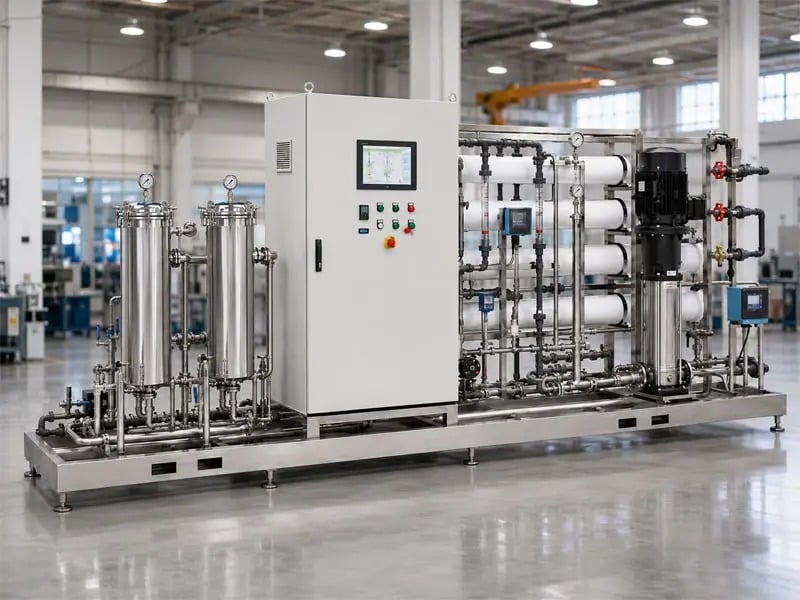
Purchasing an industrial reverse osmosis system requires more than basic specifications. Before granting technical approval to any RO water plant, buyers must request comprehensive RO water plant details that directly impact operational success, compliance, and total cost of ownership. Many organizations overlook critical documentation during procurement, leading to installation delays, performance gaps, and unexpected capital expenditures downstream.
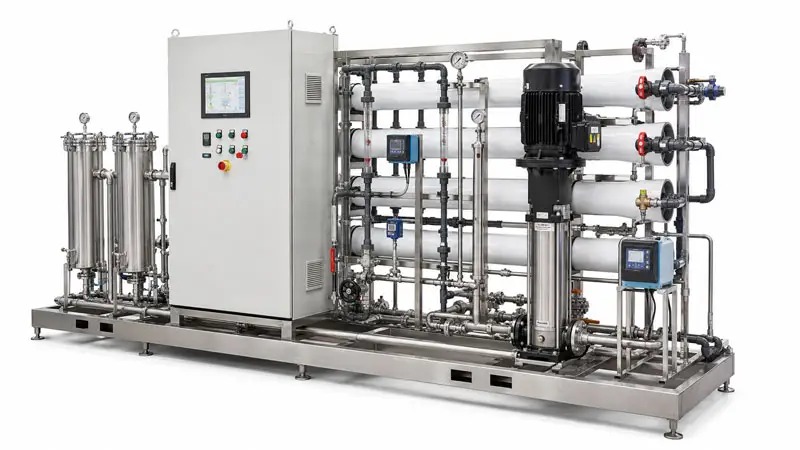
Understanding what documentation to request protects your investment and ensures the RO system aligns with your facility's technical and operational demands. This guide outlines the essential RO water plant details, engineering documentation, performance data, and validation requirements that every buyer should obtain before committing to technical approval.
Core Design and System Specifications
Engineering Design Data Requirements
Design data forms the foundation of any RO installation. Vendors must provide detailed design data that includes feed water source characterization, production capacity at standard operating conditions, and system configuration rationale. Request the complete design data package that documents feed water pressure, temperature, pH, salinity, silica content, turbidity limits, and any specialized contaminants relevant to your industry.
Buyers should verify that design data includes membrane selection justification, pressure vessel ratings, pump specifications, and pretreatment requirements. The design data must clearly define operating windows, including minimum and maximum inlet pressures, temperature ranges, and recovery rates. Request calculations showing how the vendor sized each component based on your specific feed water characteristics and production targets. This ensures the RO system will perform reliably under your actual facility conditions.
Process Flow Diagram and PFD Documentation
A comprehensive PFD is non-negotiable before technical approval. The PFD must illustrate the complete process flow from feed water intake through product water delivery and concentrate discharge. Demand that the PFD includes all pretreatment stages, cartridge filter specifications, scale inhibitor injection points, and reverse osmosis membrane arrays with their respective pressures and flow rates.
The PFD should clearly mark instrumentation locations, including pressure gauges, flow meters, conductivity sensors, and temperature transmitters. Request a labeled PFD that shows isolation valves, check valves, relief valves, and emergency bypass lines. Ensure the diagram identifies the concentrate recirculation loop if applicable, cleaning-in-place connections, and tank interconnections. A detailed PFD prevents confusion during installation and helps operators understand system behavior during startup and operation.
Water Quality and Performance Data
Feed Water Analysis and Water Quality Parameters
Water quality testing must precede any RO purchase. Request that the vendor conduct a comprehensive water quality analysis of your feed water source or provide detailed templates for your facility to complete. This water quality assessment should include total dissolved solids, hardness, alkalinity, chloride, silica, iron, manganese, and any site-specific contaminants relevant to your process.
Buyers must confirm that the vendor's design data was based on actual or representative water quality samples from your facility. If using historical data, request at least twelve months of water quality records to account for seasonal variations. The water quality profile directly affects pretreatment selection, membrane type, and operating pressures. Misaligned water quality assumptions lead to premature membrane fouling, reduced product water purity, and system downtime.
Product Water Quality Guarantees
Request specific product water quality guarantees in writing before approval. The RO system should produce water meeting defined conductivity, total dissolved solids, and silica targets under normal operating conditions. Ask for product water quality performance data based on the feed water quality you provided. Request information about any secondary polishing stages, such as mixed-bed deionization or electrodeionization, if ultra-pure water is your objective.
Demand that the vendor specify product water quality under degraded conditions, such as at 95% of membrane life or following a CIP cycle. This shows realistic expectations for product water consistency throughout the operating cycle. Request details on concentrate water quality and disposal requirements, as concentrate streams often contain elevated salts and require proper handling or treatment before discharge.
System Validation, Testing, and Operational Documentation
Factory Acceptance Testing and Performance Verification
Before requesting technical approval, obtain factory acceptance testing protocols and baseline performance data. The vendor should provide test reports showing the RO system meeting design specifications at the factory before shipment. Request pressure drop across each membrane stage, product and concentrate flow rates, and product water quality measurements under representative operating conditions.
Ask for startup procedures, including depressurization protocols, membrane flushing sequences, and safe pressure ramp-up procedures. Request information about required site acceptance testing, including pressure testing of pressure vessels, instrumentation calibration, and performance verification after installation. Understanding the complete validation pathway ensures smooth commissioning and confirms that installed equipment performs as designed.
Operation, Maintenance, and Spare Parts Documentation
Request comprehensive operation and maintenance manuals covering routine monitoring, membrane replacement schedules, and cleaning protocols. The vendor must provide specifications for replacement membranes, filter cartridges, seals, and gaskets to ensure you can source components throughout the system's life. Ask for CIP procedures, including cleaning frequency recommendations, chemical types, concentrations, and environmental disposal guidance.
Demand a spare parts list with part numbers, lead times, and typical wear item replacement intervals. Request information about predictive maintenance indicators, such as pressure drop limits and product water conductivity thresholds that signal maintenance requirements. Request technical support contact information and response time commitments. Clear operational documentation reduces unplanned downtime and helps maintenance teams manage the RO system effectively over its operational life.
FAQ
What design data should I prioritize requesting from an RO vendor?
Prioritize feed water characterization, membrane selection justification, operating pressure ranges, recovery rates, and pretreatment specifications. These design data elements directly determine whether the RO system will perform reliably under your facility's conditions. Request calculations showing how the vendor sized each component to handle your specific feed water quality and production targets.
Why is a detailed PFD essential before technical approval?
A comprehensive PFD prevents installation confusion, ensures all critical components are sized correctly, and helps operators understand system behavior during startup. The PFD clearly shows pretreatment stages, membrane arrays, instrumentation, valves, and interconnections. Without a detailed PFD, installation teams may make incorrect assumptions about component locations, flow paths, and safety features, leading to costly rework.
How does water quality data impact RO system performance?
Water quality directly affects pretreatment selection, membrane type, operating pressures, and product water consistency. Misaligned water quality assumptions between vendor design data and your actual feed water lead to premature membrane fouling, reduced product purity, and unexpected downtime. Requesting current water quality analysis ensures the RO system is properly designed for your specific source water characteristics.

 EN