Selecting between an MVR evaporator system and a multi effect evaporator requires understanding far more than initial purchase price. Lifecycle cost analysis reveals the true financial impact of your evaporation technology choice, accounting for steam consumption, electricity demand, maintenance, and operational efficiency over the equipment's useful life. Industrial operations managing wastewater concentration, chemical recovery, or process fluid evaporation face this critical decision regularly, and the cost implications can represent millions of dollars across a ten or fifteen year operational span.
Both technologies serve essential roles in industrial separation processes, but they operate under fundamentally different thermodynamic principles. Understanding these differences and their cost implications across the full operational lifetime helps facility managers make informed decisions aligned with their specific process needs, energy infrastructure, and budget constraints. This comparison framework addresses the major cost drivers that separate these technologies and demonstrates how to evaluate them quantitatively.
Understanding Core Technology Differences and Cost Drivers
How Multi Effect Evaporators Consume Steam
Multi effect evaporators operate through sequential vapor recovery across multiple evaporation stages, where the steam from one effect provides heating for the next effect. This cascading approach reduces steam demand significantly compared to single-effect designs. In a typical multi effect system with three or four effects, the overall steam consumption drops dramatically because each subsequent stage reuses the latent heat from previous stages. However, multi effect systems still require a substantial initial steam supply to drive the first effect, and the total energy requirement remains considerable for large-scale operations processing significant liquid volumes.
Mechanical Vapor Recompression Technology
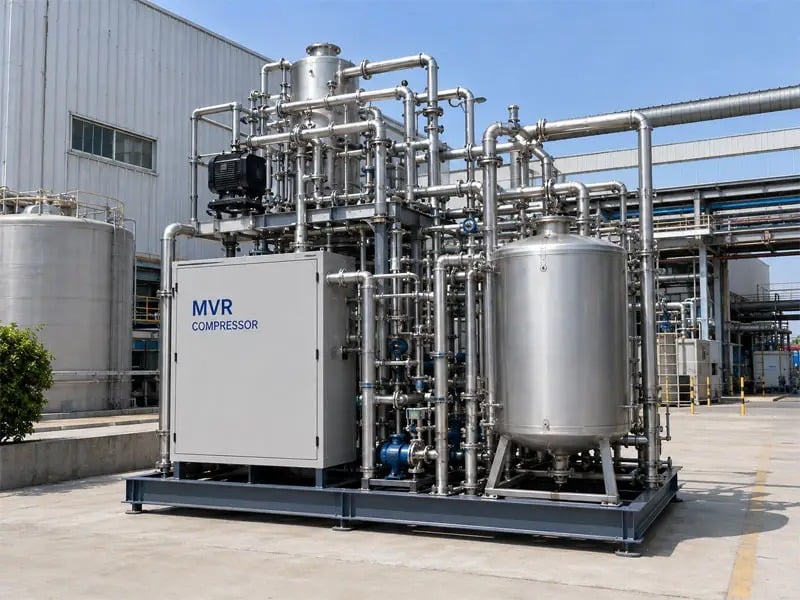
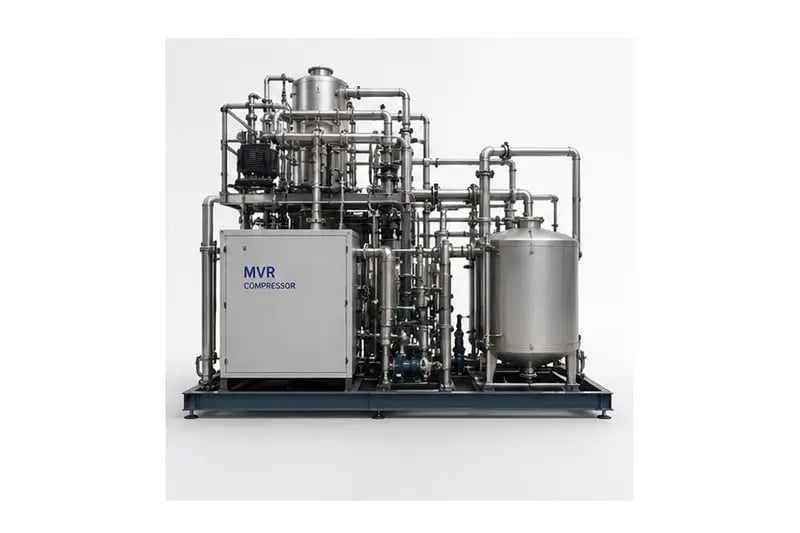
An mvr evaporator system uses electricity to power a mechanical compressor that increases the pressure and temperature of evaporator vapor, effectively recycling the same vapor multiple times. This electricity-driven approach eliminates or dramatically reduces steam requirements, making it particularly attractive in facilities with abundant electrical capacity or limited steam generation capability. The multi effect approach and mechanical vapor recompression represent opposite philosophies: one recovers steam heat sequentially, while the other compresses and reuses vapor mechanically, each with distinct lifecycle cost profiles.
Calculating Lifecycle Cost Components and Energy Expenses
Steam and Electricity Cost Comparisons
Lifecycle cost analysis must account for the dominant energy carriers in your facility. If steam is expensive or generated from fossil fuels with rising costs, multi effect systems may show higher energy expenses over fifteen years despite their vapor recovery benefits. Conversely, facilities with abundant, low-cost electricity may find electricity costs far lower than equivalent steam costs, favoring the mvr evaporator system approach. The lifecycle cost calculation requires local energy pricing over the anticipated equipment operating period, not just current rates. Energy price volatility significantly impacts the relative economics, and facilities must consider whether they expect electricity or steam costs to rise faster.
Capital Equipment and Installation Investment
Multi effect systems typically require lower capital investment than an mvr evaporator system because they use simpler mechanical designs with fewer specialized components. However, the multi effect approach demands more physical space, additional piping, and more complex vapor management infrastructure. MVR systems require investment in high-quality compressors, specialized controls, and electrical infrastructure, but they occupy less space and integrate more compactly into existing facilities. Lifecycle cost comparisons must include not only equipment purchase price but also installation costs, electrical or steam infrastructure upgrades, foundation requirements, and any modifications to facility utilities needed to support the chosen technology.
Operational and Maintenance Expense Assessment
Maintenance Costs Across Equipment Lifetime
Multi effect systems generally require less maintenance because they contain fewer moving parts and simpler mechanical designs compared to an mvr evaporator system. Heat exchanger fouling, scale management, and periodic tube cleaning represent the primary multi effect maintenance tasks. MVR systems demand more rigorous maintenance schedules because the mechanical compressor operates continuously at high pressure, requiring regular bearing inspection, seal maintenance, and compressor oil changes. Over a fifteen-year lifecycle, compressor maintenance costs can accumulate substantially, affecting total lifecycle cost significantly. Facilities must budget for specialized technician time, genuine replacement parts, and potential compressor overhauls when calculating true operating expenses.
Performance Degradation and Energy Efficiency Decline
As multi effect systems age, scale accumulation on heat exchanger tubes gradually reduces steam transfer efficiency, requiring increasingly frequent cleaning interventions and potentially higher steam consumption per unit of evaporated liquid. An mvr evaporator system experiences compressor efficiency decline over time as seals wear and bearing clearances increase, causing gradual electricity consumption increases. Both technologies show some performance degradation within a typical fifteen to twenty year operational span. Lifecycle cost analysis must account for this gradual efficiency loss rather than assuming constant performance throughout equipment life, as realistic energy costs increase moderately over time due to mechanical wear.
Decision Framework for Lifecycle Cost Comparison
Process Volume and Operating Hours
High-capacity operations running continuously benefit most from multi effect systems because the steam recovery advantage compounds across thousands of operational hours annually. Lower-volume or intermittent processes may show better lifecycle cost economics with an mvr evaporator system because the compressor operates efficiently even at partial loads. The breakeven point depends heavily on facility-specific factors including operating hours per year, liquid throughput volume, and the cost differential between electricity and steam in your region.
Site-Specific Energy Infrastructure
Facilities with excess steam generation capacity from cogeneration, waste heat recovery, or on-site power generation may find multi effect systems economically superior because steam costs remain minimal. Conversely, facilities without steam infrastructure but with abundant electrical capacity should evaluate the mvr evaporator system closely. The lifecycle cost comparison must reflect the actual energy costs your facility pays, not generic regional averages, because steam and electricity pricing varies dramatically based on facility energy infrastructure, utility contracts, and regional markets. Perform sensitivity analysis across a reasonable range of energy price scenarios to understand how changes in steam or electricity costs affect the total lifecycle cost comparison.
FAQ
What is the primary difference between MVR and multi-effect evaporator lifecycle costs?
Multi effect systems excel when steam is inexpensive because vapor recovery reduces steam demand dramatically over the equipment lifecycle. MVR evaporator systems minimize energy consumption through mechanical vapor recompression and perform better when electricity costs are low relative to steam. The lifecycle cost winner depends entirely on your facility's energy pricing, operating hours, and local utility rates rather than any inherent technology superiority.
How does operating hours per year affect the lifecycle cost comparison between these technologies?
High annual operating hours favor multi effect systems because steam recovery benefits compound across thousands of hours, generating substantial cumulative savings. Lower operating hours reduce the total energy benefit of either technology, making capital cost differences and maintenance expenses more significant in the lifecycle cost calculation. Facilities operating fewer than 2,000 hours annually should weight upfront equipment and installation costs more heavily in their decision.
Should rising energy costs influence which evaporator technology we select for lifecycle cost analysis?
Yes, anticipated energy price trends significantly impact fifteen-year lifecycle cost projections. If you expect steam costs to rise faster than electricity costs, an mvr evaporator system becomes more attractive. Conversely, if electricity prices are expected to increase significantly while steam remains stable, multi effect systems gain advantage. Performing lifecycle cost sensitivity analysis across multiple energy price scenarios provides realistic decision-making guidance rather than relying on current pricing alone.

 EN