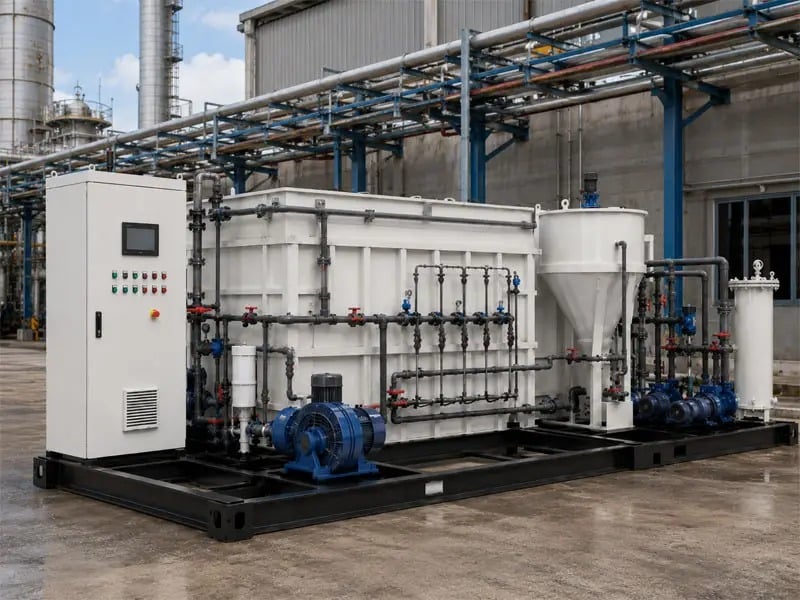
Variable organic loads represent one of the most significant operational challenges in modern wastewater facilities. Whether treating municipal effluent or industrial discharge, fluctuating pollutant concentrations can overwhelm conventional treatment systems, leading to poor performance and regulatory violations. MBBR wastewater treatment technology has emerged as a robust solution for facilities struggling with inconsistent inflow conditions.
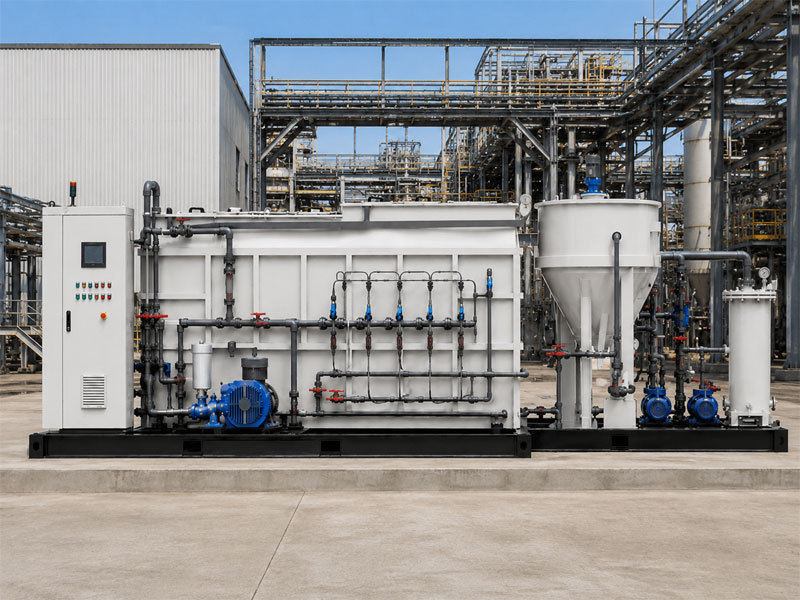
The core strength of MBBR systems lies in their ability to adapt and stabilize treatment performance even when influent composition shifts dramatically. Unlike suspended-growth reactors that depend on maintaining stable sludge concentrations, MBBR wastewater treatment uses fixed biofilm carriers to provide biological resilience. This flexibility makes these systems particularly valuable for industries with seasonal variations or unpredictable discharge patterns.
Understanding Biofilm-Based Treatment and Organic Load Adaptation
How Biofilm Carriers Respond to Fluctuating Organic Load
The biofilm structure in MBBR systems creates a natural buffer against variable influent conditions. When organic load spikes, the microbial communities within the biofilm respond by accelerating metabolic activity and expanding their population density. This distributed biological capacity means the system can absorb load shocks without washout, a common failure mode in conventional activated sludge plants.
Each biofilm carrier maintains multiple layers of microorganisms, creating diffusion gradients that allow both aerobic and anoxic zones to exist simultaneously. During periods of high organic load, outer biofilm layers consume available oxygen and organic matter, while deeper layers remain active through different biochemical pathways. This layered architecture ensures treatment efficiency across a wide range of loading scenarios.
Biofilm Density and Operational Resilience
Biofilm thickness typically ranges from 100 to 500 micrometers in steady-state MBBR operation. When organic load increases suddenly, the biofilm expands rapidly to utilize available substrate, then stabilizes once loading normalizes. This dynamic behavior allows the system to maintain consistent effluent quality without requiring operator intervention or shock-load protocols.
The resilience of biofilm-based treatment extends operational flexibility significantly. Unlike suspended-growth systems that require careful aeration control and sludge age management during variable loading, MBBR wastewater treatment operates with greater tolerance for transient upsets. This characteristic makes these systems particularly suited to industrial discharge streams with predictable or unpredictable fluctuations.
Equalization and System Stabilization Strategies
Equalization as a Complementary Operation Strategy
While MBBR systems are inherently robust, equalization basins further enhance performance when dealing with severe organic load swings. Equalization tanks homogenize influent streams by mixing high-concentration slugs with lower-concentration periods, reducing shock impact on the biological reactor. This operation approach works synergistically with MBBR biofilm systems to achieve consistent treatment results.
For facilities experiencing peak organic load variations exceeding 200 percent of average, equalization becomes a critical component of the treatment train. The retention time in equalization basins can be optimized based on influent monitoring data, allowing operators to smooth spikes before they reach the reactor. This staged operation philosophy protects the biofilm community and maintains stable effluent discharge.
Retention Time and Loading Rate Optimization
The operation of MBBR systems under variable organic load depends heavily on establishing appropriate hydraulic retention times and volumetric loading rates. Typical MBBR designs operate at 6 to 24 hours detention time, depending on the complexity of the organic load and treatment objectives. Biofilm systems tolerate higher volumetric loading rates than suspended-growth alternatives, often handling 3 to 10 kg BOD per cubic meter per day.
When organic load spikes beyond design parameters, maintaining adequate retention time becomes more critical. Operators must balance flow equalization, aeration control, and potential recirculation to prevent washout. Real-time monitoring of dissolved oxygen, biomass concentration, and effluent quality provides essential feedback for optimal operation during variable conditions.
Practical Implementation and Performance Outcomes
Design Considerations for Variable Influent Conditions
Successful MBBR wastewater treatment systems designed for variable organic load incorporate oversized aeration capacity and media fill ratio flexibility. Most systems include 60 to 70 percent media fill under normal operation, allowing for temporary media expansion during high-load periods. This design buffer protects treatment performance without requiring capital investment in additional tanks.
Facilities implementing MBBR systems for unpredictable organic load also invest in instrumentation and automated controls. pH sensors, dissolved oxygen probes, and effluent monitoring systems enable operators to adjust aeration intensity and sludge wasting in real time. This operation-centric approach ensures that biofilm communities remain active and resilient across the full spectrum of influent variations.
Monitoring and Response Protocols
The operation of MBBR systems under variable conditions requires establishing clear monitoring protocols and response thresholds. Key indicators include suspended solids in the reactor, effluent turbidity, specific oxygen uptake rates, and biofilm color. When organic load surges, dissolved oxygen can drop rapidly, signaling the need for increased aeration or temporary flow reduction.
Biofilm detachment and sloughing increase during sudden organic load spikes, which is a normal protective response rather than a system failure. Operators should monitor effluent suspended solids and adjust sludge removal accordingly. Many facilities implement polishing clarifiers or tertiary filtration when treating highly variable influent streams to manage temporary biofilm shedding events.
FAQ
Can MBBR wastewater treatment handle a 300 percent increase in organic load suddenly?
MBBR systems can absorb significant load shocks better than conventional activated sludge plants due to their biofilm architecture. However, a 300 percent sudden spike will still stress the system, potentially requiring equalization, temporary flow reduction, or increased aeration. The biofilm adapts within hours to days, but effluent quality may be compromised during the initial transient period without proper design buffering.
How does equalization help manage variable organic load in MBBR operation?
Equalization tanks smooth influent peaks by mixing concentrated slugs with dilute flows, creating a more stable feed stream to the MBBR reactor. This operation strategy reduces shock loading, allows consistent biofilm growth, and improves overall treatment efficiency. For facilities with severe variations, equalization can be the difference between regulatory compliance and process upset.
What is the typical biofilm growth response time when organic load increases?
The biofilm responds to increased organic load within hours, with visible density changes occurring over 24 to 48 hours. Initial metabolic acceleration occurs almost immediately, while full biofilm expansion and population growth take several days. The exact response time depends on temperature, dissolved oxygen availability, and nutrient balance within the MBBR system.

 EN