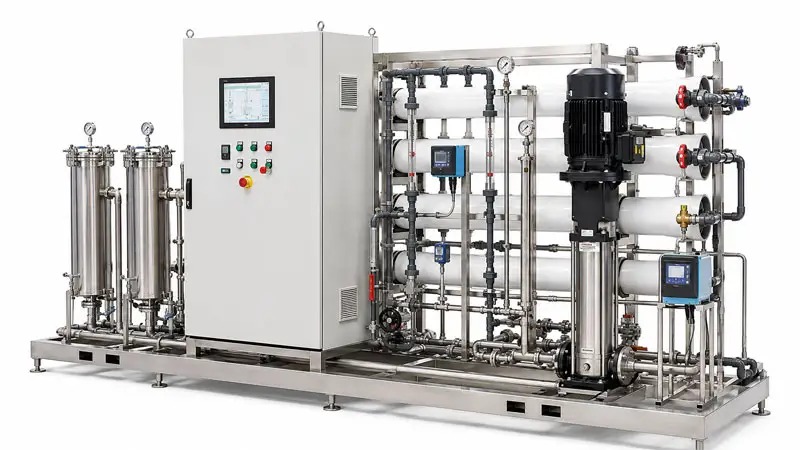
Selecting the right industrial ro plant manufacturer requires a strategic approach that extends far beyond price comparison. Your choice directly affects water quality outcomes, operational efficiency, maintenance costs, and long-term production reliability. Industrial reverse osmosis systems are capital-intensive investments that must deliver consistent performance across demanding applications including pharmaceuticals, food and beverage processing, electronics manufacturing, and power generation. Understanding how to evaluate manufacturers based on membrane technology, control systems architecture, and comprehensive service models separates informed buyers from those who discover critical gaps only after installation.
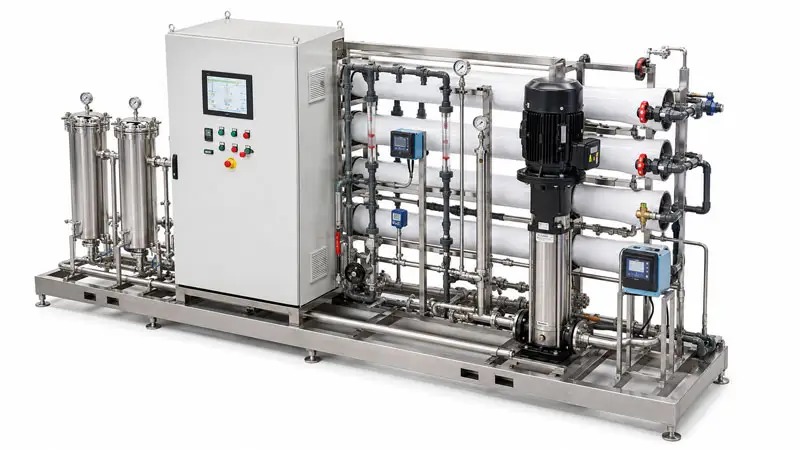
The evaluation process must account for three interconnected dimensions: how the RO manufacturer designs and specifies membrane arrays for your specific feedwater chemistry, how advanced the controls infrastructure is for real-time monitoring and adjustment, and what service support structures exist to minimize downtime. A manufacturer that excels in one area but falls short in another can create operational friction and hidden costs that compound over years of operation. This guide walks through the critical evaluation criteria that separate leading manufacturers from commodity suppliers, helping you make a decision aligned with your facility's unique water quality requirements and business objectives.
Membrane Design and Feedwater Application Assessment
Membrane Technology Selection and Pressure Ratings
Every industrial RO system begins with membrane selection, and this choice reflects the manufacturer's technical depth and understanding of your specific application. Leading manufacturers assess your feedwater analysis comprehensively—total dissolved solids, hardness, silica content, biological activity, and ionic composition—before recommending membrane types. The RO manufacturer should specify whether your system requires standard polyamide membranes, specialized thin-film composites for challenging feedwater, or hybrid membrane configurations that combine multiple rejection capabilities. Membrane pressure ratings, element count per vessel, and recovery rates should be justified based on your feedwater quality and production volume, not simply selected from a standard catalog.
A qualified manufacturer will explain how membrane degradation factors like chlorine exposure, temperature fluctuations, and biofouling influence long-term performance and replacement frequency. They should provide predictive membrane life calculations based on your specific operating conditions, which helps you budget for ongoing consumable costs. The controls and monitoring infrastructure must work in concert with membrane selection; a membrane designed for high recovery may require sophisticated pressure staging and feed flow optimization that only advanced control systems can achieve reliably.
Pretreatment Design Integration
Membrane longevity depends heavily on pretreatment effectiveness, and this is where manufacturer expertise becomes evident. The best RO manufacturers design integrated pretreatment systems that remove suspended solids, reduce fouling potential, and condition feedwater to match membrane specifications. Your manufacturer should specify multimedia filtration stages, carbon adsorption for chlorine and organic removal, and possibly softening or pH adjustment stages depending on your source water characteristics. The controls architecture must include differential pressure monitoring across pretreatment stages to alert operators when filter cartridges approach saturation or breakthrough occurs.
Advanced manufacturers may propose real-time turbidity monitoring and automated backflush cycles that optimize pretreatment runtime while preventing membrane damage. This level of integration distinguishes manufacturers who understand long-term system reliability from those selling equipment components assembled with minimal engineering coordination.
Control Systems Architecture and Real-Time Optimization
Advanced Monitoring and Automated Response Capabilities
Modern industrial RO systems must deliver repeatable water quality and consistent permeate production despite fluctuating feedwater conditions. The controls infrastructure is what enables this consistency, which is why this element deserves significant evaluation weight. A capable RO manufacturer provides control systems that monitor feed pressure, concentrate pressure, permeate production rate, and real-time total dissolved solids simultaneously. The system should automatically adjust feed pump speed, throttle concentrate flow, and manage membrane staging to maintain target recovery rates while preventing membrane damage from pressure spikes or flow instability.
Look for manufacturers offering predictive analytics within their control platform. Advanced systems track membrane fouling trends, calculate remaining run time before cleaning becomes necessary, and recommend optimal cleaning intervals. Some controls solutions include remote monitoring capabilities that allow your manufacturer's service technicians to diagnose performance anomalies from a distance, reducing troubleshooting time when issues emerge. The control system should generate trend reports showing permeate quality, water recovery efficiency, and energy consumption metrics that help you identify deteriorating performance before it impacts production.
Integration with Your Facility Systems
Your RO system must communicate seamlessly with your facility's water management, production planning, and maintenance scheduling systems. Modern industrial RO manufacturers offer controls platforms compatible with common industrial protocols—Modbus, Profibus, Ethernet—allowing data exchange with your SCADA systems, MES platforms, or facility management software. This integration eliminates manual data collection and enables automated alerts when water quality drifts outside acceptable ranges or system pressures exceed safe operating limits. The manufacturer should provide clear documentation of data formats, alarm codes, and API specifications that your IT team needs to integrate the RO system into your broader infrastructure.
Evaluate whether the manufacturer offers customizable control logic that adapts to your specific operational workflows. For example, if your facility operates multiple production shifts with varying RO system demand, the control system should support different setpoint configurations for each shift and automatically transition between them. This flexibility reduces operator error and ensures consistent system behavior across operational scenarios.
Service Support Models and Long-Term Partnership Value
Preventive Maintenance Programs and Technical Training
An industrial RO plant manufacturer's service capabilities often determine total cost of ownership more significantly than equipment purchase price. Evaluate what preventive maintenance programs the manufacturer offers and whether they include scheduled membrane cleaning, equipment inspection, spare parts provisioning, and performance testing. Leading manufacturers provide detailed preventive maintenance schedules tailored to your feedwater characteristics and operating intensity. They should offer on-site training for your operations and maintenance staff covering system startup, routine monitoring procedures, troubleshooting methodology, and emergency response protocols.
Service quality manifests in spare parts availability and response time guarantees. Ask the manufacturer what critical spare parts they stock, what their typical delivery timeframe is for emergency replacement components, and whether they offer rental equipment if your system requires extended downtime for major repairs. Some manufacturers maintain regional service centers that can dispatch technicians quickly; others coordinate service through authorized distributors. Understand this distinction clearly, as it affects your risk profile during equipment failure scenarios.
Warranty Terms and Technical Support Responsiveness
Beyond preventive maintenance, examine the manufacturer's warranty terms and service contract options carefully. Standard warranties typically cover equipment defects for 12 to 24 months; extended warranties covering specific components like membranes may be available at additional cost. More important than warranty length is the manufacturer's documented response time for service calls and their willingness to provide remote technical support while on-site repairs are being arranged. Request references from existing customers about their actual experience with the manufacturer's service responsiveness during critical production situations.
Ask the manufacturer how they handle service documentation and whether they provide digital records of all maintenance work performed on your system. This documentation trail becomes invaluable for regulatory compliance verification in industries like pharmaceuticals where water system documentation is mandatory. Some manufacturers offer service contracts that bundle preventive maintenance, parts replacement, and priority emergency response into monthly or annual fees, providing cost predictability compared to pay-as-you-go service models.
FAQ
What should I prioritize when evaluating an RO manufacturer's membrane specifications?
Prioritize membrane selection justified by your specific feedwater analysis and application requirements rather than generic catalog recommendations. Ensure the manufacturer can explain how membrane type, pressure rating, and recovery targets relate directly to your source water chemistry and production volume. A manufacturer demonstrating deep understanding of your unique water quality challenges—such as high silica content, elevated hardness, or specific contaminants—indicates technical competence that translates to better long-term system performance and reliability.
How important is controls technology when comparing industrial RO plant manufacturers?
Controls technology is critically important because it directly affects permeate quality consistency, energy efficiency, and membrane lifespan. An advanced control system optimizes operations automatically despite feedwater variations, identifies fouling trends early, and communicates with your facility systems. Manufacturers offering predictive analytics and remote monitoring capabilities provide operational visibility that justifies their higher technology investment through reduced downtime, lower energy consumption, and extended membrane service life across your facility's operational lifetime.
What service capabilities should I require from my industrial RO plant manufacturer?
Require the manufacturer to provide documented preventive maintenance programs tailored to your feedwater and operating intensity, on-site training for your staff, clearly defined spare parts availability and emergency response times, and options for service contracts that include membrane cleaning and equipment inspection. Verify that they offer remote technical support while on-site repairs are arranged and that they maintain comprehensive service documentation for regulatory compliance purposes. Service responsiveness during equipment emergencies often determines whether your facility experiences hours of downtime or days, making this evaluation dimension essential.

 EN