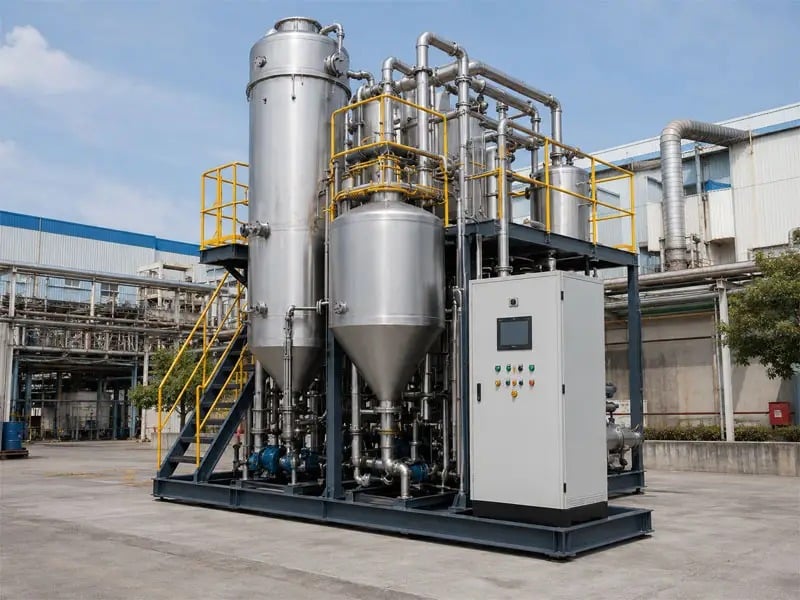
Crystal quality is the foundation of successful crystallization operations in industrial settings. When organizations invest in industrial crystallization equipment, they must understand the critical factors that determine whether crystals remain stable, uniform, and fit for downstream processing. Poor crystal quality leads to higher rejection rates, reduced yield, and increased operational costs. The stability of crystal formation depends on multiple interconnected variables that must work in harmony throughout the crystallization process.
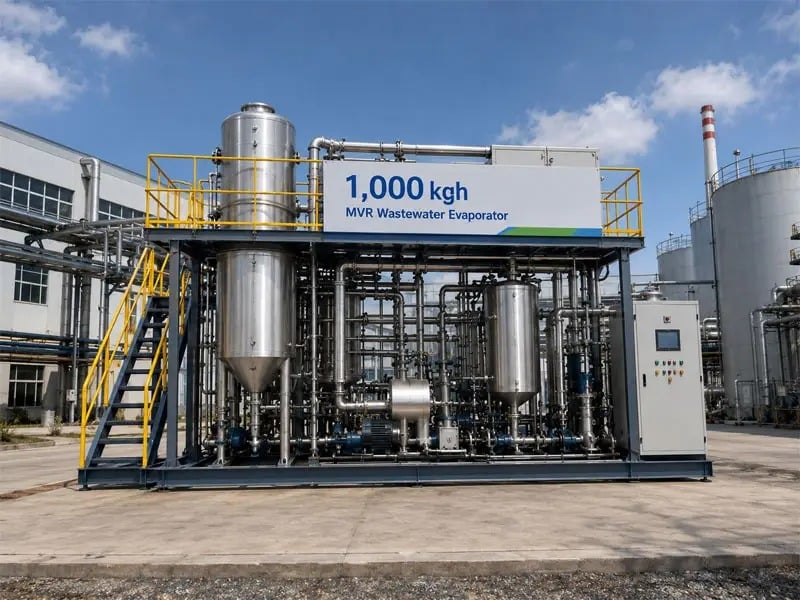
The relationship between equipment design and crystal quality is direct and measurable. Industrial crystallization equipment operates within narrow parameters where even small deviations can compromise crystal formation. Operators and engineers must recognize that achieving stable, high-quality crystals requires a systematic approach combining proper feed chemistry management, rigorous process control standards, and continuous operational monitoring. Understanding these determinants empowers organizations to optimize their crystallization operations and deliver consistently superior products to their customers.
Feed Chemistry and Crystal Seed Performance
Composition Impact on Crystal Stability
Feed chemistry fundamentally influences how crystals nucleate and grow within industrial crystallization equipment. The purity, concentration, and chemical composition of the incoming feed directly determine whether crystal growth will be orderly or chaotic. Impurities in the feed can act as disruptive agents, creating defects in the crystal lattice structure and reducing the overall quality of the final product. When feed chemistry is optimized, crystal nucleation occurs in a controlled manner, leading to uniform particle size distribution and enhanced mechanical strength in the crystals produced.
Seed Crystal Selection and Management
Seed crystal selection represents a critical decision point in maintaining crystal quality through proper operation. The size, purity, and structural integrity of seed crystals determine the foundation upon which new crystal layers will build. Poor seed quality directly compromises the crystal quality of the entire batch, making seed management a non-negotiable aspect of process control. Organizations that carefully source and prepare seed crystals experience dramatically fewer product defects and achieve higher yields compared to those that neglect this essential step.
Process Control Systems and Temperature Management
Temperature Regulation for Uniform Crystal Growth
Precise temperature management stands as one of the most significant factors determining crystal quality in industrial crystallization equipment. Temperature fluctuations cause supersaturation levels to vary unpredictably, which disrupts the orderly growth of crystals and produces unstable, irregular crystal structures. Advanced process control systems continuously monitor and adjust temperature to maintain the exact conditions required for steady, uniform crystal formation. When temperature control is precise, crystals grow at predictable rates, resulting in homogeneous particle size and superior mechanical properties that meet stringent industry specifications.
Mixing and Residence Time Optimization
Effective mixing within industrial crystallization equipment ensures that feed chemistry remains uniformly distributed throughout the crystallization vessel. Inadequate mixing creates localized zones of varying concentration and temperature, which generates multiple competing nucleation sites and produces mixed crystal sizes. Proper residence time allows crystals sufficient opportunity to grow without being subjected to excessive agitation that would cause breakage. Process control algorithms that optimize both mixing intensity and residence time enable organizations to achieve exceptional crystal quality and consistency across all production batches.
Operational Excellence and Continuous Monitoring
Real-Time Monitoring Technologies and Feedback Systems
Modern industrial crystallization equipment incorporates real-time sensors and monitoring systems that track crystal formation at every stage of operation. These systems measure temperature, pressure, concentration, pH, and particle size distribution simultaneously, providing operators with immediate visibility into process performance. When anomalies are detected through process control mechanisms, adjustments can be made instantly before they compromise crystal quality. Facilities equipped with advanced monitoring technologies consistently achieve higher purity levels and superior crystal uniformity compared to facilities relying on manual checks or outdated instrumentation.
Troubleshooting and Adaptive Process Adjustments
Crystal quality can degrade rapidly if operators lack the knowledge to respond effectively to process disturbances. Trained operators understand how feed chemistry changes propagate through the system and how to adjust operation parameters to restore stability quickly. When crystal quality begins to decline, prompt intervention based on real-time data prevents batch loss and maintains product consistency. Organizations that invest in operator training and robust process control frameworks experience fewer quality incidents and maintain higher overall equipment reliability throughout their crystallization operations.
FAQ
How does feed chemistry directly affect crystal quality in industrial crystallization equipment?
Feed chemistry determines the purity, concentration, and presence of impurities that influence nucleation and growth patterns. When feed chemistry is controlled precisely, crystals form with uniform structure, consistent size, and superior mechanical properties. Contaminated or improperly concentrated feed results in defective crystals with irregular shapes, fractured surfaces, and reduced yield, making feed chemistry management essential for stable crystal quality.
What role does process control play in maintaining stable crystal production?
Process control systems monitor temperature, mixing, residence time, and other critical parameters to ensure crystallization conditions remain within optimal ranges. Real-time feedback allows operators to detect deviations and adjust operation before they damage crystal quality. Without robust process control, fluctuations in conditions cause unstable, unpredictable crystal formation and inconsistent product quality across batches.
Why is operational expertise important for achieving consistent crystal quality?
Skilled operators understand how industrial crystallization equipment responds to changes in feed chemistry, temperature, and mixing conditions. They can interpret real-time data, troubleshoot emerging problems, and make informed adjustments to restore quality when disturbances occur. Experienced operation teams minimize batch losses, reduce quality variability, and maximize the efficiency of crystallization processes through continuous monitoring and adaptive responses.

 EN