The food industry generates substantial wastewater streams that require effective treatment before discharge or reuse. Selecting the right food industry wastewater treatment technology directly impacts operational costs, environmental compliance, and long-term sustainability. Three primary approaches dominate the market: moving bed biofilm reactors (MBBR), membrane bioreactors (MBR), and conventional biological processes. Each method offers distinct advantages and trade-offs that merit careful evaluation.
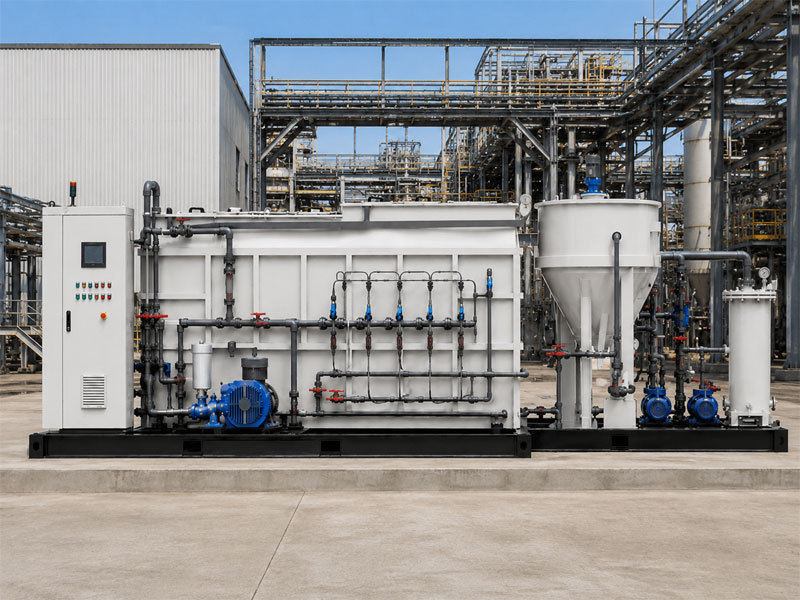
Understanding the fundamental differences between these technologies helps facility managers make informed decisions aligned with specific operational needs, discharge standards, and budget constraints. The choice between MBBR, MBR, and conventional biological treatment influences treatment efficiency, space requirements, maintenance demands, and overall capital and operating expenditures for food processing plants.
MBBR Technology for Food Industry Applications
How MBBR Systems Operate
Moving bed biofilm reactors (MBBR) utilize suspended plastic carriers that provide biofilm attachment sites within an aerated tank. In MBBR systems, microorganisms colonize the carrier surfaces, creating a high-density biomass that continuously removes organic contaminants from food industry wastewater. The carriers remain in motion throughout the treatment process due to aeration and mixing, ensuring consistent contact with incoming wastewater.
MBBR technology delivers robust biological treatment for food industry wastewater containing high biochemical oxygen demand (BOD), chemical oxygen demand (COD), and suspended solids. The system accommodates variable organic loading common in food processing, where daily production volumes and waste composition fluctuate significantly. MBBR reactors typically achieve 80–90% BOD removal rates and handle food industry applications ranging from dairy, meat processing, beverage production, and vegetable processing facilities.
Advantages and Operational Considerations
MBBR installations require less floor space than conventional biological reactors while maintaining comparable treatment capacity, making them attractive for food industry plants with limited available land. The system demonstrates flexibility toward operational disruptions and shock loads, recovering quickly after upset conditions that might compromise conventional processes. Maintenance costs remain moderate because internal moving parts are minimal, and the system tolerates variations in food industry wastewater strength without requiring extensive operator intervention.
However, MBBR systems require careful aeration management to prevent carrier washout and ensure adequate oxygen transfer for biological treatment. Energy consumption represents a significant operating cost component, particularly in food industry facilities operating continuously. Additionally, MBBR reactors typically require secondary clarification to remove biomass and suspended solids before discharge.
MBR Systems for Advanced Food Wastewater Treatment
Membrane Bioreactor Integration
Membrane bioreactors (MBR) combine activated sludge treatment with membrane filtration, typically using ultrafiltration or microfiltration barriers. In MBR systems, the membrane physically separates treated water from the biomass, eliminating the need for secondary clarification common in conventional biological or MBBR approaches. Food industry wastewater passes through the membrane, which retains suspended solids and microorganisms while allowing treated effluent to pass through.
MBR technology delivers superior effluent quality, achieving 95–99% removal of suspended solids, bacteria, and certain contaminants from food industry wastewater. This high-quality treated water enables direct reuse for cooling systems, washdown operations, or environmental discharge in stringent regulatory zones. The compact footprint of MBR systems makes them particularly suitable for food industry facilities requiring advanced treatment in constrained spatial environments.
Operational Requirements and Challenges
MBR systems demand vigilant membrane management and regular cleaning to prevent fouling from organic compounds and fats prevalent in food industry wastewater. The biological treatment portion functions similarly to conventional activated sludge, but the membrane component introduces additional operational complexity and specialized expertise requirements. Energy consumption for membrane filtration significantly exceeds MBBR systems, elevating operational costs for food industry applications.
Membrane replacement represents a major capital expense occurring every 5–7 years, requiring budget planning for food industry operations. Additionally, fats, oils, and grease (FOG) commonly present in food industry wastewater can accelerate membrane fouling, necessitating upstream pretreatment or more frequent membrane maintenance intervals.
Conventional Biological Treatment Fundamentals
Activated Sludge Process Overview
Conventional biological treatment for food industry wastewater employs activated sludge processes using suspended biomass in aerated basins. Microorganisms consume organic matter under aerobic conditions, transforming food industry wastewater contaminants into biosolids and CO2. The process relies on gravity clarification to separate treated water from settled biomass, followed by sludge recycling to maintain adequate microorganism populations.
Conventional systems deliver moderate biological treatment suitable for many food industry applications, achieving 70–85% BOD removal with proven, well-understood technology. The biological process accommodates diverse food industry wastewater compositions and handles moderate organic loading variations. Long operational history in food processing provides substantial design and management data.
Space Requirements and Maintenance
Conventional activated sludge treatment requires substantial aeration basin volumes and secondary clarifier footprints, making conventional systems space-intensive compared to MBBR alternatives. Food industry facilities with available land area may find conventional biological treatment cost-effective, particularly where capital investment constraints warrant simpler technology approaches. Operational complexity remains moderate, with standard operator training and qualifications sufficient for food industry applications.
Energy costs for conventional biological treatment typically fall between MBBR and MBR systems. Secondary sludge handling and disposal represent ongoing expenses, requiring dedicated dewatering equipment or external biosolids management for food industry operations. Sensitivity to shock loads and toxic food industry wastewater components necessitates robust process monitoring and operational safeguards.
Comparative Analysis for Food Industry Selection
Treatment Capacity and Efficiency
MBBR systems deliver higher volumetric treatment capacity within compact footprints compared to conventional biological processes, making MBBR attractive for food industry expansion scenarios or brownfield installations. MBR systems provide superior effluent quality but at increased capital and operational expenses. Conventional biological treatment offers moderate efficiency with lower complexity, suitable for food industry facilities prioritizing simplicity and cost reduction.
Selection between MBBR, MBR, or conventional biological treatment depends on discharge standards applicable to specific food industry locations. Stringent reuse requirements or sensitive receiving waters favor MBR technology. Standard environmental discharge permits often allow MBBR or conventional biological treatment, where capital and energy constraints influence final selection for food industry projects.
Capital and Operating Costs
Conventional biological treatment typically represents the lowest capital investment for food industry wastewater systems, followed by MBBR installations, with MBR systems commanding the highest upfront expenditure. Operating costs reverse this ranking somewhat, as MBR energy and membrane replacement costs frequently exceed MBBR or conventional systems over extended operational periods. Food industry operators must evaluate total cost of ownership across expected facility lifespan rather than focusing exclusively on initial installation investment.
FAQ
Which treatment technology best suits small food processing facilities?
Small food industry operations often benefit from MBBR systems that combine compact size with robust biological treatment capacity. If effluent reuse or extremely stringent discharge standards apply, MBR systems prove worthwhile despite higher costs. Conventional biological treatment becomes advantageous primarily when substantial land area exists and capital availability remains constrained for small food industry producers.
How do food industry wastewater characteristics influence technology selection?
High-strength food industry wastewater with significant BOD, COD, and FOG content favors MBBR systems that tolerate shock loads and maintain stable biological performance. Dairy and meat processing facilities particularly benefit from MBBR robustness. MBR systems excel where FOG removal and water reuse drive decision criteria, though upstream pretreatment becomes essential for optimal MBR performance in food industry applications.
Can food industry facilities retrofit existing conventional treatment systems with MBBR?
Existing conventional biological basins can accommodate MBBR carrier introduction, effectively converting activated sludge systems to hybrid configurations. This retrofit approach enables food industry facilities to increase treatment capacity and improve biological performance without complete system replacement. Engineering assessment ensures basin geometry, aeration infrastructure, and hydraulic retention time compatibility with MBBR conversion for individual food industry sites.

 EN






