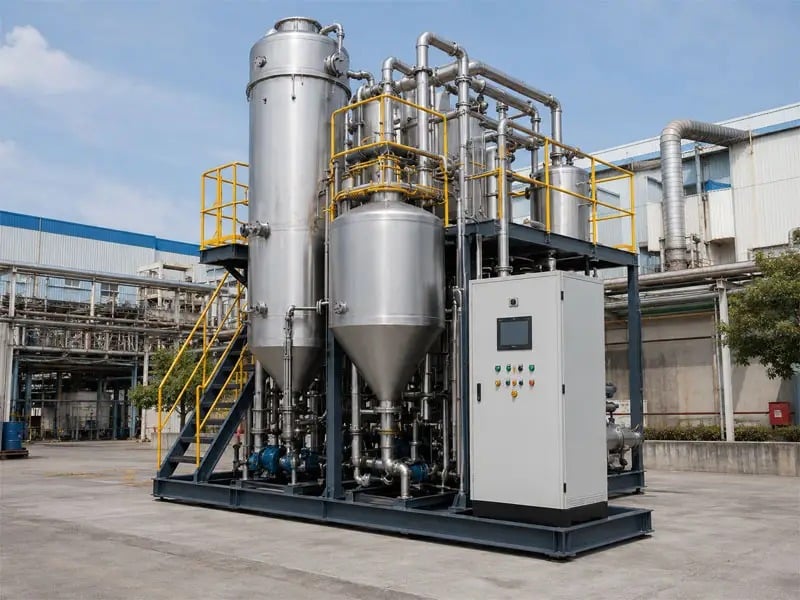
Industrial wastewater treatment and salt recovery operations depend heavily on the seamless coordination between evaporation and crystallization stages. When these processes operate independently without proper integration, production bottlenecks emerge, capital investments underperform, and operational costs escalate. The evaporator and crystallizer must work as a unified system, not as isolated equipment units, to achieve consistent throughput and maximize salt recovery efficiency.
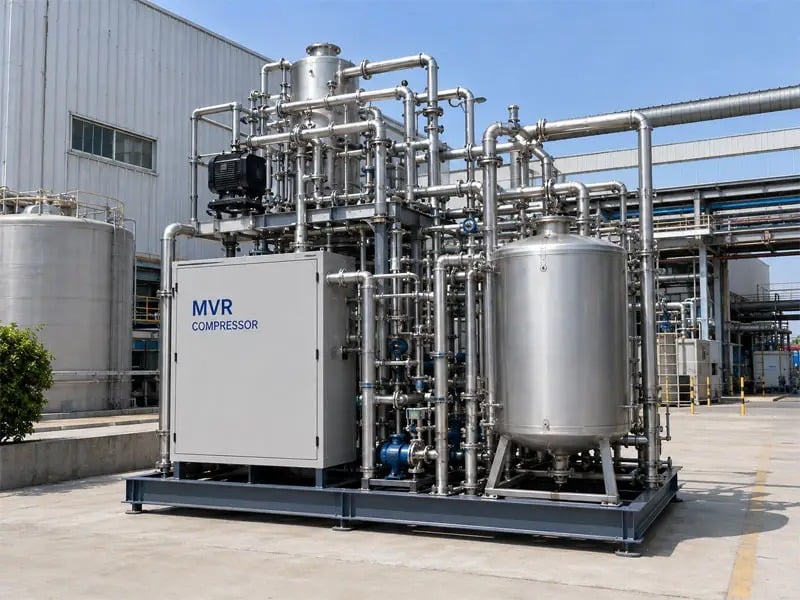
Proper integration of evaporation and crystallization stages requires understanding how capacity balance, brine characteristics, and process controls interact across the entire system. Misalignment between evaporator output and crystallizer input capacity creates immediate operational friction, forcing operators to either reduce throughput or compromise product quality. This guide explores the critical factors that prevent bottlenecks and demonstrates how intelligent system design ensures smooth material flow, consistent brine composition, and predictable salt yield.
Understanding the Integration Challenge
Why Evaporator and Crystallizer Mismatch Occurs
Most integration problems stem from viewing evaporation and crystallization as separate design problems rather than coupled processes. An evaporator sized for peak water removal may produce concentrated brine faster than the crystallizer can process it, creating accumulation and instability. Conversely, undersized evaporation capacity leaves the crystallizer starved for feedstock, reducing overall throughput and leaving expensive equipment underutilized. The capacity balance between these stages determines whether the facility operates smoothly or experiences frequent operational constraints.
Brine characteristics flowing from the evaporator directly influence crystallizer performance. Supersaturation levels, temperature profile, dissolved solid concentration, and impurity content all affect crystal nucleation and growth rates. When evaporator controls do not maintain consistent brine specifications, the crystallizer must continuously adapt its operating parameters, reducing precision and creating waste. Integration failures often disguise themselves as crystallizer malfunctions when the root cause is evaporator output inconsistency.
System Interdependencies and Failure Modes
Integration failures cascade through the entire operation. A brine surge from the evaporator overwhelms the crystallizer feed tank, forcing operators to restrict evaporator flow and reduce throughput. Alternatively, unstable brine composition causes erratic crystallization, leading to excessive mother liquor recycling and energy waste. Temperature drops in the brine pipeline reduce supersaturation, slowing crystal growth and forcing longer residence times. Each failure mode reduces overall system capacity below design specifications.
The capacity balance challenge intensifies when facilities process variable feedstock or operate at partial capacity. Scaling factors between evaporator and crystallizer must accommodate fluctuation without creating bottlenecks at any operating point. This requires controls that respond dynamically to changing conditions rather than static equipment sizing assumptions alone.
Designing for Capacity Balance and Flow Consistency
Sizing the Evaporator and Crystallizer Together
Proper capacity balance starts with integrated sizing that accounts for both equipment's role in the overall system. The evaporator must produce concentrated brine at a rate the crystallizer can reliably handle without overflow, backup, or starvation during normal operation. This capacity balance requires calculating not just individual equipment capacity but the interaction between throughput, residence time, and brine quality parameters.
A typical integration approach targets the crystallizer as the limiting stage because crystal formation rates are slower than water evaporation rates. The evaporator is then sized to deliver brine at a rate slightly below the crystallizer's maximum processing capacity, with adequate buffer volume in the intermediate brine tank. This capacity balance ensures the evaporator operates steadily without creating dangerous pressure conditions or forcing flow reduction that cuts into production.
Brine Quality and Feed Consistency
The evaporator must deliver brine with consistent temperature, density, and purity to prevent crystallizer upset. Temperature stability within ±5°C maintains supersaturation levels within target range, preventing either unwanted precipitation in pipes or insufficient crystal growth in the vessel. Brine density must remain within a narrow window to ensure consistent crystal formation kinetics and predictable yield per unit volume processed.
Impurity tolerance in brine directly affects crystallizer performance and product quality. The evaporator design must remove volatile impurities and limit non-volatile contaminants to levels the crystallizer can manage. When brine quality varies widely between batches, the crystallizer cannot maintain optimized controls, forcing operators to choose between quality compromise or throughput reduction. Consistent brine quality is as critical to capacity as physical tank volume.
Advanced Controls for Seamless Integration
Real-Time Monitoring and Adaptive Response
Modern integration relies on controls that sense conditions at both the evaporator outlet and crystallizer inlet, responding in real time to prevent bottlenecks. Density sensors on brine streams confirm that evaporator output meets specifications before it enters the crystallizer feed tank. Temperature monitoring prevents thermal shock that would disrupt crystallization. Flow measurement ensures capacity balance is maintained throughout the operating window.
Adaptive controls adjust evaporator steam input or crystallizer residence time based on actual brine composition, not fixed setpoints. When brine density drifts low, the controls increase evaporation intensity until specification is restored. If temperature drops because of pipeline heat loss, controls reroute brine through heated sections or adjust crystallizer feed rates to compensate. This dynamic response prevents manual intervention and maintains consistent operation despite minor upstream fluctuations.
Cascade Control Systems and Feedback Loops
Integration is strengthened when the crystallizer's actual crystal yield feedback adjusts the evaporator's output targets. If yield drops below expected levels, the control system increases brine concentration or adjusts temperature setpoints before the crystallizer receives the next batch. This cascade approach treats the entire process as one dynamic system rather than two independent stages. Feedback from crystallizer discharge composition even influences evaporator energy efficiency settings, creating a closed-loop optimization that minimizes waste while preventing bottlenecks.
Buffer volume between stages must be sized to accommodate these control responses without creating overflow. A brine tank between evaporator and crystallizer acts as a shock absorber, allowing the evaporator to maintain constant throughput while the crystallizer adjusts to brine changes. The buffer must be large enough to smooth transients but not so large that brine residence time extends beyond safe limits, risking precipitation or quality degradation.
FAQ
What is the most common cause of bottlenecks between evaporator and crystallizer stages?
The most frequent bottleneck source is inadequate capacity balance, where the evaporator produces brine faster than the crystallizer can process it, or where brine quality variations force the crystallizer to reduce throughput. Integration failures also occur when controls operate independently without feedback between stages. Addressing this requires verifying that capacity balance was calculated as an integrated system, not as separate equipment, and that controls exchange real-time data between both processes.
How does brine composition affect crystallizer performance during integration?
Brine composition—specifically density, temperature, and impurity levels—directly determines crystallization kinetics and crystal yield. Inconsistent brine composition forces the crystallizer to operate outside its optimized window, reducing throughput or product quality. The evaporator must deliver brine with specifications tight enough that the crystallizer requires minimal adjustment, meaning the evaporator is the critical stage for maintaining integration quality. Temperature stability and density consistency are nonnegotiable for smooth operation.
What role do controls play in preventing integration bottlenecks?
Controls enable real-time communication between the evaporator and crystallizer, allowing both stages to respond dynamically to changes rather than operate at fixed setpoints. Adaptive controls adjust evaporator intensity based on actual brine specifications and crystallizer feedback, preventing both starvation and overflow. Cascade control systems treat the integrated process as one system, allowing the crystallizer's performance to guide the evaporator's output, which is the foundation of seamless integration. Without responsive controls, bottlenecks emerge frequently, forcing manual corrections and reducing overall capacity.

 EN