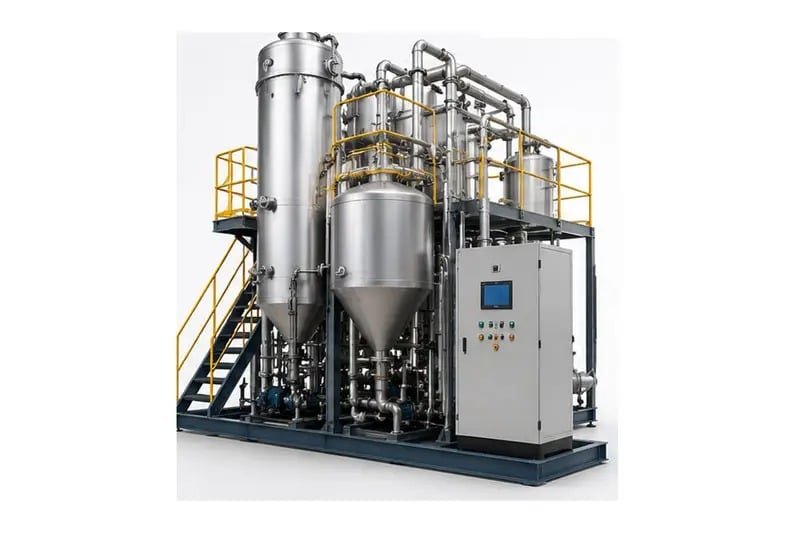
Industrial wastewater treatment requires strategic decisions about salt recovery and disposal methods. Two primary crystallization techniques dominate the field: evaporative crystallization and cooling crystallization. Both technologies remove dissolved salts from wastewater streams, but they operate through fundamentally different mechanisms and serve distinct operational contexts. Understanding the strengths and limitations of each approach is essential for facilities seeking cost-effective and environmentally responsible salt management strategies.
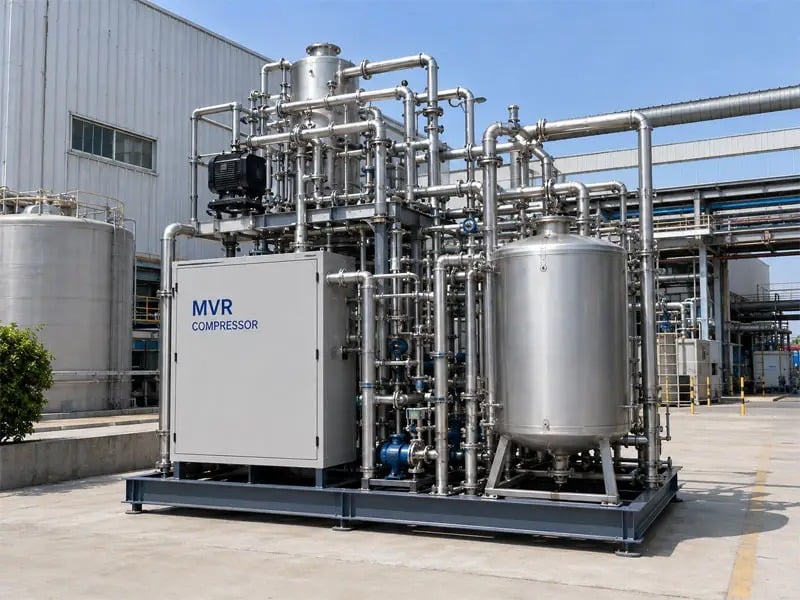
Choosing between these crystallization methods depends on several interconnected factors: feed composition, wastewater temperature, energy availability, space constraints, and downstream salt handling requirements. Process selection directly impacts capital expenditure, operating costs, maintenance burden, and product quality. This guide examines the core mechanisms, operational characteristics, and ideal application scenarios for both evaporative crystallization and cooling crystallization, helping wastewater managers make informed decisions aligned with their facility's unique circumstances and long-term sustainability goals.
Understanding Evaporative Crystallization and Cooling Crystallization
How Evaporative Crystallization Works
Evaporative crystallization removes water from wastewater through thermal energy input, concentrating dissolved salts until crystallization occurs. Heat is applied to the solution, vaporizing water and raising the solute concentration beyond saturation point. As the liquid volume decreases, salt molecules organize into solid crystal structures that separate from the remaining brine. This process works effectively across a wide range of salt types and operates continuously or semi-continuously depending on equipment design. Evaporative crystallization handles variable feed compositions and high initial salt concentrations, making it adaptable to diverse industrial wastewater streams.
How Cooling Crystallization Differs
Cooling crystallization achieves salt separation by reducing solution temperature, which lowers the solubility of dissolved salts and triggers precipitation. Cold water or refrigeration systems remove thermal energy from the wastewater, causing solid salt crystals to form as the solution becomes supersaturated. This approach requires minimal energy input compared to evaporative methods and operates well when the wastewater contains temperature-sensitive compounds. Cooling crystallization is particularly effective for salts with inverse solubility curves, where lower temperatures dramatically reduce salt solubility. Process selection for cooling crystallization emphasizes the solution's thermodynamic properties rather than thermal driving force alone.
Key Operational Differences and Performance Characteristics
Energy Requirements and Operating Costs
Evaporative crystallization demands substantial energy input because water phase change requires significant thermal transfer. Facilities must supply heat through steam, electric heating, or recovered thermal energy to maintain continuous evaporation. Cooling crystallization, by contrast, uses less energy because temperature reduction alone triggers crystallization without requiring phase change energy. However, cooling crystallization in cold climates benefits from ambient air as a free cooling resource, while warm regions must operate mechanical chillers with corresponding energy penalties. Overall, evaporative crystallization typically shows higher energy consumption, translating to increased operating expenses. Process selection strongly considers regional energy costs, utility infrastructure, and available heat recovery opportunities when comparing these crystallization methods.
Space and Equipment Footprint
Evaporative crystallization systems demand space for evaporators, condensers, vapor handling equipment, and crystallizer vessels. Multi-effect evaporators improve thermal efficiency but occupy substantial footprint. Cooling crystallization requires refrigeration units, heat exchangers, and crystallizer tanks; modern designs pack these components more compactly than equivalent evaporative systems. Facilities with limited installation space often favor cooling crystallization because the equipment profile remains relatively modest. Conversely, wastewater treatment plants with available land and existing steam infrastructure may justify evaporative crystallization's larger footprint. Space availability directly influences process selection decisions in industrial settings.
Maintenance and Operating Complexity
Evaporative crystallization systems experience scaling, corrosion, and fouling challenges due to continuous heating and concentration cycles. Regular descaling, tube cleaning, and component replacement sustain performance. Cooling crystallization avoids many scale-related issues because lower temperatures reduce corrosion and precipitation within equipment. Maintenance costs for cooling crystallization typically remain lower because fewer components experience extreme thermal or chemical stress. However, refrigeration systems require specialized technician expertise and regular compressor maintenance. Both crystallization techniques demand skilled operators, but evaporative systems generally require more intensive preventive maintenance programs.
Determining Which Process Selection Fits Your Operation
Evaluating Wastewater Composition and Salt Types
Different salt species exhibit distinct solubility behavior at various temperatures, making composition analysis critical for process selection. Salts with normal solubility curves—where solubility increases with temperature—respond well to cooling crystallization. Cooling crystallization proves especially effective for sodium chloride, potassium salts, and many sulfates. Conversely, salts with inverse solubility curves—calcium sulfate, lithium compounds—crystallize more readily through evaporative methods. Process selection must account for your specific wastewater's mineral composition. Facilities should conduct solubility studies and pilot trials using representative samples before committing to full-scale crystallization infrastructure. Understanding salt chemistry directly determines whether cooling crystallization or evaporative crystallization delivers superior performance for your particular waste stream.
Matching Energy Resources and Climate Conditions
Facilities with excess steam, waste heat from industrial processes, or incineration systems can leverage evaporative crystallization economically because supplementary heat input becomes nearly free. Conversely, facilities in cool climates or regions with low energy costs benefit from cooling crystallization's minimal thermal demands. Process selection aligns with available infrastructure and regional economic factors. A manufacturing plant adjacent to a power generation facility might favor evaporative crystallization, while a distributed treatment site in a temperate region could optimize with cooling crystallization. Long-term energy price trends also influence decisions; rising electricity costs favor evaporative methods if waste heat access improves, while heating cost escalation advantages cooling crystallization.
Assessing Product Quality and Downstream Use
Evaporative crystallization produces well-formed, relatively pure salt crystals suitable for high-value recovery applications. The intense concentration process separates organic contaminants and creates crystalline material meeting commercial specifications. Cooling crystallization often yields smaller crystals with higher water content, better suited for direct disposal or lower-grade applications. If recovered salts support resale or recycling into industrial processes, evaporative crystallization's superior product quality justifies higher operating costs. Process selection depends heavily on whether recovered salts represent a revenue stream or require landfill disposal. Facilities targeting zero-liquid discharge and maximum salt value recovery typically emphasize evaporative crystallization despite operational complexity.
FAQ
Can cooling crystallization handle highly saline wastewater streams?
Cooling crystallization becomes less effective as initial salt concentration increases because extreme saturation requires very low temperatures that strain refrigeration economics. At salt concentrations exceeding 250 grams per liter, evaporative crystallization often becomes more practical because further temperature reduction demands excessive cooling capacity. However, pre-concentration through reverse osmosis or evaporation can condition the feed stream, enabling cooling crystallization to function cost-effectively. Process selection in high-salinity scenarios often involves hybrid approaches combining both crystallization methods sequentially.
Which crystallization method produces environmentally superior outcomes?
Cooling crystallization typically demonstrates lower environmental impact because it requires minimal energy input and avoids vapor emissions associated with evaporative crystallization. However, evaporative crystallization produces higher-purity recovered salts amenable to reuse, reducing overall waste volume. Process selection from an environmental perspective depends on local energy grid carbon intensity, salt disposal regulations, and market demand for recovered materials. In regions with renewable electricity, cooling crystallization becomes increasingly attractive; in facilities with waste heat access, evaporative crystallization can achieve equivalent carbon profiles through efficient heat recovery.
What capital investment should we anticipate for each crystallization approach?
Evaporative crystallization systems typically demand 30–50% higher capital expenditure than cooling crystallization equipment because of increased thermal equipment complexity, instrumentation, and safety systems. Cooling crystallization's simpler design reduces upfront costs, though refrigeration components represent significant capital elements. Process selection must weigh capital budgets against long-term operating expense forecasts. Facilities with strong capital availability but constrained operating budgets often favor evaporative crystallization; those with limited initial investment gravitate toward cooling crystallization despite potentially higher ongoing costs. Comprehensive lifecycle cost analysis including energy, maintenance, labor, and disposal determines true economic advantage for your specific operation.

 EN