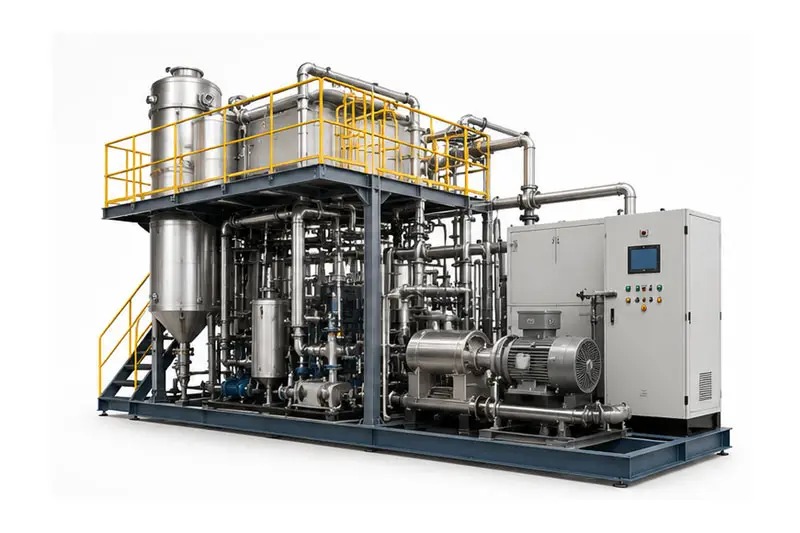
Evaporative crystallization represents one of the most effective methods for managing dissolved solids and salts in industrial wastewater systems. At its core, the process depends on precisely controlling supersaturation levels to achieve predictable nucleation and crystal growth. Understanding how these mechanisms interact is crucial for operators seeking to optimize salt separation and minimize scaling problems in their facilities.
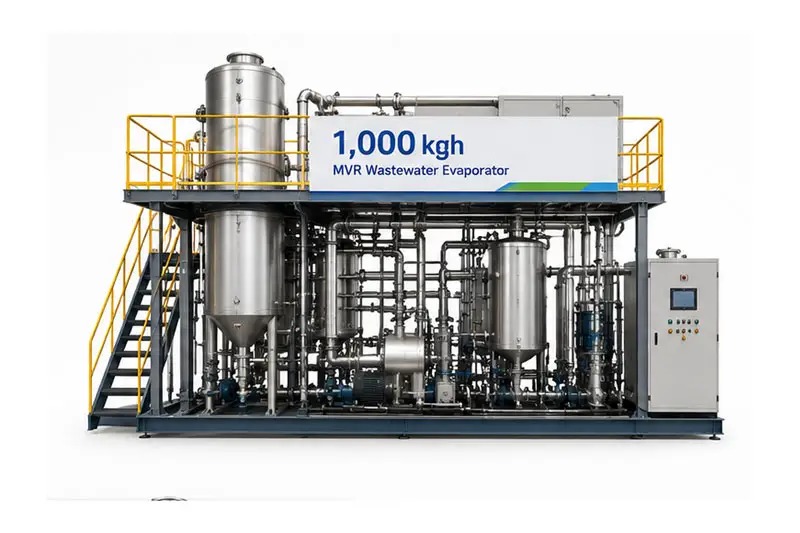
Industrial operations that implement evaporative crystallization successfully reduce disposal costs, recover valuable minerals, and protect downstream equipment from salt accumulation. The key to reliable performance lies in managing the delicate balance between evaporation rates, temperature profiles, and residence time. This guide explores the science behind supersaturation control, the role of nucleation in crystal initiation, and practical strategies for maintaining consistent crystal formation in demanding wastewater environments.
Understanding Supersaturation in Evaporative Crystallization
What Drives Supersaturation States
Supersaturation occurs when a solution contains more dissolved solids than would normally be stable at a given temperature and pressure. In evaporative crystallization systems, controlled removal of water deliberately pushes the solution beyond its saturation point. This thermodynamic imbalance is not accidental; it is the driving force that triggers nucleation and initiates crystal growth. Without carefully managed supersaturation, crystals will not form reliably, and dissolved salts remain suspended in the discharge stream.
Measuring and Maintaining Optimal Saturation Levels
Operators must monitor saturation ratios continuously to avoid two critical problems: insufficient supersaturation, which yields minimal crystal formation, and excessive supersaturation, which triggers uncontrolled precipitation and fouling. Real-time measurement of conductivity, temperature, and solids concentration provides early warning of saturation drift. Evaporative crystallization equipment uses feedback control to adjust heat input and evaporation rates, ensuring the solution remains in the optimal supersaturation window. Maintaining precise control prevents scaling in heat exchangers and distribution pipes, protecting long-term system reliability.
Nucleation Mechanisms and Their Role in Crystal Formation
Primary Nucleation and Seeded Growth
Nucleation is the critical transition from molecular-scale disorder to visible crystal structure. Primary nucleation occurs spontaneously when supersaturation levels exceed a threshold; this produces numerous tiny crystals simultaneously. Secondary nucleation, also called seeded growth, is triggered by introducing seed crystals or by contact with existing crystal surfaces. In industrial evaporative crystallization circuits, seeded nucleation offers superior control because it focuses crystal growth onto existing particle surfaces rather than generating new crystal populations. This strategy reduces fine particles, improves crystal size uniformity, and simplifies downstream separation.
Temperature Dependency of Nucleation Rates
Temperature exerts profound influence over nucleation kinetics and crystal growth. Higher temperatures generally reduce solution density and solubility, accelerating supersaturation at lower evaporation rates. Conversely, rapid cooling can spike nucleation rates abruptly, creating many small crystals rather than fewer large ones. Effective crystallization control requires balancing temperature gradients with residence time to achieve the desired crystal size distribution. In multi-stage evaporative crystallization systems, staged cooling and heating create distinct zones for nucleation initiation, growth promotion, and final equilibration, optimizing both throughput and crystal quality.
Industrial Control Strategies for Reliable Crystal Production
Real-Time Monitoring and Feedback Systems
Modern evaporative crystallization systems rely on sensor networks that track pH, temperature, density, and conductivity throughout the circuit. These data streams feed into control algorithms that adjust evaporation intensity, feed rate, and recirculation flows to maintain supersaturation within narrow bands. Automated feedback prevents dangerous excursions that damage equipment or degrade crystal quality. Many facilities integrate historical data and machine-learning approaches to refine control parameters based on seasonal variations in feed composition and ambient conditions. Continuous optimization of control settings ensures sustained performance over months and years of operation.
Equipment Design for Consistent Crystallization
The physical design of evaporative crystallization vessels directly impacts nucleation behavior and crystal growth rates. Crystallizers designed with gentle circulation patterns support stable nucleation and minimize attrition, while aggressive agitation can fragment crystals and trigger secondary nucleation at unwanted times. Many industrial systems employ draft tubes, baffles, or internal cooling surfaces to create distinct zones within a single vessel. These design features promote nucleation in designated areas, concentrate growing crystals in settling zones, and maintain consistent supersaturation throughout the active crystallization chamber. Proper equipment geometry ensures predictable crystal formation even when feed composition or evaporation rates fluctuate.
FAQ
How does evaporative crystallization differ from other salt separation methods?
Evaporative crystallization selectively removes dissolved salts by inducing controlled nucleation and crystal growth through managed supersaturation, unlike reverse osmosis or distillation which rely on membrane barriers or thermal vaporization. The key advantage is that crystal formation allows recovery of salt values while producing a clean discharge stream. Nucleation-driven crystallization is particularly effective for handling high-salinity feeds and complex salt mixtures because it concentrates dissolved solids into removable solid phases rather than energy-intensive phase changes.
What happens if supersaturation levels become too high?
Excessive supersaturation triggers uncontrolled primary nucleation, producing countless tiny crystals that clog filters, foul piping, and accumulate on heat transfer surfaces. This condition is called fouling and seriously degrades system performance. Crystal growth suffers because available solute spreads across too many particles, preventing formation of large, easily settleable crystals. In evaporative crystallization systems, rapid supersaturation excursions can cause catastrophic precipitation events that require emergency shutdown and manual cleaning. Real-time control systems prevent this scenario by maintaining supersaturation below critical thresholds.
Can nucleation be completely prevented in an evaporative crystallization system?
No; nucleation is the desired outcome in any practical crystallization circuit. However, operators can control the timing, location, and rate of nucleation through careful management of temperature, residence time, and agitation. Preventing all nucleation would mean preventing all crystal formation, which defeats the purpose of crystallization as a separation method. Instead, the goal is to initiate nucleation in controlled zones under stable conditions, promoting orderly crystal growth and high-quality solid products suitable for disposal or mineral recovery.

 EN