Water treatment is not a one-size-fits-all proposition. Every industrial facility, municipality, and commercial operation faces unique water challenges based on source water characteristics and intended applications. The effectiveness of any treatment solution depends entirely on how well the custom water treatment equipment is engineered to match both incoming feed water quality and the specific end use requirements of your operation.
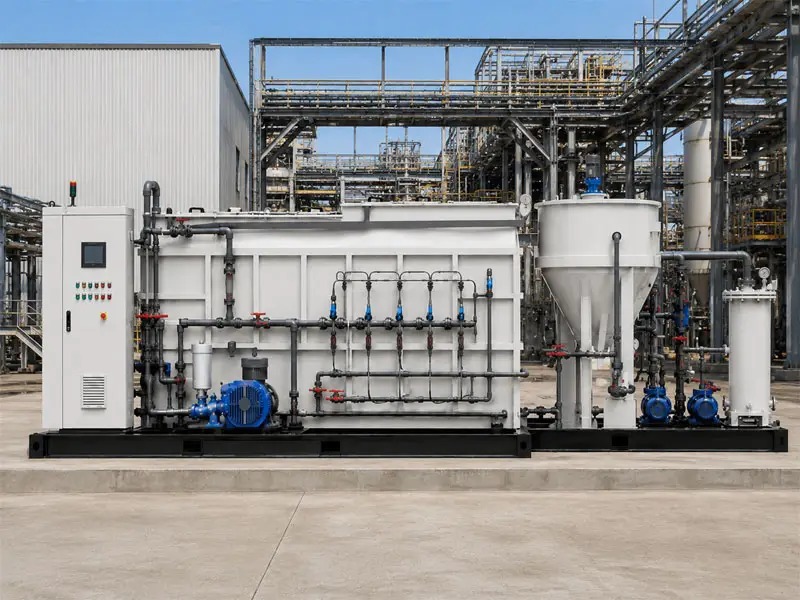
Understanding the relationship between feed water composition, treatment process design, and end use specifications is critical for selecting or designing equipment that delivers reliable performance. This guide explores how customization works in water treatment, why one-size-fits-all approaches fail, and what factors determine the right configuration for your facility.
Understanding Feed Water Characteristics and Treatment Process Design
Assessing Your Source Water Profile
The feed water entering your treatment system carries dissolved solids, suspended particles, microorganisms, and chemical compounds that vary dramatically based on source. Municipal water differs from groundwater, surface water differs from industrial process water, and recycled water presents entirely different challenges. Before any customization strategy can begin, feed water must be comprehensively analyzed for turbidity, hardness, pH, salinity, iron content, organics, and specific contaminants relevant to your region or industry.
This analysis forms the foundation of process design. If your feed water contains high suspended solids, your treatment process must include robust coagulation and filtration stages. If salinity is elevated, reverse osmosis or ion exchange becomes necessary. If biological growth is a risk, UV or chlorination becomes part of the process. Customization begins with honest assessment of what your incoming water actually contains, not assumptions about what it should contain.
Designing the Treatment Process for Your Feed Water
Once feed water characteristics are documented, the treatment process architecture can be engineered specifically to address those challenges efficiently. A facility using well water high in iron and manganese needs different customization than one treating surface water with seasonal algal blooms. The sequence of treatment stages, residence times, chemical dosing rates, and filter configurations all flow from this feed water analysis.
Effective customization means eliminating unnecessary treatment steps that waste energy and chemicals while ensuring sufficient capacity in critical stages. Your process design becomes lean and targeted rather than over-built or under-equipped. This approach directly reduces operational costs while improving treatment reliability.
Aligning Equipment Specifications with End Use Demands
Defining Your End Use Requirements
End use requirements establish the quality standards your treated water must meet. Potable water, cooling water, process water for pharmaceuticals, boiler feedwater, and irrigation each demand different purity levels, pH ranges, hardness limits, and microbiological standards. High-purity industrial applications may require total dissolved solids below 10 mg/L, while cooling applications might accept 500 mg/L. Boiler feedwater demands silica removal that end use for washing does not.
Your end use specification drives equipment selection more than any other factor. Pharmaceutical process water demands polishing stages and microbial barriers that municipal non-potable use does not. Food and beverage production requires different customization than textile manufacturing. When end use requirements are clearly defined upfront, the equipment configuration practically designs itself.
Matching Equipment Capacity and Technology Selection
Customization also means right-sizing equipment capacity to match actual demand patterns and peak flow requirements. An undersized system cannot meet peak end use demands and creates bottlenecks. An oversized system wastes capital and energy. Flow rate analysis determines tank volumes, filter areas, membrane surface, and pump specifications that align with how your operation actually uses water throughout the day or production cycle.
Technology selection within your process also depends on end use. Ultrafiltration may be sufficient for some applications while reverse osmosis is required for others. Activated carbon addresses taste and odor for potable end use but may be unnecessary for cooling water. Each technology component is chosen because it solves a specific problem identified in the feed water analysis and supports the end use quality target.
Achieving Operational Efficiency Through Strategic Customization
Balancing Treatment Performance with Operating Costs
Customization is not about adding every possible treatment technology. It is about engineering the minimum necessary configuration to reliably achieve your end use standards from your specific feed water. Overtreatment wastes resources. Undertreatment fails to meet requirements. Strategic customization finds the optimal balance by matching treatment process intensity precisely to what your feed water contains and what your end use demands.
This precision reduces chemical consumption, minimizes wastewater generation, and lowers energy demand. An operation using well water may need only softening and basic filtration, while another facility treating contaminated surface water needs advanced oxidation and multi-stage filtration. The difference in equipment complexity, operating cost, and maintenance reflects the difference in feed water and end use, not arbitrary feature additions.
Ensuring Long-Term Reliability and Compliance
Customized equipment designed specifically for your feed water and end use operates predictably and maintains compliance with regulations or internal specifications. You avoid the degraded performance that results when generic equipment receives water it was not engineered to handle. Sizing, material selection, automation logic, and maintenance protocols can all be tailored to your actual operating conditions rather than industry averages.
This targeted approach also simplifies troubleshooting. When performance deviates, you understand how your specific equipment interacts with your specific water supply. Staff training becomes more focused and effective. Spare parts are stocked strategically for your configuration. Predictive maintenance protocols are customized to your equipment and water quality.
FAQ
Why should I invest in customization rather than purchasing standard water treatment equipment?
Standard equipment is designed for average conditions and typically requires oversizing, process compromises, or supplemental treatment to work reliably. Customization eliminates wasted capacity and unnecessary steps, delivering exactly what your feed water needs and your end use demands. Over the equipment lifetime, the capital and operating savings from customization typically exceed the engineering investment required to tailor the system properly.
How does feed water analysis influence equipment customization decisions?
Feed water analysis reveals the specific contaminants and water quality parameters your treatment process must address. This analysis determines which treatment technologies are necessary, how they must be sequenced, and what capacity each stage requires. Without this analysis, customization cannot be science-based and equipment selection remains guesswork that often leads to poor performance or unnecessary cost.
Can end use requirements change without requiring equipment modifications?
In some cases, minor adjustments to chemical dosing, filter cleaning cycles, or polishing stages can adapt equipment to modest changes in end use requirements. However, significant shifts in end use standards may require adding treatment stages, upgrading membrane specifications, or reconfiguring the process flow. This is why defining end use requirements clearly upfront is essential to avoiding costly retrofits later.

 EN






