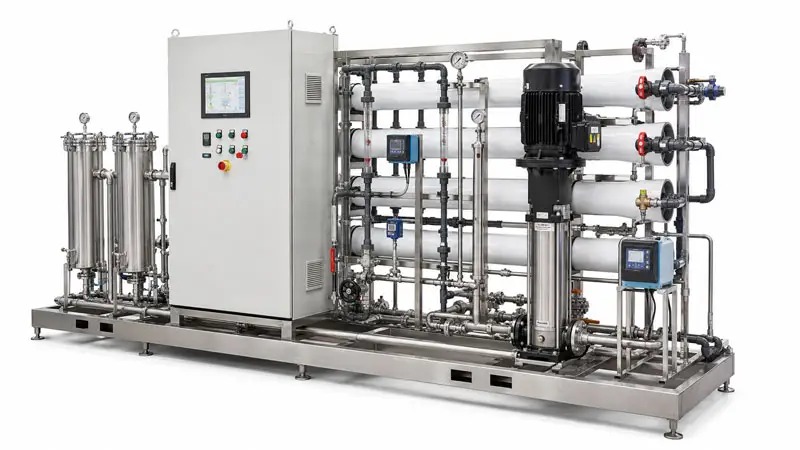
The success of any industrial reverse osmosis plant depends fundamentally on the quality of pretreatment applied upstream. Many operators focus exclusively on membrane performance, filtration speed, or recovery rates, yet overlook that inadequate pretreatment is the primary driver of system failures, costly downtime, and premature membrane replacement. When pretreatment falls short, even the most advanced RO membranes cannot deliver expected performance or longevity.
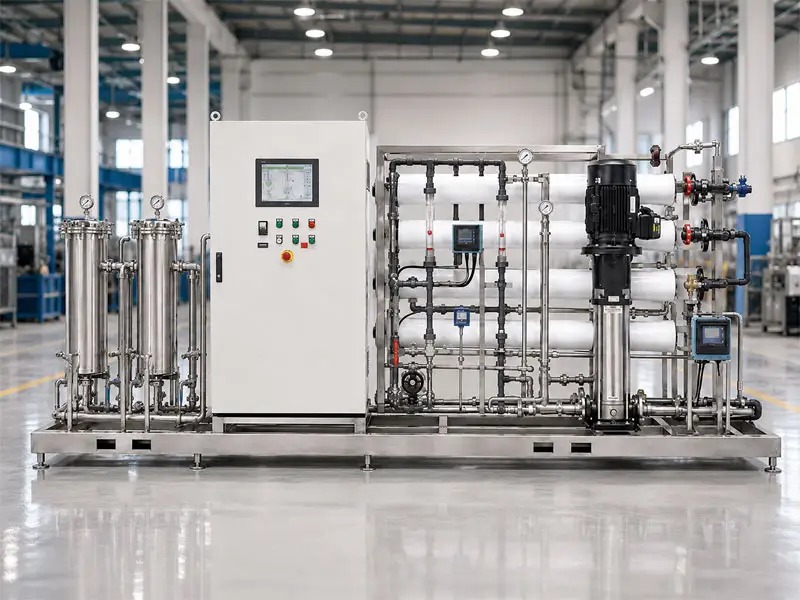
Understanding how pretreatment quality determines reliability reveals why investment in robust upstream treatment safeguards the entire system. Fouling, scaling, and biological contamination originate upstream, and no amount of membrane optimization can compensate for poor pretreatment practices. This article examines the direct relationship between pretreatment excellence and industrial reverse osmosis plant operational stability.
The Critical Role of Pretreatment in RO System Stability
Why Pretreatment Quality Directly Impacts Reliability
Pretreatment removes suspended solids, colloids, bacteria, and organic compounds before water enters RO membranes. When pretreatment is weak, these contaminants accumulate on membrane surfaces, causing fouling that increases pressure drop, reduces permeate flow, and accelerates membrane degradation. An industrial reverse osmosis plant without strong pretreatment faces reliability challenges that manifest within weeks of operation.
The relationship between pretreatment quality and fouling is direct and measurable. Poor pretreatment allows silt density index (SDI) levels to exceed safe thresholds, leading to rapid membrane blockage. Effective pretreatment maintains SDI below 3, ensuring the industrial reverse osmosis plant operates predictably and maintains consistent flow rates. Each layer of pretreatment—coagulation, sedimentation, sand filtration, and cartridge filtration—removes specific contaminant categories that RO membranes cannot tolerate.
Fouling Prevention Through Superior Pretreatment
Fouling represents the greatest threat to industrial reverse osmosis plant reliability. Particulate fouling clogs membrane pores, biofouling allows microorganism growth in the pressure vessel, and organic fouling creates biofilm that resists cleaning. Pretreatment eliminates the root causes before they reach the membrane. Sand filters remove suspended particles down to 20 microns, while multimedia filters and cartridge stages push final particle removal to 5 microns or finer.
Chemical pretreatment—including coagulation, pH adjustment, and anti-scalant dosing—addresses fouling mechanisms that physical filtration cannot. Coagulants neutralize colloidal charges, allowing suspended particles to aggregate and settle. This reduces the load on downstream RO membranes significantly. An industrial reverse osmosis plant equipped with both mechanical and chemical pretreatment avoids the sudden pressure spikes and flow loss that signal membrane fouling and operational failure.
Pretreatment Technologies That Enhance System Longevity
Multimedia Filtration and Cartridge Stages
Multimedia filtration combines sand, anthracite, and garnet in a single vessel, creating layered particle capture from coarse to fine. This approach reduces turbidity to 0.1 NTU or lower, a critical benchmark for industrial reverse osmosis plant protection. Cartridge filters positioned after multimedia filtration provide a final polishing stage, capturing remaining submicron particles and extending RO membrane life by months.
Cartridge selection directly influences fouling risk in an industrial reverse osmosis plant. Pleated cartridges offer higher surface area and longer service intervals than flat or spiral designs. Switching from low-micron (20-micron) cartridges to ultra-high-efficiency 5-micron or 1-micron variants can reduce RO membrane fouling events by 60 percent or more. The modest cost of premium pretreatment equipment is recovered quickly through extended membrane lifespan and reduced unplanned maintenance.
Chemical Conditioning and Anti-Scalant Integration
Chemical pretreatment prevents scaling by addressing water chemistry upstream. Acid injection lowers pH to prevent carbonate scaling, while anti-scalant compounds sequester calcium, magnesium, and silica. For an industrial reverse osmosis plant operating on challenging feedwater—high hardness, high silica, or high organics—chemical pretreatment is non-negotiable. Without it, scaling accumulates on membrane surfaces within days, raising operating pressure and reducing reliability.
Biocides and chlorine removal are equally essential pretreatment steps. Chlorine oxidizes RO membranes irreversibly if allowed through, while residual biocides prevent microbial growth in the RO vessel. Activated carbon filters remove chlorine and organics, sodium bisulfite scavenges residual oxidant, and periodic biocide dosing maintains a biofilm-free environment. These measures ensure an industrial reverse osmosis plant operates without the biological fouling that degrades reliability and forces emergency membrane replacement.
Operational Impact of Inadequate Pretreatment on System Reliability
Pressure Rise, Flow Decline, and Membrane Stress
When pretreatment fails to remove contaminants effectively, the industrial reverse osmosis plant experiences pressure creep—feed pressure gradually rising to maintain constant permeate flow. This indicator signals membrane fouling and reflects that inadequate pretreatment has allowed contaminants through. Operating under high pressure accelerates membrane degradation, increases energy consumption, and reduces system reliability. A plant that should operate at 200 psi begins demanding 250, 300, or higher—a sign that fouling has progressed past the point of simple cleaning.
Permeate flow decline mirrors pressure rise and reveals pretreatment deficiency more clearly. When an industrial reverse osmosis plant loses 20 percent of production capacity within three months despite new membranes, poor pretreatment is the root cause. RO fouling does not resolve through temporary cleanings; it compounds. Each fouling episode leaves organic residues and biological films that resist chemical cleaning, making the industrial reverse osmosis plant progressively less reliable until membranes must be replaced.
Maintenance Burden and Total Cost of Ownership
Inadequate pretreatment transforms an industrial reverse osmosis plant into a high-maintenance liability. Frequent chemical cleanings interrupt production, consume expensive cleaning solutions, and risk membrane damage if performed too aggressively. Membrane replacement cycles shorten from 5–7 years to 2–3 years, multiplying consumable costs and labor. An industrial reverse osmosis plant designed for reliability must invest in pretreatment that prevents fouling rather than treating it after the fact.
The economic logic is straightforward. Robust pretreatment costs 15–25 percent of total system capital investment upfront but eliminates 70–80 percent of membrane replacement and maintenance expenses over a ten-year operating period. An industrial reverse osmosis plant with weak pretreatment may appear cheaper initially but becomes a cost center through constant troubleshooting, emergency repairs, and unexpected downtime. Facilities that prioritize pretreatment quality achieve superior reliability, predictable operating costs, and system availability that justifies the initial investment.
FAQ
What SDI level ensures reliability in an industrial reverse osmosis plant?
SDI below 3 is the industry standard for RO feed water. Many operators aim for SDI below 2 for maximum reliability. An industrial reverse osmosis plant receiving feedwater with SDI above 5 will experience rapid fouling and membrane failure. SDI testing every shift ensures pretreatment effectiveness and early warning of system degradation.
How often should pretreatment equipment be maintained or replaced?
Sand filters should be backwashed every 2–4 days depending on feedwater quality and flow rate. Cartridge filters require replacement every 3–6 months or when pressure differential exceeds design limits. An industrial reverse osmosis plant operator should establish a preventive maintenance schedule based on feedwater characteristics, not just calendar intervals. Monitoring differential pressure across each pretreatment stage provides early warning of declining performance before fouling reaches the RO membranes.
Can an industrial reverse osmosis plant recover from membrane fouling caused by poor pretreatment?
Chemical cleaning can temporarily restore performance, but fouling damage is often permanent. Organic films and biological biofilms resist cleaning and re-colonize quickly if pretreatment remains inadequate. The best strategy is prevention through superior pretreatment rather than recovery. Once an industrial reverse osmosis plant suffers severe fouling, membrane replacement is typically the only reliable path to restoring full operational capacity and reliability.

 EN