Industrial wastewater treatment facilities face mounting pressure to reduce operational footprints while maintaining treatment performance. Compact treatment solutions have become essential for manufacturers operating in space-constrained environments. Biofilm-based systems, particularly those using moving bed reactor (MBBR) technology, have emerged as a practical answer to this challenge. These systems deliver robust treatment capability in significantly smaller facility dimensions than conventional approaches, making them increasingly attractive for industrial operations seeking efficiency gains without sacrificing water quality outcomes.
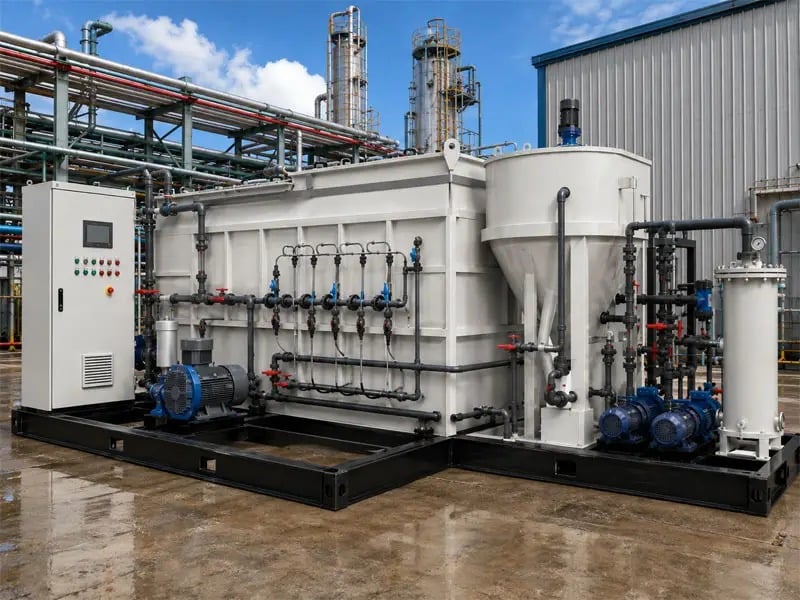
A biofilm system leverages naturally occurring microbial communities that attach to suspended media, creating a high-density biological processing environment. This mechanism differs fundamentally from conventional activated sludge approaches, where microorganisms remain suspended in the liquid phase. By concentrating biomass on carrier surfaces within a compact reactor vessel, mbbr sewage treatment technology achieves superior treatment rates per unit volume. Industrial facilities implementing these systems report significant reductions in land area requirements, making them particularly valuable in urban industrial zones and retrofit applications where space scarcity drives capital constraints.
Compact Footprint and Space Efficiency
Maximizing Treatment Capacity in Limited Areas
Industrial plants operating within geographic or property limitations cannot afford to dedicate excessive square footage to wastewater processing. Biofilm systems achieve exceptional volumetric treatment efficiency by concentrating active biomass within a compact footprint. The carrier media in these reactors provides enormous surface area for microbial colonization, sometimes exceeding 600 square meters per cubic meter of reactor volume. This high specific surface area enables treatment rates that would require substantially larger conventional tanks. For industrial facilities, the compact footprint advantage translates directly into lower real estate costs, reduced civil works expenses, and easier integration into existing plant layouts.
Retrofit and Space-Constrained Applications
Many industrial sites operate within established facility boundaries where expanding treatment infrastructure would require property acquisition or operational disruption. Biofilm technology addresses this constraint through its inherently efficient design. A single compact reactor can often replace multiple larger conventional tanks, freeing valuable industrial space for production activities. The reduced footprint also simplifies permitting procedures and reduces the environmental impact assessment complexity associated with facility modifications. Industrial operators can upgrade treatment capabilities without major facility redesign or relocation concerns.
Load Stability and Treatment Resilience
Maintaining Performance During Load Fluctuations
Industrial production cycles inherently generate variable wastewater flows and concentration levels. Biofilm systems demonstrate superior resilience during these fluctuations because the immobilized biomass acts as a biological buffer. When organic loads spike, the biofilm's established microbial community can respond quickly without the washout risks that threaten suspended-growth systems. Load stability in biofilm reactors results from multiple factors: the biomass concentration remains relatively constant regardless of hydraulic variation, the established biofilm matrix protects cells from transient toxicity events, and the high specific surface area provides redundant treatment capacity. Industrial facilities processing seasonal products or experiencing demand-driven production variations benefit significantly from this inherent load stability characteristic.
Reduced Sludge Handling and Disposal Burden
Conventional activated sludge systems generate excess biomass requiring continual removal, thickening, dewatering, and disposal. These sludge-handling operations represent substantial operational expenses and environmental considerations for industrial treatment plants. Biofilm systems produce significantly less excess sludge because the attached biomass remains relatively constant once the system reaches steady state. The biofilm naturally regulates its thickness through sloughing mechanisms that prevent excessive growth. Industrial operators report reduced sludge disposal costs and simplified solids-handling infrastructure when transitioning to biofilm systems. This operational benefit extends the economic attractiveness of compact biofilm systems beyond initial capital savings into long-term recurring cost reductions.
Industrial Application Benefits and Implementation
Supporting Diverse Industrial Wastewater Characteristics
Industrial wastewater streams vary widely depending on manufacturing processes, ranging from food and beverage operations to pharmaceutical manufacturing and chemical processing. Biofilm systems demonstrate robust treatment performance across this diversity because the immobilized biomass can support specialized microbial communities tailored to specific contaminants. The compact footprint accommodates modular expansion, allowing industrial facilities to add reactor capacity as production scales without requiring proportional facility expansion. The flexibility of biofilm configuration supports industrial sectors with space constraints, variable product lines, or uncertain future capacity requirements. This adaptability makes biofilm technology a strategically sound investment for industrial plants anticipating operational changes.
Economic Factors Supporting Industrial Adoption
The economic case for biofilm systems in industrial applications combines capital cost reduction with operational efficiency gains. The compact footprint reduces civil construction expenses, site preparation costs, and ongoing utility demands for aeration and mixing. Industrial facilities achieve faster return on investment through lower maintenance requirements compared to conventional systems. The reduced sludge production cuts disposal expenses, and the system's load stability reduces the likelihood of treatment upset events that could trigger regulatory violations and associated penalties. When industrial operators evaluate treatment system alternatives, biofilm technology consistently demonstrates superior life-cycle economics in space-constrained scenarios. The combination of reduced property requirements, lower operational complexity, and predictable performance creates compelling value propositions for industrial decision-makers.
FAQ
What specific industrial sectors benefit most from biofilm compact treatment systems?
Industrial sectors generating moderate-strength wastewater with consistent characteristics show optimal results. Food and beverage processing, small-scale pharmaceutical manufacturing, specialty chemical operations, and metal fabrication facilities represent common applications. The compact footprint particularly suits urban industrial zones where property costs are high and space availability is limited. Automotive parts suppliers, printing operations, and textile finishing facilities have successfully implemented biofilm systems when conventional treatment infrastructure was impractical due to site constraints.
How does mbbr sewage treatment perform compared to conventional activated sludge in industrial settings?
Mbbr sewage treatment consistently outperforms conventional approaches in space-constrained applications through superior volumetric efficiency and load stability. Industrial facilities report 40 to 60 percent smaller reactor volumes achieving equivalent treatment performance. The biofilm's resilience during organic load fluctuations provides greater operational margin during production variations. Conventional systems often require larger clarifiers and more complex solids handling, while biofilm systems maintain simpler operating procedures. Industrial operators cite predictability and reduced sludge disposal as significant operational advantages favoring biofilm implementation.
Are there industrial scenarios where biofilm systems present challenges or limitations?
Biofilm systems require consistent hydraulic flow to maintain carrier media in suspension, making them less suitable for highly variable intermittent discharge patterns common in some industrial operations. Wastewater containing excessive grease or fibrous materials can foul carrier media, requiring enhanced preprocessing. Industrial facilities with extremely high-strength wastewater may require staged biofilm configuration rather than single-reactor design. However, these limitations typically apply to relatively few industrial scenarios, and appropriate system design modifications can address most constraints.

 EN






