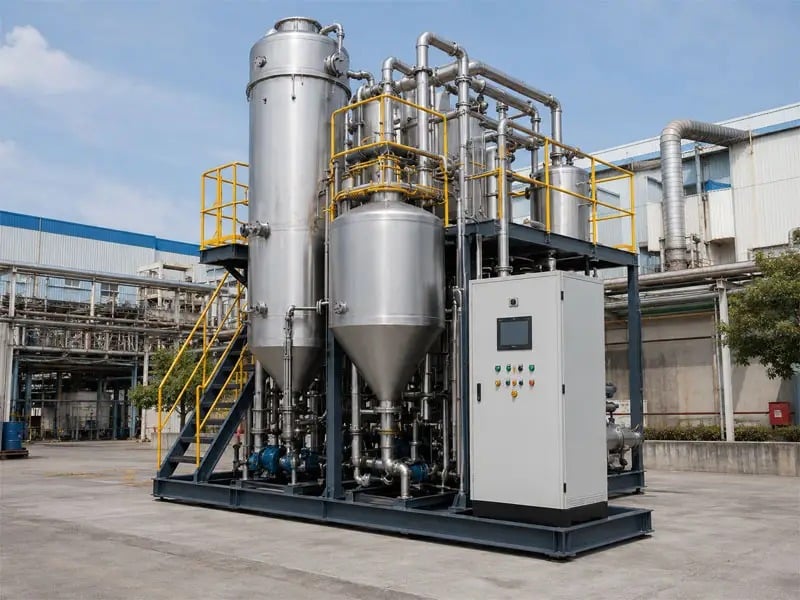
Deciding when to install an evaporator for wastewater treatment is a critical operational and financial decision that directly impacts your facility's compliance, sustainability goals, and bottom line. Many industrial operations defer this investment until regulatory pressure or process inefficiencies force their hand, but the ideal timing depends on several measurable conditions related to water quality, discharge regulations, and operational economics.
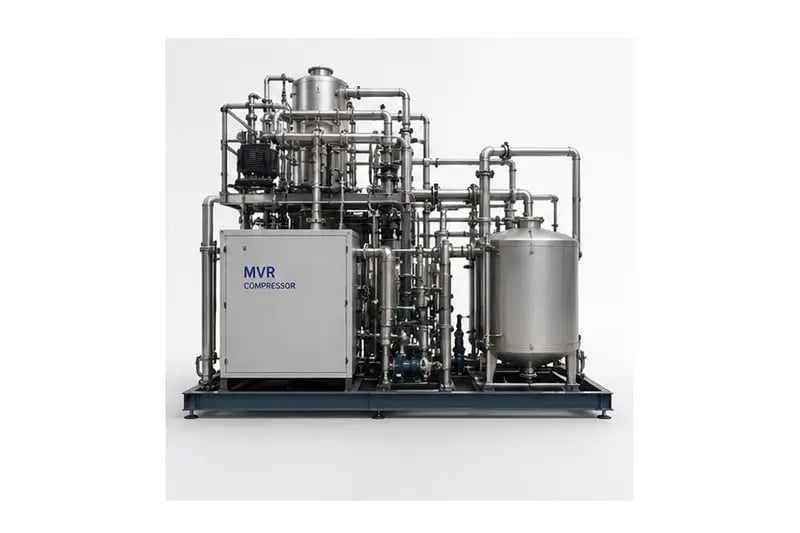
When your wastewater exhibits high TDS (total dissolved solids) levels that exceed 5,000 mg/L, conventional treatment methods like reverse osmosis or chemical precipitation often become ineffective or prohibitively expensive. An evaporator for wastewater treatment concentrates dissolved minerals, salts, and contaminants, allowing you to recover clean water for reuse while minimizing disposal costs. Understanding the specific triggers for evaporator installation helps you time the investment strategically and maximize return on capital.
High TDS Levels as a Key Installation Signal
Recognizing TDS Thresholds and Treatment Limitations
High TDS concentrations in wastewater arise from mineral-rich source water, industrial process chemicals, or repeated recycling. When TDS climbs above conventional treatment capacity, membrane systems foul rapidly, reject rates fall, and disposal or treatment costs escalate. An evaporator for wastewater treatment excels precisely in these scenarios because it uses thermal energy to evaporate water, leaving concentrated solids behind. This separation mechanism works regardless of TDS level, making it ideal for waste streams where high TDS has rendered other technologies uneconomical.
The decision point typically arrives when your discharge costs per gallon, combined with regulatory compliance expenses, exceed the annualized cost of evaporator operation. If your facility currently spends significant capital on external waste disposal, haul-away fees, or chemical treatment to reduce TDS, an evaporator for wastewater treatment becomes financially justified. High TDS also signals that water reuse potential is being lost; evaporators recover 70–90% of feed water as clean condensate, directly reducing your freshwater intake and offsetting operating costs.
Integration with Existing Treatment Trains
Evaporators are most effective when installed downstream of primary and secondary treatment stages. If your facility already has clarifiers, biological reactors, or chemical treatment systems, high TDS in the polishing stage indicates that an evaporator for wastewater treatment should follow. This positioning allows the evaporator to handle only the most concentrated stream rather than processing entire facility throughput. Staging treatment this way reduces evaporator size, capital investment, and energy consumption while protecting the system from particulates and biological fouling.
ZLD Goals and Regulatory Compliance Drivers
When Zero Liquid Discharge Becomes Mandatory
Certain industries and geographies face zero liquid discharge (ZLD) mandates or water stress conditions that make wastewater reuse non-negotiable. Textile mills, food processing plants, semiconductor manufacturers, and chemical producers operating in water-scarce regions increasingly adopt ZLD to eliminate liquid discharge entirely. An evaporator for wastewater treatment is the core technology enabling ZLD because it concentrates wastewater to a dried solid residue while recovering water for reuse. When your regulatory environment mandates ZLD compliance or your facility sits in a region where water permits are becoming restricted, installing an evaporator for wastewater treatment shifts from optional to essential.
The timing advantage of early adoption is significant. Facilities that proactively install an evaporator for wastewater treatment ahead of regulatory deadlines avoid rushed, costly installations and maintain operational continuity. They also secure vendor resources, engineering expertise, and installation scheduling before demand surges. If your industry is trending toward ZLD standards or your operating permits are up for renewal, the decision window to install an evaporator for wastewater treatment closes quickly, and delaying often means emergency capital allocation and extended downtime.
Environmental and Reputational Benefits
Beyond compliance, an evaporator for wastewater treatment delivers tangible sustainability advantages that enhance corporate reputation and attract environmentally conscious customers. Eliminating liquid discharge protects local water bodies, reduces environmental liability, and demonstrates commitment to circular economy principles. For B2B suppliers subject to ESG (environmental, social, governance) audits or corporate sustainability pledges, adopting an evaporator for wastewater treatment is often a competitive differentiator. The reuse of recovered water also reduces freshwater intake, lowering municipal water charges and supporting water conservation goals that resonate with stakeholders and regulators alike.
Water Reuse Economics and Concentration Scenarios
Determining When Reuse Becomes Economically Viable
The financial case for an evaporator for wastewater treatment strengthens when recovered water can be reused in-process or sold to adjacent facilities. If your facility uses significant quantities of cooling water, wash water, or process makeup, recovered condensate from an evaporator for wastewater treatment offsets freshwater purchases immediately. The payback period depends on three factors: freshwater cost, wastewater disposal cost, and evaporator energy consumption. In regions where freshwater exceeds $3–5 per thousand gallons and disposal costs are high, evaporators often achieve 3–5 year payback and generate positive NPV within a decade.
Concentration scenarios also influence timing. If your wastewater stream contains valuable materials (metals, salts, or specialty chemicals), an evaporator for wastewater treatment enables material recovery and resale, adding incremental revenue. Food and beverage processors, for example, often recover dissolved sugars or nutrients, creating secondary revenue streams. Mining and mineral processing operations extract salable minerals from evaporator concentrate. When your waste stream contains recoverable value, an evaporator for wastewater treatment transitions from a cost-reduction tool to a profit center, dramatically accelerating the business case and installation timeline.
Measuring System Payback and Capacity Alignment
Before committing to an evaporator for wastewater treatment, quantify your wastewater volume, concentration trajectory, and true cost of current disposal practices. If your facility generates 10,000–50,000 gallons per day of high TDS waste, evaporators achieve optimal economics. Very small flows may not justify the capital; very large flows may require multiple units or alternative approaches. Model several scenarios: worst-case (today's costs), regulatory-driven (future mandates), and best-case (material recovery). An evaporator for wastewater treatment typically makes sense when at least two of these scenarios show positive returns within your capital planning horizon.
FAQ
What is the minimum TDS level that justifies an evaporator for wastewater treatment?
Most evaporators become economically justified when wastewater exceeds 5,000–8,000 mg/L TDS, though this threshold varies by regional water costs and disposal fees. If your current disposal or treatment method already costs more than $1–2 per gallon and your TDS is consistently above 5,000 mg/L, an evaluation of evaporator systems is warranted. Some facilities with lower TDS but very high disposal costs still benefit from an evaporator for wastewater treatment, so total lifecycle economics matter more than TDS alone.
How much water can an evaporator for wastewater treatment recover for reuse?
Most modern evaporators recover 70–90% of feed water as clean condensate suitable for reuse, while concentrating 10–30% as a solid or liquid waste stream. The exact recovery rate depends on feed composition, evaporator type, and operational parameters. This high recovery percentage makes reuse economics attractive, especially when freshwater is scarce or expensive. The recovered water quality is typically excellent, often requiring minimal additional polishing before cooling tower or process use.
Should I install an evaporator for wastewater treatment now or wait for regulations to mandate it?
Proactive installation typically offers financial and operational advantages over reactive deployment. Early adopters avoid regulatory deadlines, secure better vendor resources, spread capital costs over longer operational life, and optimize system integration into existing treatment trains. If your facility is already spending significantly on wastewater disposal or faces water scarcity, installing an evaporator for wastewater treatment now generates immediate cost savings and competitive advantage. Waiting until mandatory compliance deadlines often forces rushed decisions, emergency capital allocation, and suboptimal system sizing.

 EN