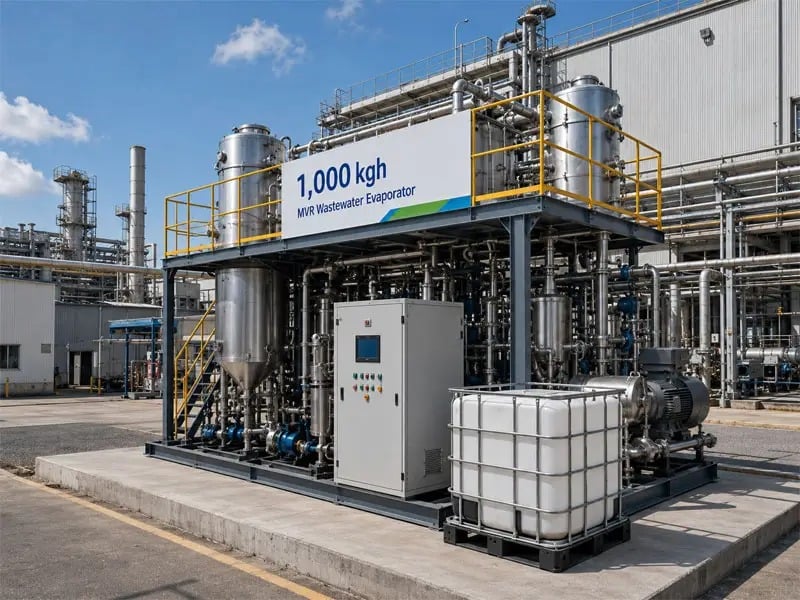
Before deploying an mvr evaporator system into full production, comprehensive testing protocols must be executed to validate design specifications, operational safety, and process reliability. Commissioning an mvr evaporator system represents a critical phase in the project lifecycle where theoretical engineering meets real-world performance. Without rigorous pre-commissioning testing, operators face significant risks including equipment failure, inefficient operation, safety incidents, and costly downtime.
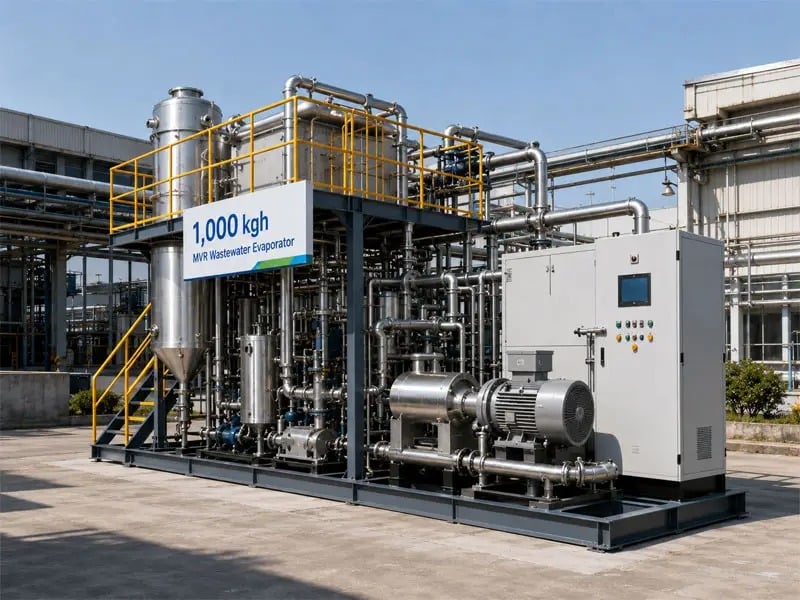
The commissioning process for an mvr evaporator system follows a structured approach that begins long before operational startup. Factory Acceptance Testing, Site Acceptance Testing, and controls validation form the backbone of this verification framework. Each testing phase serves a distinct purpose: FAT confirms the equipment meets design intent in a controlled environment, SAT validates performance in the actual operational setting, and controls testing ensures all automation systems function safely and reliably. Understanding these testing requirements enables facility managers to transition smoothly from installation to reliable production operation.
Factory Acceptance Testing for MVR Evaporator Equipment
Scope and Objectives of FAT
Factory Acceptance Testing represents the first formal validation step for an mvr evaporator system and occurs at the manufacturer's facility or fabrication shop. During FAT, engineers verify that the equipment has been constructed according to design specifications, technical drawings, and contractual requirements. This phase includes mechanical integrity checks, pressure testing, hydrostatic testing of vessels, and inspection of all critical welds and connections. FAT also validates that instrumentation has been calibrated correctly, that all safety interlocks respond as designed, and that backup systems function properly. The objective is to identify and resolve manufacturing defects or design issues before the equipment ships to the site.
Key Testing Elements During FAT
Pressure vessel certification forms a core element of FAT for any mvr evaporator system. All evaporation vessels, heat exchangers, and condensers must undergo hydrostatic pressure testing to verify structural integrity and weld quality. Visual inspections by certified personnel examine surface conditions, corrosion resistance, and material consistency. Instrumentation testing confirms that temperature sensors, pressure gauges, flow meters, and level switches operate within acceptable accuracy ranges. Mechanical systems including pumps, fans, and compressors are tested individually under controlled conditions. Vibration analysis, noise testing, and thermal imaging may be performed to detect anomalies. Controls verification ensures that the programmable logic controller, touchscreen interface, and alarm systems respond correctly to simulated process conditions. Documentation of all FAT results provides objective evidence that the mvr evaporator system meets baseline requirements before shipment.
Site Acceptance Testing and Operational Verification
Installation Verification and Baseline Testing
Site Acceptance Testing validates that the mvr evaporator system operates correctly within the actual facility environment after installation and connection. SAT begins with mechanical verification that all equipment is properly anchored, piped, and electrically connected according to design documents. Initial baseline testing includes functional checks of all pumps, motors, and automated systems under no-load conditions. Utility systems such as cooling water supply, electric power, compressed air, and thermal energy sources are confirmed to meet specification requirements. Pressure drop testing across heat exchangers and piping systems is performed to verify that flow paths match design assumptions. Temperature stratification in storage tanks is evaluated to ensure proper heat recovery. Vibration signatures are recorded as a baseline reference for future condition monitoring. This phase typically occurs with minimal feedstock or under simulated conditions to isolate equipment performance from process variables.
Process Performance Testing Under Load
Once baseline verification is complete, the mvr evaporator system undergoes gradual commissioning under actual or simulated feed material. Initial throughput is kept low to allow operators to observe equipment behavior and confirm that process measurements align with design expectations. Evaporation rate is verified against design capacity curves over a range of operating conditions. Heat duty consumption is measured to confirm that the mechanical vapor recompression cycle achieves expected efficiency. Concentrate discharge rates and quality parameters are monitored to verify that the separation performance meets process requirements. Bottoms withdrawal systems are tested to ensure that they remove concentrated material at the specified rate without clogging or fouling. Energy consumption data is logged across multiple steady-state conditions to establish baseline metrics for future performance trending. Long-term stability testing at full design capacity over at least 48 to 72 hours confirms that the mvr evaporator system can sustain operation without degradation of performance or unplanned shutdowns.
Controls System Testing and Safety Validation
Automated Systems and Interlock Verification
Controls testing for an mvr evaporator system focuses on verifying that all automation logic, sensor inputs, and safety interlocks function as designed. Each sensor including pressure transmitters, temperature probes, level instruments, and flow meters is verified in isolation and in combination with the control logic. The programmable logic controller is tested with simulated sensor inputs to confirm that the system responds correctly to normal operating conditions and alarm conditions. Manual override capabilities are tested to ensure that operators can safely intervene when needed. Communication between the control system and remote monitoring platforms is validated to confirm that real-time data logging and alert notifications work reliably. Redundant sensors and voting logic are tested to confirm that the system selects correct inputs when sensor disagreement occurs. Backup power systems are tested to verify that critical controls remain powered during utility outages and that graceful shutdown sequences execute properly.
Safety Systems and Emergency Response
Safety interlocks on the mvr evaporator system must be thoroughly tested to ensure they prevent unsafe operating conditions. High-pressure alarms and relief valve setpoints are validated to confirm that system pressure never exceeds safe limits. Low-level interlocks are tested to confirm that the system shuts down before vacuum pump cavitation occurs. Temperature limits are verified to ensure that product degradation, safety hazards, or equipment damage cannot occur due to excessive thermal input. Compressor discharge pressure limits are tested to confirm that motor overload protection functions correctly under fault conditions. Emergency stop buttons are tested to verify that they initiate immediate safe shutdown regardless of other system states. Confined space entry procedures and lockout protocols are established and documented so that maintenance personnel can work safely when the system is offline. All controls documentation is verified to be current, accurate, and accessible to facility operators and maintenance technicians.
FAQ
What is the typical duration of commissioning an MVR evaporator system?
Commissioning duration varies based on system complexity and facility readiness, but typically spans 2 to 4 weeks. Factory Acceptance Testing usually requires 3 to 7 days depending on equipment size and test scope. Site Acceptance Testing including installation verification, baseline testing, process performance testing, and controls validation typically requires 2 to 3 weeks. Documentation, training, and final sign-off may add 1 to 2 additional weeks. The exact timeline depends on how quickly site utilities are available, how smoothly installation proceeds, and whether any discrepancies require engineering review or corrective action during commissioning.
Who performs Factory Acceptance Testing for an MVR evaporator system?
Factory Acceptance Testing is performed by a combination of manufacturer engineers, third-party inspection agencies, and the customer's technical representatives. The manufacturer's quality assurance team leads FAT execution and documents all test results. For critical equipment, certified third-party inspectors verify pressure vessel compliance, material certifications, and weld integrity according to applicable codes such as ASME or PED. The customer's engineering team or a designated technical authority witnesses FAT activities and reviews documentation to confirm that all contractual requirements have been met. This multi-party involvement ensures objectivity and provides confidence that FAT results accurately represent equipment condition at the time of shipment.
What happens if discrepancies are found during commissioning tests?
When commissioning identifies discrepancies between observed performance and design specifications, the issue is documented and a resolution path is established. Minor issues such as calibration drift on instrumentation or small leaks in tubing connections are typically corrected immediately during the same commissioning visit. Significant issues such as reduced evaporation capacity, excessive energy consumption, or controls malfunctions are investigated to determine root cause. If the root cause is a design issue, engineering changes may be required that involve manufacturer input and formal change control procedures. If the issue is a site condition such as inadequate cooling water supply or excessive ambient temperature, facility modifications are implemented. The mvr evaporator system remains in commissioning status until all discrepancies are resolved and formal sign-off is obtained from both the manufacturer and facility operator.

 EN