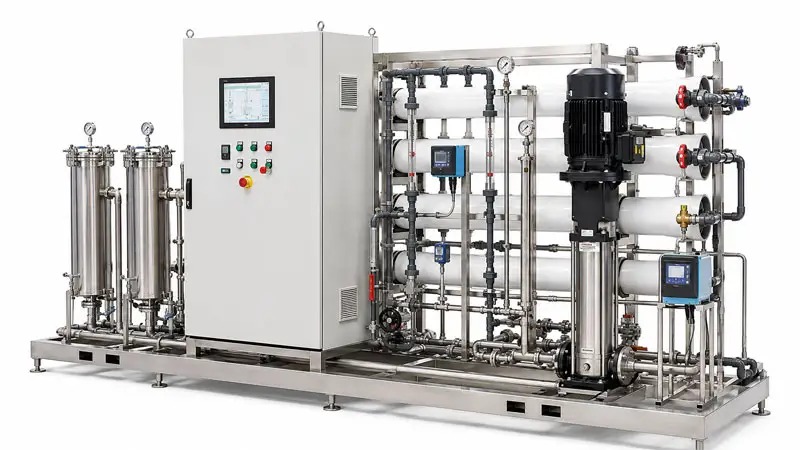
A successful industrial RO plant commissioning requires meticulous planning and systematic execution. Whether you're installing a new reverse osmosis system or expanding existing water treatment capacity, having a comprehensive checklist ensures that every critical component functions properly before full production begins. An experienced industrial RO plant manufacturer understands that commissioning is not merely a final verification step—it's the foundation upon which system reliability, water quality, and operational longevity depend. This guide outlines the essential elements that belong on your industrial RO plant commissioning checklist, helping facility managers and operators avoid costly mistakes and ensure rapid deployment.

Proper commissioning bridges the gap between equipment installation and operational performance. The process validates system design, confirms equipment calibration, trains operational staff, and identifies potential issues before they affect production. From feed water testing to membrane activation and controls optimization, each stage of commissioning directly impacts water recovery rates, product water quality, and system runtime. By following a structured approach aligned with manufacturer specifications and industry standards, your facility gains confidence in the RO system's ability to meet water quality targets consistently.
Feed Water Analysis and Pre-Treatment Verification
Baseline Water Quality Testing
Begin your commissioning process by conducting thorough feed water analysis. Test for total dissolved solids, hardness, turbidity, silica content, iron, and potential foulants that could damage the RO membrane over time. This baseline assessment informs pre-treatment system configuration and helps predict membrane lifespan. Document all measurements and compare them against the design specifications provided by your industrial RO plant manufacturer to ensure the pre-treatment train can effectively condition the incoming water.
Pre-Treatment System Startup
Verify that sand filters, carbon filters, and softeners operate correctly before commissioning begins. Run the pre-treatment system for several hours, checking for proper flow rates, pressure differentials, and water quality improvements at each stage. Commissioning these units upstream prevents sediment and contaminants from reaching the RO membranes during startup, which could cause immediate fouling or damage. Replace or regenerate filter media as needed, and confirm that bypass configurations and isolation valves function properly.
Membrane Installation and Initial RO System Setup
Membrane Housing Preparation and Inspection
Inspect membrane housings for cleanliness, proper sealing, and correct orientation before membrane installation. Ensure that all port connections are correctly labeled and pressure gauges are calibrated. During commissioning, carefully load the RO membrane cartridges according to manufacturer specifications, verifying that each element sits securely in its housing with appropriate seals. Test the housing integrity under low pressure before introducing feed water, confirming no leaks occur around seals or end caps.
Feed, Concentrate, and Permeate Line Configuration
Verify that piping connections match design drawings and support the correct flow directions. The commissioning process requires confirming that the feed line delivers pretreated water at the specified pressure and temperature, that concentrate discharge operates without backpressure restrictions, and that permeate collection lines have proper gravity drainage or pump discharge capability. Install pressure relief valves, isolation valves, and sampling points at strategic locations to enable safe operation and ongoing monitoring. Check for any leaks, improper connections, or pressure anomalies before advancing to controls activation.
Controls Configuration and System Testing
Control System Calibration and Alarm Setup
An industrial RO plant manufacturer recognizes that accurate controls are essential to protecting the membrane and maintaining product water quality. During commissioning, calibrate all pressure transducers, flow meters, and conductivity sensors against known standards. Program alarm thresholds for feed pressure, product water conductivity, recovery rate, and system runtime. Test each alarm condition manually to verify that alerts trigger correctly and that shutdown sequences function as designed. Confirm that operators understand the alarm meanings and appropriate response procedures.
Automated Shutdown and Protection Features
Commission all protection mechanisms that safeguard the RO membrane during upset conditions. Test low-feed-pressure shutdowns, high-concentrate-pressure relief, and product water quality alarms. Verify that automatic backflush or CIP sequences initiate properly when triggered manually or by sensor conditions. Simulate fault conditions during a controlled commissioning environment to confirm that the system responds safely and predictably. Document the results for training purposes and future troubleshooting reference.
Performance Validation and Water Quality Confirmation
Staged Startup and Gradual Pressure Ramp
Begin RO commissioning with low feed pressure and gradually increase to design operating pressure over several hours. This staged approach allows the membrane to acclimate, helps remove trapped air from the housing, and permits early detection of leaks or mechanical issues under safe conditions. Monitor product water flow, concentrate flow, and pressure differentials at each stage. Record these observations and compare them to manufacturer performance curves to confirm the membrane is functioning within expected parameters.
Product Water Quality Testing
Collect product water samples at various time intervals during commissioning to track conductivity reduction and rejection rates. The RO membrane should achieve design rejection specifications within the first few hours of operation as the concentrate becomes more concentrated and driving pressure stabilizes. Conduct hardness, TDS, silica, and ion analysis to confirm that product water meets end-use specifications. If water quality falls short, consult with your industrial RO plant manufacturer regarding potential causes such as membrane defects, seal leaks, or concentrate line contamination.
Operational Training and Documentation
Staff Competency and Safety Training
Commissioning is an ideal opportunity to train operators on system operation, normal operating ranges, alarm responses, and emergency procedures. Walk through daily startup sequences, monitoring checkpoints, and shutdown protocols. Ensure operators understand the significance of key parameters and can recognize warning signs of membrane fouling or equipment malfunction. Provide clear written documentation including flowcharts, pressure and flow targets, and maintenance schedules.
Handover Documentation and As-Built Records
Complete comprehensive as-built documentation during commissioning, capturing actual system configuration, equipment serial numbers, calibration certificates, and test results. Create a baseline performance record against which future operation can be compared. This documentation supports warranty claims, troubleshooting efforts, and regulatory compliance. Archive all commissioning test reports, pressure traces, and product water analysis results for future reference.
FAQ
What is the typical duration for an industrial RO plant commissioning?
Commissioning typically requires three to seven days depending on system complexity, feed water challenges, and operator familiarity. Smaller systems may commission in two to three days, while large industrial installations with advanced controls may require one to two weeks. An experienced industrial RO plant manufacturer can provide a more precise timeline based on your specific system design and site conditions.
How often should membrane testing occur during the commissioning phase?
Collect product water samples hourly for the first four to eight hours during RO commissioning, then extend intervals to every four hours for the remainder of the day. Continue daily sampling for the first week to track any membrane performance drift. The membrane should stabilize within 24 to 48 hours, achieving consistent rejection rates and permeate quality.
What causes a failed commissioning and how can it be prevented?
Common commissioning failures include inadequate pre-treatment, improper membrane loading, leaking seals, and misconfigured controls. Prevention requires careful attention to manufacturer instructions, thorough pre-commissioning equipment inspection, experienced personnel execution, and systematic validation of each system component. Engaging your industrial RO plant manufacturer's commissioning support team can significantly reduce failure risk and ensure rapid resolution if issues arise.

 EN