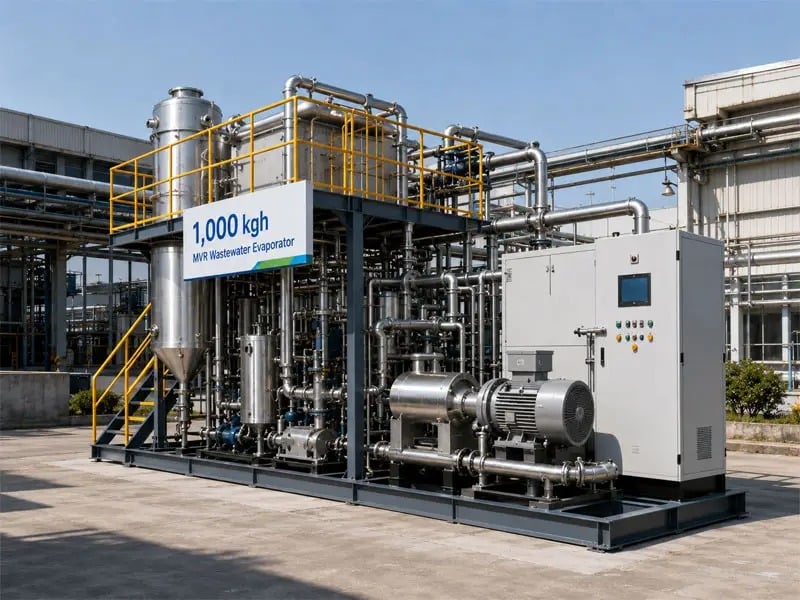
Choosing the right technology for wastewater evaporation is critical for industrial operations seeking to balance environmental compliance, operational costs, and system reliability. The decision between mechanical vapor recompression (MVR) and conventional evaporation methods directly impacts both capital expenditure and long-term operating efficiency. Understanding when MVR delivers superior performance requires examining energy consumption, process dynamics, feed quality considerations, and specific operational constraints that favor one approach over another.
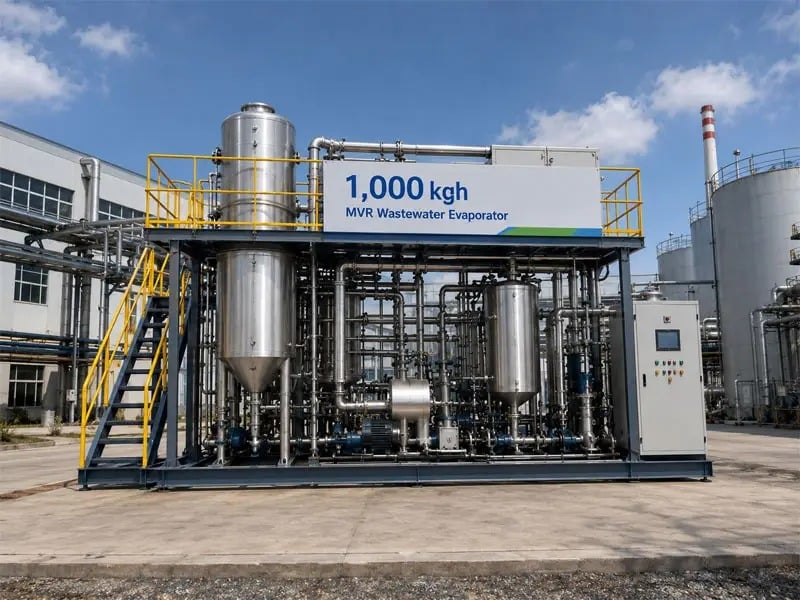
Conventional wastewater evaporation has served industrial facilities for decades, using steam as the primary energy driver for evaporative separation. However, modern challenges around energy costs and sustainability have prompted operators to evaluate alternatives like MVR technology that compress and recycle vapor internally. The transition between these methods is not one-size-fits-all; success depends on matching the technology to your specific operational, economic, and quality requirements.
Energy Efficiency and Operating Cost Dynamics
How MVR Reduces Energy Demand
MVR systems fundamentally reshape the energy profile of wastewater evaporation by compressing evaporated vapor back into the heating medium. Rather than exhausting vapor and requiring continuous fresh steam input, MVR captures and upgrades the latent heat already present in the system. This recycling dramatically lowers energy consumption, typically reducing thermal energy requirements by 60 to 80 percent compared to conventional approaches.
The energy advantage becomes financially significant in operations running continuous evaporation. Facilities processing high-volume wastewater streams benefit from the compressor motor's electricity-driven compression cycle, which often costs less than equivalent steam generation from fuel sources. Over a five to ten-year operating window, energy savings frequently justify the higher capital cost of MVR equipment.
Conventional Evaporation Energy Profile
Traditional wastewater evaporation relies on external steam supply to drive the evaporation process. Fresh steam continuously enters the heat exchanger, transfers energy to drive vapor from the feed, and exits as condensate. While simple and proven, this approach consumes significant thermal energy and offers limited opportunity for recovery once vapor leaves the system. Conventional methods work well when waste steam is available from adjacent processes, making the marginal energy cost approach zero.
The energy economics shift depending on regional electricity and fuel pricing. In areas with high electricity costs and abundant low-cost steam (from cogeneration or industrial partners), conventional evaporation may retain an advantage despite higher absolute energy consumption. Process selection should therefore account for local utility rates and existing thermal infrastructure availability.
Feed Quality, Scaling, and Process Stability
Feed Characteristics That Favor MVR
Wastewater evaporation system selection depends significantly on feed composition and scaling tendency. MVR excels when handling streams with moderate to high dissolved solids and fouling potential. The lower evaporation temperature maintained in many MVR designs reduces thermal decomposition and salt precipitation rates, supporting higher feed quality by minimizing degradation reactions. Lower operating temperatures also mean reduced scaling on heat-transfer surfaces, extending maintenance intervals and improving system uptime.
Feeds containing temperature-sensitive organics, ammonia, or components prone to thermal breakdown benefit from MVR's gentler thermal profile. The ability to maintain precise temperature control and the shorter residence time in the evaporator chamber means better preservation of feed integrity. For applications where distillate purity and concentrate quality matter for downstream treatment or disposal, MVR often delivers superior effluent characteristics.
Conventional Evaporation Feed Handling
Conventional evaporation systems tolerate higher feed temperatures and are well-suited for stable, non-scaling wastewaters. Crystalline and highly fouling feeds sometimes perform better in conventional equipment because the larger heat exchanger surface area and established operational procedures manage salt precipitation predictably. However, temperature-sensitive or chemically active feeds may undergo unwanted reactions, potentially complicating downstream treatment and concentrate handling.
For simple, clean wastewater streams or where concentrate disposal is non-critical, conventional methods provide straightforward operation without the complexity that feed-sensitive chemistry introduces. The choice depends on understanding your specific feed quality and processing objectives.
Capital Cost, System Complexity, and Decision Criteria
Investment and Implementation Factors
Process selection for wastewater evaporation must weigh initial capital investment against operating savings and project timeline. MVR systems command higher upfront costs due to compressor components, specialized controls, and process integration complexity. Conventional evaporation systems require less sophisticated engineering and typically cost 30 to 50 percent less to purchase and install. However, when energy represents a significant annual operating budget, the higher capital outlay for MVR recovers within a predictable timeframe through monthly utility savings.
Facilities with constrained capital budgets or short-term operational windows may favor conventional approaches despite higher operating costs. Conversely, long-term installations, high-throughput operations, or locations with expensive electricity should lean toward MVR economics. The decision requires calculating payback period, net present value, and sensitivity analysis around energy price assumptions.
Operational Complexity and Maintenance
Conventional evaporators operate with fewer moving parts and simpler control logic, reducing maintenance training requirements and spare parts inventory. MVR systems introduce mechanical components—compressors, gearboxes, advanced instrumentation—that demand more sophisticated expertise and predictive maintenance discipline. However, modern MVR equipment reliability has improved substantially, and operators in water treatment and chemical processing have built strong maintenance programs around compressor and controls management.
Your facility's technical capabilities, access to specialized service support, and willingness to invest in preventive maintenance should inform this aspect of process selection. Wastewater evaporation operators with established mechanical expertise and vendor relationships often manage MVR complexity effectively. Those with limited in-house capacity may experience fewer disruptions with conventional equipment's straightforward operation.
FAQ
When does MVR become financially justified for wastewater evaporation?
MVR typically reaches economic justification when annual operating hours exceed 5,000 to 6,000 hours and regional electricity costs remain stable or rising. For continuous operations processing 50 or more cubic meters per day, the energy savings from MVR usually offset its 30 to 50 percent higher capital cost within five to seven years. Feed quality considerations and available utility infrastructure also accelerate justification; facilities with expensive steam and access to low-cost electricity see faster payback.
How does feed quality influence the choice between MVR and conventional wastewater evaporation?
Feed quality critically shapes process selection because MVR's lower operating temperature reduces thermal decomposition and scaling compared to conventional methods. Temperature-sensitive feeds, those containing ammonia or organic compounds, benefit from MVR's gentler thermal profile. Conversely, simple, stable wastewaters without fouling components work reliably in conventional evaporators. Evaluate your specific effluent composition, scaling history, and concentrate disposal requirements to determine which technology preserves product quality and minimizes maintenance.
Can conventional evaporation match MVR energy efficiency through waste steam integration?
Yes, conventional wastewater evaporation achieves competitive energy economics when reliable waste steam or steam from cogeneration systems is available on-site at minimal cost. Integrating waste heat effectively eliminates the financial advantage MVR gains from electricity-driven compression. However, waste steam availability is often inconsistent or reserved for higher-priority processes. If your facility cannot guarantee adequate waste heat supply, MVR's self-contained energy recycling and predictable operating cost make it the more reliable economic choice.

 EN