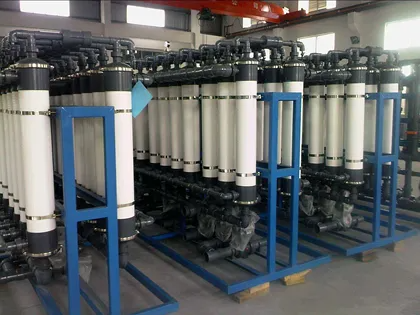
An ultrafiltration water system plays a critical role in industrial water treatment when positioned ahead of reverse osmosis technology. Many operations overlook this strategic sequencing, leading to premature RO membrane fouling, reduced system efficiency, and escalating maintenance costs. Understanding when and why UF should precede RO can transform your water treatment performance and extend equipment lifespan significantly.
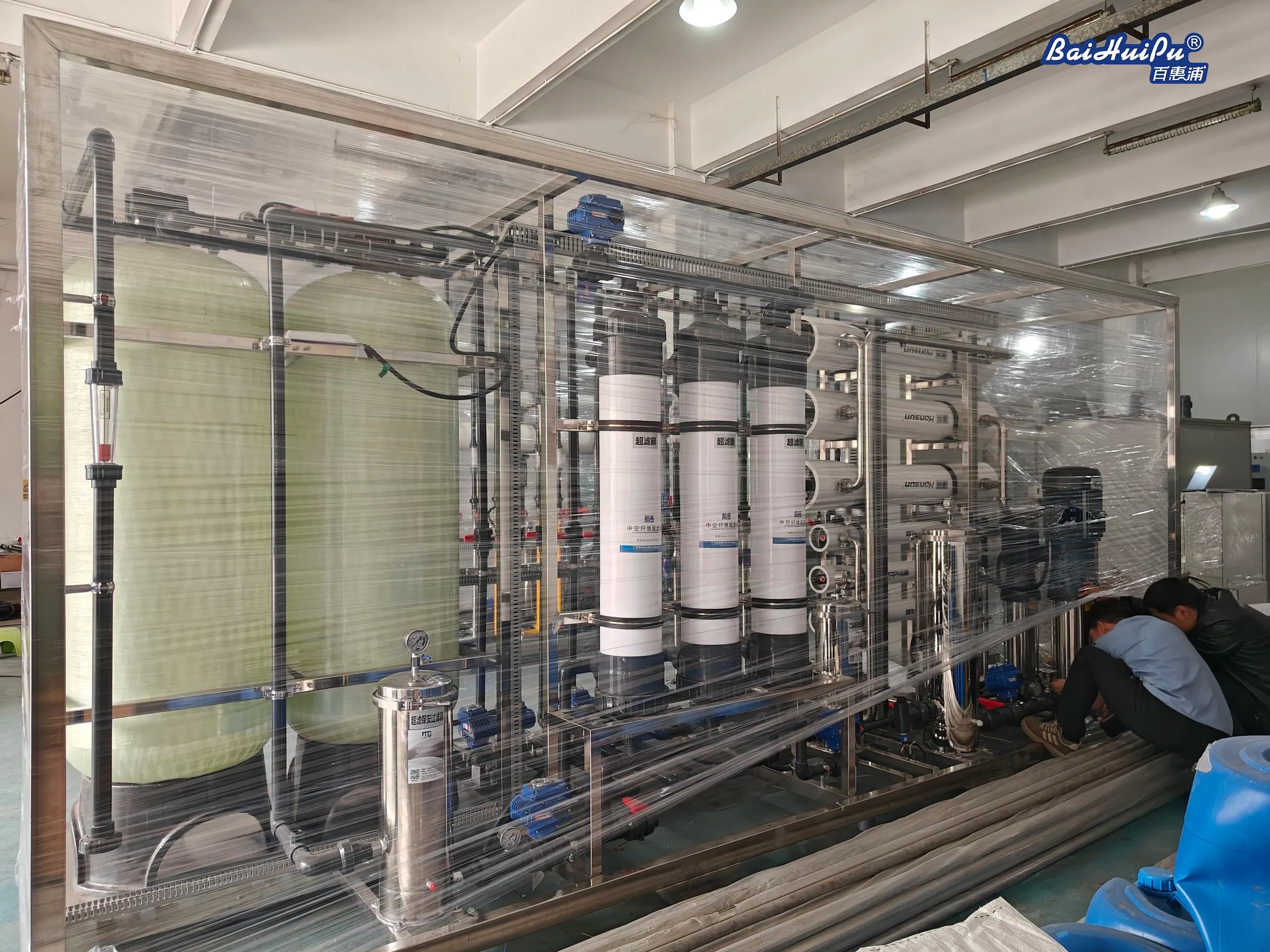
The relationship between UF and RO represents a fundamental principle in membrane technology: progressive filtration removes increasingly smaller particles. While RO operates at very high pressures and handles the final purification stage, it cannot tolerate the suspended solids and colloidal matter that source water often contains. This is where pretreatment with UF becomes essential, protecting your RO investment and ensuring consistent output quality.
Understanding UF and RO Membrane Fundamentals
How UF Functions in Pretreatment
UF technology uses microporous membranes with pore sizes typically between 0.01 and 0.1 microns. This range allows UF to remove suspended solids, bacteria, viruses, and colloidal particles while permitting dissolved salts and smaller molecules to pass through. Unlike RO, which requires extreme pressure and removes nearly all dissolved content, UF operates at lower pressures and serves a distinct purpose: cleaning the water before it reaches more aggressive treatment stages.
The mechanical action of UF makes it ideal for handling turbidity spikes and organic fouling precursors. When your source water contains high turbidity levels or seasonal contamination, UF can reduce these challenges substantially before RO enters the picture. This staged approach prevents the catastrophic fouling that would otherwise clog RO membranes within days or weeks.
RO Membrane Sensitivity and Pressure Dynamics
Reverse osmosis membranes are precision components operating at pressures between 200 and 1000 psi, depending on feed water salinity. At these pressures, even microscopic foulants accumulate rapidly on membrane surfaces, creating resistance that forces operators to increase pressure further, triggering accelerated membrane degradation. This escalation cycle becomes expensive and unsustainable without proper pretreatment.
RO membranes excel at removing dissolved minerals, salts, and some organic compounds, but they are fundamentally incompatible with turbidity and suspended matter. Feeding untreated or minimally treated water directly into RO systems is like running sand through a silk filter—damage occurs almost immediately, though it may not be visible until performance metrics decline sharply.
When Pretreatment UF Is Essential Before RO
High-Turbidity and Challenging Source Water
If your source water exhibits turbidity above 5 NTU (Nephelometric Turbidity Units), UF pretreatment becomes mandatory rather than optional. Surface water, agricultural runoff, and recycled wastewater streams frequently exceed this threshold. UF can reduce turbidity to below 0.1 NTU, creating feed water that RO can process without accelerated fouling and membrane stress.
Wells and boreholes may produce lower initial turbidity, but seasonal variations, bacterial growth, and colloidal silica can emerge unpredictably. Installing an ultrafiltration water system ahead of RO provides insurance against these fluctuations, ensuring consistent downstream protection regardless of source water variability.
Protecting Against Colloidal and Organic Fouling
Colloidal particles—submicroscopic substances suspended in liquid—cause some of the most insidious RO membrane damage because they accumulate silently beneath the membrane surface. UF membranes capture these colloids effectively, whereas RO cannot distinguish between colloids and dissolved salts when pressure dynamics dominate. Pretreatment with UF eliminates this category of foulant before it reaches RO.
Organic matter, biofilm precursors, and microbial content also threaten RO longevity. UF removes bacteria, viruses, and organic compounds through size exclusion, reducing the biological load that would otherwise stress RO membranes and potentially trigger biofouling within the membrane module.
Seasonal and Industrial Variation Scenarios
Food processing, pharmaceutical production, and mining operations produce wastewater with highly variable composition. UF pretreatment stabilizes incoming water quality, creating predictable conditions for RO operation. During high-load seasons or after maintenance shutdowns, when suspended matter and microbial regrowth spike, UF captures these transient problems before they reach RO.
Municipal recycled wastewater and reclaimed water applications almost always require UF pretreatment before RO. The regulatory and quality standards for such applications demand multiple barriers, and the physical and biological challenges of recycled water make UF an indispensable intermediate stage in any robust RO system design.
Strategic System Design and Performance Optimization
Balancing Operating Costs and Equipment Protection
Installing an ultrafiltration water system increases upfront capital expenditure, but this cost is quickly offset by extended RO membrane life, reduced maintenance frequency, and lower replacement part expenses. An RO membrane lasting 3 to 4 years without UF pretreatment might extend to 6 to 8 years with proper UF protection, representing substantial savings over a system's operational lifetime.
Energy consumption also improves with UF pretreatment because RO pressure requirements remain stable as feed water quality stays consistent. Without pretreatment, RO operators must progressively increase system pressure to compensate for fouling, driving energy costs upward month after month until membrane replacement becomes unavoidable.
Monitoring and Maintenance Advantages
UF systems provide real-time visibility into source water quality through differential pressure monitoring. Rising UF pressure indicates increasing foulant load, signaling when backflushing or cleaning is needed before foulants breach into the RO stage. This early warning system enables proactive maintenance rather than reactive emergency repairs.
RO performance parameters like permeate flow, salt rejection, and operating pressure become far more stable downstream of UF pretreatment. This stability simplifies troubleshooting, reduces guesswork during system operation, and allows operators to establish baseline metrics that reveal problems before they become critical.
FAQ
Does every RO system need UF pretreatment?
Not every RO application requires UF, but most industrial and municipal systems benefit significantly from it. Wells producing consistently low-turbidity water may operate successfully with RO alone, supported by sand filtration or multimedia filters. However, any source water with irregular quality, surface water origin, recycled water composition, or turbidity above 1 NTU should include UF pretreatment to ensure reliable RO performance and acceptable total cost of ownership.
Can other pretreatment methods replace UF before RO?
Conventional pretreatment like coagulation, sedimentation, and sand filtration can reduce turbidity and some suspended matter, but they cannot match UF's effectiveness against colloids, bacteria, and viruses. UF is membrane-based and therefore more reliable and consistent than chemical-dependent processes. Combining both methods—chemical pretreatment followed by UF—is common in demanding applications, though UF alone often provides superior RO protection compared to conventional methods alone.
What happens if UF is not used before RO in high-turbidity applications?
Without UF pretreatment in high-turbidity environments, RO membranes foul rapidly, requiring frequent chemical cleanings and shortened operating intervals. Membrane replacement cycles accelerate dramatically, maintenance labor increases, and system downtime becomes routine. The cost savings from skipping UF installation vanish within months as emergency maintenance and premature membrane replacement compound the initial underinvestment in proper system design.

 EN