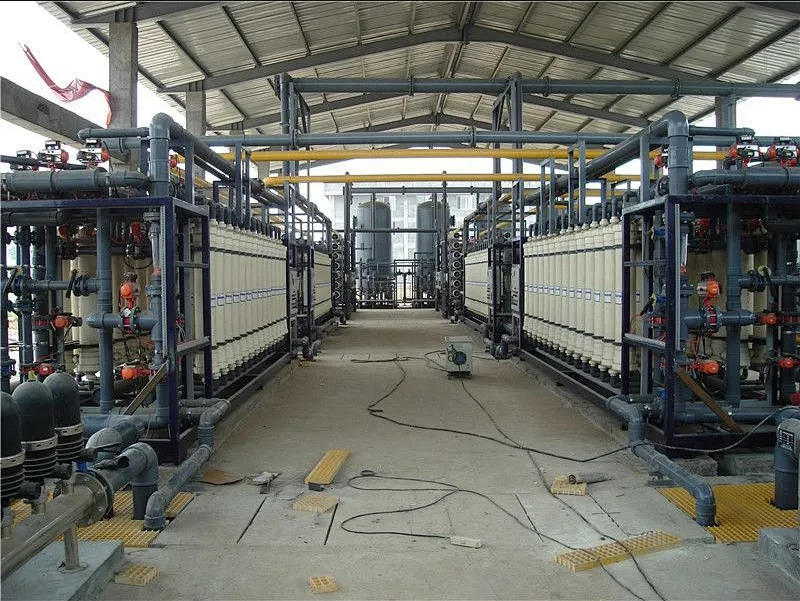
Ultrafiltration (UF) systems represent one of the most reliable membrane filtration technologies available for industrial water treatment applications today. However, achieving stable and consistent operation requires more than simply installing equipment and monitoring flow rates. The true key to maintaining peak performance lies in understanding how backwashing and chemical in-place cleaning (CIP) work together to preserve membrane integrity and system reliability over extended operating periods.
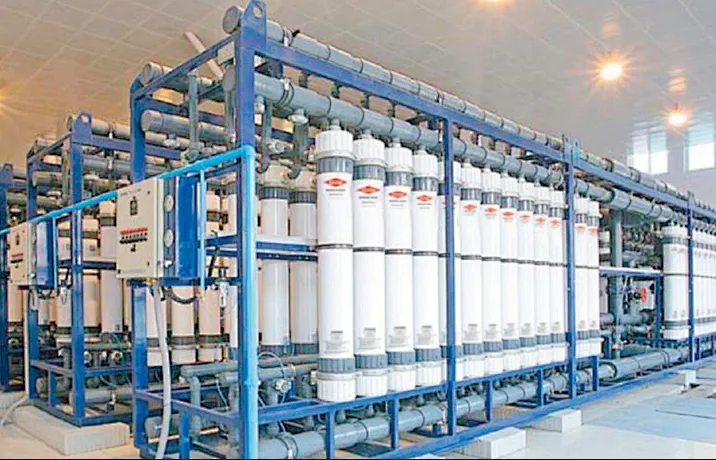
Every uf water treatment facility must address membrane fouling as a primary operational challenge. Fouling accumulates gradually as particles, colloids, and biological matter deposit on the membrane surface, restricting water passage and forcing operators to increase pressure to maintain throughput. Without proactive maintenance strategies, fouling accelerates, leading to shortened membrane life, reduced efficiency, and potentially costly emergency replacements that disrupt production schedules.
Understanding Backwashing in UF Systems
The Backwash Mechanism and Timing
Backwashing represents the first line of defense against membrane fouling in modern UF operation. During a backwash cycle, filtered water is pumped backward through the membrane at controlled pressure, dislodging accumulated particles from the membrane surface and flushing them to waste. This mechanical reversal occurs automatically at preset intervals or when differential pressure across the membrane exceeds a defined threshold, ensuring membrane porosity remains open for efficient filtration.
The frequency and duration of backwash cycles depend on raw water quality, feed water turbidity, and operational demands specific to each installation. Systems treating relatively clean source water may require backwash intervals of 30 to 60 minutes, while operations handling high-turbidity feed water may necessitate backwashing every 15 to 20 minutes. Establishing the correct backwash frequency prevents both unnecessary water consumption and the risk of excessive fouling buildup between cycles.
Backwash Parameters and System Performance
Successful backwash execution depends on maintaining precise flow rates and pressure differentials throughout the cycle. Most UF systems operate backwash at reverse flow rates between 15 and 25 liters per minute per square meter of membrane area, with duration typically lasting 1 to 3 minutes depending on membrane type and fouling severity. Operating parameters that fall outside recommended ranges compromise cleaning effectiveness and accelerate membrane degradation, making backwash optimization essential to UF operation longevity.
Monitoring backwash water discharge clarity provides valuable feedback on cleaning effectiveness. When backwash water remains visibly turbid or contains suspended particles throughout the cycle, it indicates incomplete particle removal and suggests that CIP cleaning may be approaching necessity. Conversely, when backwash water clears quickly during discharge, fouling removal is proceeding normally and UF operation efficiency remains stable.
Chemical In-Place Cleaning for Deep Membrane Restoration
When and Why CIP Becomes Necessary
Chemical in-place cleaning, commonly referred to as CIP, represents a deeper maintenance intervention than mechanical backwashing alone. While backwash removes reversible fouling, CIP addresses irreversible fouling caused by biological growth, colloidal accumulation, and organic compound deposition that mechanical reversal cannot reach. Regular CIP cycles maintain membrane porosity and restore water flux, preventing gradual performance degradation that characterizes neglected UF systems.
The decision to initiate CIP cleaning typically triggers when differential pressure rises beyond acceptable limits despite regular backwashing, or when routine monitoring indicates flux decline that backwash alone cannot restore. Many industrial UF operation protocols call for preventive CIP cycles on weekly or bi-weekly schedules, depending on raw water characteristics and system design. This proactive approach prevents emergency situations where membranes become so fouled that restoration becomes impossible without full system replacement.
CIP Chemistry and Protocol
Standard CIP procedures employ alkaline and acidic chemical solutions designed to chemically dissolve and suspend accumulated deposits within membrane pores. An alkaline solution, typically sodium hydroxide or specialized alkaline surfactants, addresses organic matter and biological film. This step is followed by an acidic rinse using citric acid or hydrochloric acid to dissolve mineral scales and metal oxides. The sequence of chemical exposure, concentration levels, temperature control, and contact time each significantly influence CIP effectiveness and membrane preservation during UF operation.
Automated CIP systems monitor temperature, flow rate, and chemical concentration throughout cleaning cycles, adjusting parameters in real time to optimize results while minimizing chemical consumption and environmental impact. Manual CIP procedures require careful operator attention to ensure proper chemical dosing and circulation time, introducing variability that automated systems eliminate. Well-designed CIP protocols incorporate rinse phases that remove residual chemicals, preventing chemical residues from compromising subsequent filtration cycles or affecting treated water quality standards.
Integration of Maintenance Strategies for Stable Operation
Establishing a Comprehensive Maintenance Schedule
Stable and reliable UF operation depends on coordinating backwash and CIP cleaning as complementary strategies rather than independent functions. An effective maintenance program defines specific triggers for each intervention: regular backwash cycles maintain day-to-day performance while predetermined CIP schedules address irreversible fouling before critical thresholds are reached. Documentation systems that track backwash frequency, differential pressure trends, and water quality parameters enable operators to fine-tune maintenance intervals based on actual system behavior and seasonal variations in feed water quality.
Raw water characteristics change seasonally and with source variations, requiring adaptive maintenance approaches. During periods of elevated turbidity or biological activity, backwash intervals may shorten and CIP frequency may increase accordingly. Conversely, during seasons with clearer source water, maintenance frequency can decrease without compromising system integrity. This adaptive management prevents premature membrane wear while avoiding the resource waste of unnecessary cleaning cycles during periods of excellent feed water quality.
Monitoring and Performance Optimization
Continuous monitoring of differential pressure, permeate flow rate, and water quality parameters provides early warning signals that maintenance intervention is needed. Pressure gauges installed upstream and downstream of the membrane module allow operators to track fouling accumulation trends. When differential pressure rises more steeply than historical baseline patterns suggest, it signals either accelerated fouling requiring increased backwash frequency or the onset of irreversible fouling that demands CIP intervention. These real-time signals guide maintenance decisions and prevent the performance degradation that accompanies reactive rather than proactive maintenance approaches.
Advanced UF systems incorporate automated control logic that adjusts backwash frequency based on pressure differential, reducing manual operator intervention while optimizing water recovery rates. Integration of data logging capabilities enables tracking of long-term performance trends, identifying seasonal patterns and detecting gradual decline that might otherwise escape notice. This data-driven approach to UF operation transforms maintenance from guesswork into science, extending membrane life and reducing overall operational costs while ensuring consistent water quality output.
FAQ
How often should backwashing occur in a typical UF system?
Backwash frequency depends on feed water quality and turbidity levels. Most UF operation facilities conduct backwashing every 15 to 60 minutes, with intervals determined by either time-based schedules or pressure differential thresholds. Systems treating cleaner water may backwash less frequently, while high-turbidity applications require more frequent cycles. Monitoring differential pressure trends helps operators establish optimal intervals that balance fouling control against unnecessary water consumption and energy use.
What is the difference between backwashing and CIP cleaning?
Backwashing uses filtered water pumped backward through the membrane to mechanically dislodge reversible fouling like particles and colloids. CIP employs chemical solutions to dissolve and remove irreversible fouling including biological film and mineral scales that mechanical backwash cannot address. Both processes are essential components of comprehensive UF water treatment maintenance; backwash handles daily fouling while CIP restores membrane performance when mechanical cleaning becomes insufficient.
What signs indicate that CIP cleaning is needed?
Rising differential pressure despite regular backwashing signals the need for CIP intervention. Additional indicators include declining permeate flow rate, turbid backwash water that fails to clear quickly, and visible flux decline documented during routine monitoring. Many operators implement preventive weekly or bi-weekly CIP schedules rather than waiting for crisis indicators. Preventive CIP protects membrane integrity and maintains stable UF operation performance over extended periods, avoiding emergency situations where restoration becomes impossible.

 EN