Surface treatment wastewater presents one of the most complex challenges in industrial water management. Manufacturing facilities that plate, finish, or coat metal products generate multiple waste streams with vastly different chemical compositions, pollutant concentrations, and treatment requirements. Before any treatment process begins, understanding why stream segregation matters can be the difference between regulatory compliance and costly violations. Segregating these distinct waste streams at the source—rather than combining them—enables targeted, efficient treatment and dramatically improves the economics and effectiveness of your wastewater management system.
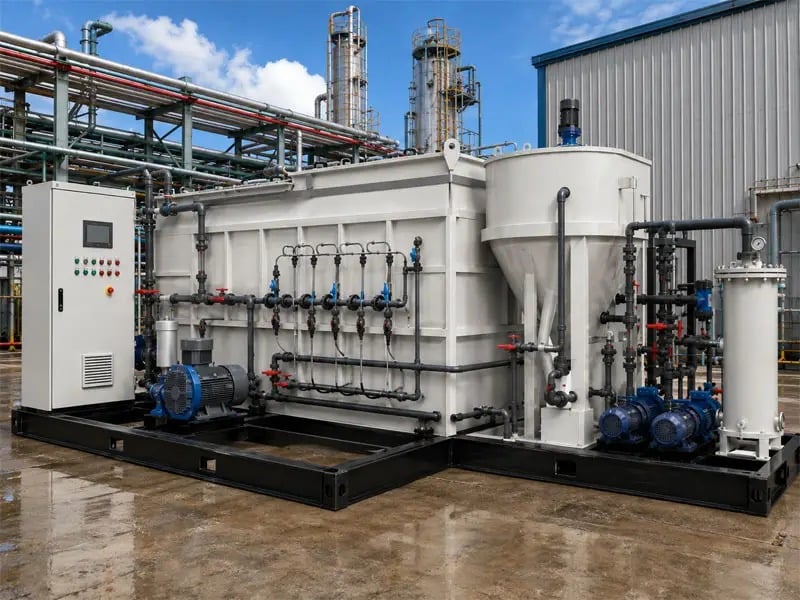
Industrial surface treatment operations typically generate several distinct waste streams from plating tanks, rinsing stages, spent cleaning solutions, and process overflow. Each stream carries different metals, pH values, and chemical loads. When these streams mix before treatment, the resulting blend becomes unpredictable and difficult to manage. Stream segregation in surface treatment wastewater operations allows treatment specialists to match the right process to the right contamination profile, reducing chemical consumption, improving metal recovery, and achieving better final effluent quality.
Why Stream Segregation Improves Treatment Efficiency
Reducing Chemical Demand Through Targeted pH Adjustment
One of the primary reasons stream segregation matters is pH control. Different surface treatment operations produce waste with widely varying pH levels. Plating rinse water might be near-neutral, while alkaline cleaning solutions are highly basic, and acidic pickling baths are extremely acidic. When these streams combine, neutralizing the mixed batch requires significantly more acid or base than treating each stream separately. By segregating streams before treatment, facilities can apply minimal chemical doses tailored to each stream's specific pH, reducing reagent costs and preventing overtreatment that could damage equipment or create downstream complications.
Enhancing Metals Recovery and Recycling Value
Surface treatment operations discharge metals including nickel, zinc, copper, chromium, and cadmium. When segregating wastewater at the source, plating rinse water—which contains lower metal concentrations but discrete types—can be processed separately from concentrated plating bath solutions. This segregation enables more efficient metals recovery, allowing operators to precipitate and recover valuable metals with minimal interfering substances. Metals that might otherwise be lost in a commingled waste stream become recoverable product, improving sustainability and offsetting treatment costs. Many facilities find that proper segregation transforms metals from a disposal liability into a revenue source.
The Chemical and Compliance Benefits of Stream Separation
Meeting Effluent Discharge Standards Through Segregation
Regulatory compliance depends on discharge water quality meeting specific limits for individual metals, pH, suspended solids, and other parameters. When surface treatment wastewater streams are combined before treatment, the final effluent blend reflects the worst-case mixture, often requiring aggressive polishing steps to meet limits. Stream segregation allows treatment specialists to apply appropriate methods to each source—precipitation for certain metals, ion exchange for others, oxidation for dissolved contaminants—ensuring each effluent meets discharge criteria efficiently. This targeted approach often eliminates the need for expensive tertiary treatment and reduces the risk of permit violations caused by unpredictable interactions between mixed waste streams.
Preventing Interfering Substances and Process Failures
When diverse waste streams combine, unexpected chemical reactions can occur. Complexing agents in one stream can interfere with metal precipitation in another. Suspended solids from one source can clog filter media designed for a different stream. High pH in one tank can cause unintended hydrolysis in another. These interactions complicate troubleshooting and lead to inefficient treatment or compliance failures. Segregating streams eliminates many of these interference pathways. Each stream follows a predictable treatment path, reducing troubleshooting time, improving operator confidence, and ensuring more consistent performance. This operational stability is especially critical in facilities running continuous shifts or handling variable inlet volumes.
Practical Implementation of Stream Segregation in Surface Treatment
Identifying and Classifying Waste Streams
Effective segregation begins with mapping your facility's waste generation. Most surface treatment operations have several natural segregation points: plating bath overflow, rinse water from plating stages, spent cleaning or degreasing solutions, process cooling water, and plant washdown water. Each carries different contaminant profiles. Concentrated plating solutions should be segregated from dilute rinse water. Acidic streams should be kept separate from alkaline streams. Streams with specific metals should be segregated where feasible. Once you understand your facility's waste streams, you can design a segregation infrastructure—separate collection tanks, properly labeled piping, and operator training—to keep streams separate until each reaches its optimized treatment train.
Designing Treatment Systems Around Segregated Streams
With streams segregated, you can specify treatment equipment sized and configured for each stream's actual characteristics rather than overdesigning for an artificial mixed case. Segregation enables modular, scalable treatment systems where each module is optimized for its input. A plating rinse stream with moderate metal concentrations might use precipitation and simple filtration, while concentrated plating solutions might need additional metal separation steps. This modularity reduces capital cost by eliminating unnecessary unit operations and operational cost by running each module only when needed. It also simplifies troubleshooting and maintenance since each stream has a dedicated treatment path with known parameters and performance expectations.
FAQ
What happens if surface treatment wastewater streams are combined without segregation?
Combining streams increases chemical demand for pH adjustment, creates unpredictable metal mixtures that are harder to treat and recover, introduces interfering substances that complicate treatment, and often results in mixed effluent that requires expensive polishing to meet discharge standards. Operators also lose the ability to target metals recovery and end up with treatment costs that reflect worst-case conditions rather than actual stream characteristics.
How does segregation reduce the cost of treating surface treatment wastewater?
Segregation allows precise pH adjustment, targeted metal recovery, elimination of interfering substances, and optimized equipment sizing. Facilities use less chemical reagent, recover valuable metals that would otherwise be lost, avoid unnecessary treatment steps, and reduce both capital expenditure on oversized equipment and ongoing operational costs. Many operations also reduce disposal costs by recovering metals as a byproduct rather than treating everything as waste.
Which metals are easiest to recover from segregated wastewater streams?
Common metals in surface treatment including nickel, zinc, copper, and chromium are typically easiest to recover from segregated streams because each stream contains known metal types at predictable concentrations. When segregated, precipitation can target specific metals without interference from incompatible substances. Concentrated plating streams yield the highest metal recovery value since they contain the highest metal loading, making them ideal candidates for dedicated recovery processing.

 EN






