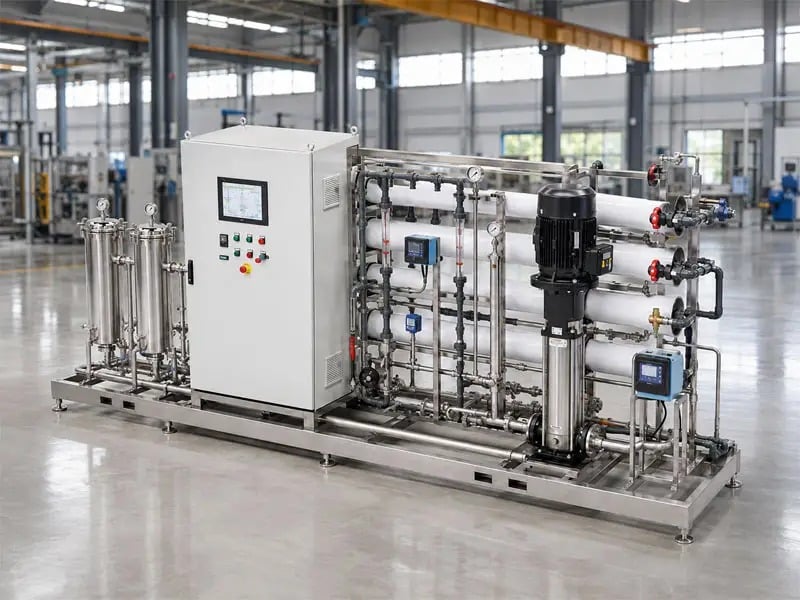
The sea water desalination process represents a critical technology for coastal facilities, islands, and industrial operations requiring fresh water in saltwater environments. Understanding the complete journey from raw seawater intake through final product water delivery enables operators to optimize system performance, reduce costs, and ensure reliable freshwater supply. This comprehensive guide walks through each stage of desalination, explaining how modern systems transform saline seawater into usable freshwater.

Seawater contains roughly 35,000 parts per million of dissolved salts and minerals, making it unsuitable for most industrial and domestic uses without treatment. The desalination process systematically removes these contaminants through multiple treatment stages, each serving a specific purpose in protecting downstream equipment and ensuring product water quality. Operators must understand how pretreatment protects sensitive RO membranes, how reverse osmosis removes dissolved salts, and how final polishing creates water meeting specific industry standards.
Intake and Pretreatment Systems
Seawater Intake Design
The initial seawater intake represents the foundation of any desalination facility. Intake location, depth, and screening design directly influence pretreatment effectiveness and long-term system reliability. Operators must position intakes away from sediment zones, biological activity, and pollution sources to minimize initial contamination loads. Properly designed intake systems reduce suspended solids, organic matter, and biological organisms entering pretreatment, extending equipment life and lowering maintenance costs.
Pretreatment Stage Overview
Effective pretreatment forms the critical foundation for successful seawater desalination. This stage removes particles, suspended solids, and biological contaminants that could damage downstream RO membranes. Pretreatment typically includes mechanical screening, media filtration, and sometimes activated carbon adsorption to eliminate taste, odor, and residual chlorine. Without robust pretreatment, RO membranes face accelerated fouling, shorter service life, and increased operating costs. Facilities typically target product water clarity through multi-stage pretreatment before seawater enters the RO system.
Reverse Osmosis Technology and Operation
How RO Removes Dissolved Salts
Reverse osmosis represents the core desalination technology removing dissolved salts from pretreated seawater. RO works by forcing pressurized seawater against semi-permeable membranes, where water molecules pass through while salt ions and larger contaminants remain in the reject stream. Typical RO systems operate at 800 to 1,000 pounds per square inch, requiring substantial energy investment but delivering 99 percent removal of dissolved minerals. The RO process produces two streams: high-purity product water and concentrated brine requiring proper disposal or further treatment.
Membrane Selection and Maintenance
Choosing appropriate RO membrane types depends on specific seawater characteristics, desired product water recovery rates, and long-term cost considerations. Seawater RO membranes differ from brackish water varieties, featuring higher salt rejection and operating at greater pressures. Regular membrane cleaning prevents scaling and biological fouling that degrade salt rejection performance. Facilities must monitor feed water quality, pressure differentials, and product water conductivity to identify when cleaning becomes necessary. Proper pretreatment directly correlates with membrane lifespan and overall system economics.
Product Water Polishing and Quality Assurance
Post-RO Treatment Steps
While RO produces highly purified product water, many applications require additional polishing before final use. Post-treatment may include remineralization to restore beneficial minerals, pH adjustment for corrosion control, and ultraviolet disinfection for microbiological safety. These final processing steps ensure product water meets specific industry standards, whether for power generation, pharmaceutical manufacturing, or drinking water applications. Proper post-treatment prevents downstream piping corrosion, extends equipment life, and maintains water quality throughout distribution systems.
Quality Monitoring and Testing
Continuous monitoring of product water quality validates desalination system performance and identifies treatment issues before they impact operations. Operators track total dissolved solids, conductivity, pH, turbidity, and microbial indicators at regular intervals. Real-time sensors on product water streams provide immediate feedback on RO membrane performance and indicate when cleaning or replacement becomes necessary. Comprehensive testing ensures product water consistently meets specifications, protecting downstream industrial processes and maintaining regulatory compliance in coastal facilities.
FAQ
What is the recovery rate for seawater desalination?
Seawater desalination systems typically achieve 35 to 50 percent recovery rates, meaning 35 to 50 percent of inlet seawater becomes usable product water while the remainder becomes concentrated brine reject. Recovery rates depend on feed water salinity, membrane type, operating pressure, and specific facility requirements. Higher recovery rates reduce overall water intake but increase concentrate disposal challenges and system fouling risk. Most coastal industrial facilities operate at 40 to 45 percent recovery as an economic and operational balance.
How often does RO require pretreatment in desalination?
Pretreatment continuously protects RO membranes throughout desalination operations, with effectiveness directly dependent on intake water quality and pretreatment design sophistication. Seawater intakes introduce variable biological activity, seasonal turbidity changes, and dissolved organic matter requiring consistent pretreatment optimization. Operators adjust pretreatment intensity based on feed water monitoring, increasing chemical dosing or filtration stages when contamination levels rise. Proper pretreatment ensures sustained RO performance and extends membrane intervals between cleaning or replacement cycles.
Can product water from seawater desalination be used directly for drinking?
Product water from seawater RO systems requires post-treatment before safe drinking water use, as pure demineralized water lacks beneficial minerals and exhibits corrosive properties. Remineralization restores calcium and magnesium, improving taste and protecting distribution infrastructure from corrosion damage. Many municipalities combine desalinated seawater with conventional freshwater sources to balance mineral content and reduce treatment costs. When produced under strict quality control with appropriate post-treatment and disinfection, desalinated seawater provides reliable drinking water for coastal communities and island populations.

 EN