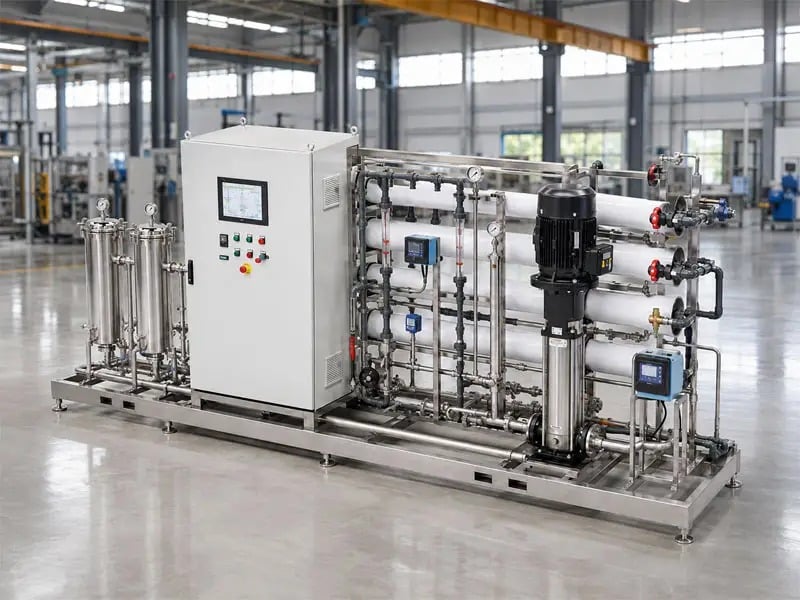
A recycle water system for house and industrial water reuse infrastructure operate under fundamentally different constraints and objectives. While both capture and treat wastewater for reuse, residential systems prioritize affordability, space efficiency, and simplified maintenance, whereas industrial reuse requires robust treatment to meet stringent regulatory standards and handle enormous volumes. Understanding these distinctions is critical for property owners, facility managers, and engineers selecting the right technology. This guide explores why design requirements diverge so sharply between these two applications and what each approach demands.

The distinction between residential and industrial systems begins with volume and throughput. A typical household generates 150 to 300 gallons of grey water daily—wastewater from sinks, showers, and laundry suitable for landscape irrigation or toilet flushing. Industrial facilities process thousands or millions of gallons per day, requiring powerful treatment trains, redundant safety mechanisms, and compliance with municipal discharge or potable reuse standards. These volume differences cascade into every design decision, from equipment sizing to treatment chemistry to monitoring protocols.
Treatment Complexity and Water Quality Standards
Residential Grey Water Treatment
A recycle water system for house typically uses multi-stage filtration and basic disinfection. Most residential systems begin with mechanical screening to remove hair, lint, and debris, followed by settlement tanks or sand filtration to reduce suspended solids. Grey water quality standards for residential use are less stringent because the primary reuse outlet is landscape irrigation or toilet flushing in the same property. These applications tolerate moderate turbidity, residual organic matter, and lower pathogen inactivation than potable reuse. Homeowners often choose systems that balance treatment effectiveness with simplicity and cost, favoring reliable gravity-fed designs or low-energy filtration over advanced technologies.
Industrial Water Quality Requirements
Industrial reuse demands far more aggressive treatment protocols. Facilities discharging recycled water into municipal systems, using it for cooling towers, or supporting process water applications must meet stringent regulatory thresholds. Water quality parameters including turbidity, total suspended solids, biological oxygen demand, nitrogen and phosphorus levels, and microbial contamination are monitored continuously. Industrial systems employ membrane filtration, ultraviolet disinfection, reverse osmosis, advanced oxidation, and sometimes multi-barrier approaches to ensure safety and consistency. This complexity reflects liability exposure, regulatory scrutiny, and the cost of treating contaminated water downstream.
Regulatory Framework and Compliance Burden
Residential System Regulations
Permitting for a recycle water system for house varies dramatically by jurisdiction, but many regions allow grey water systems under simplified guidelines or even by-right provisions. Homeowners may operate systems with minimal regulatory oversight as long as the system remains on-site and water is not stored indefinitely or used for potable purposes. Some areas require basic design approval and annual inspection, while others impose no formal mandate. This lighter regulatory environment reflects lower population risk and the decentralized nature of household systems. However, this flexibility comes with responsibility: homeowners must maintain their systems correctly to prevent contamination or nuisance conditions.
Industrial Reuse Compliance
Industrial water reuse operates under heavy regulatory scrutiny. Facilities must obtain discharge permits, submit detailed engineering plans, implement real-time monitoring, maintain treatment records, and undergo regular third-party audits. Standards may derive from state water boards, environmental protection agencies, or potable reuse frameworks if the recycled water eventually enters drinking water supplies. Industrial reuse often requires redundant treatment systems so that if one process fails, secondary barriers remain active. Capital and operational costs reflect this stringent oversight, sometimes reaching millions of dollars annually for large installations. The regulatory burden ensures public health protection but significantly raises the total cost of ownership compared to residential systems.
Infrastructure Design and Maintenance Implications
Residential System Design Philosophy
Residential grey water systems prioritize simplicity and user accessibility. Most designs fit within a garage, basement, or outdoor enclosure and require minimal operator training. Homeowners typically perform routine maintenance such as filter changes and tank cleaning themselves or hire a plumber for annual service. The system architecture is intentionally straightforward: source separation, basic treatment, storage, and reuse outlet. Redundancy is limited because the consequences of brief system downtime are low—irrigation simply does not occur for a few days. Energy consumption is minimal, often relying on gravity flow or small centrifugal pumps. This simplification reflects the economic reality that most homeowners cannot justify expensive infrastructure or continuous professional monitoring.
Industrial System Infrastructure
Industrial water reuse systems are engineered for continuous operation and fail-safe performance. Treatment trains occupy entire buildings or outdoor mechanical yards, with multiple redundant treatment stages, backup power systems, and automated controls. Professional operators staff the facility continuously or monitor it remotely using supervisory control and data acquisition technology. Maintenance is scheduled proactively to prevent downtime, with spare parts inventoried on-site. Piping infrastructure is often segregated from potable supplies using different colors, labeling, and physical separation. Capital investment in industrial reuse frequently exceeds millions of dollars, justified by enormous operational water cost savings or regulatory mandates. The infrastructure reflects the critical role recycled water plays in facility operations and the strict liability consequences of system failure.
Cost Structure and Economic Justification
Residential System Economics
A recycle water system for house typically costs between $3,000 and $15,000 installed, depending on treatment complexity and local labour rates. Operating costs are minimal—mostly filter replacements and occasional repairs. Payback periods for residential systems are long, often 10 to 20 years, because homeowner water savings are modest. However, residential systems also deliver non-financial benefits: reduced environmental impact, increased self-sufficiency, and resilience during water restrictions. Many homeowners justify the investment for these values rather than pure financial return. Financing options are increasingly available through utility rebates or home improvement loans, making systems more accessible.
Industrial Reuse Investment and Returns
Industrial water reuse systems represent capital investments ranging from $500,000 to over $10 million, with annual operating costs in the hundreds of thousands. However, industrial reuse typically delivers strong financial returns. A large manufacturing facility or data centre consuming millions of gallons monthly can save hundreds of thousands of dollars annually by replacing purchased water with recycled water. Municipal utilities operating reclaimed water networks for landscape irrigation and cooling may serve thousands of customers, spreading infrastructure costs across many users. Industrial reuse is economically justified when water scarcity, disposal costs, or operational criticality create powerful financial or operational drivers. The system must be sized precisely for the facility's water demand and integrated with existing operations.
FAQ
Can grey water from a residential recycle water system for house be used for indoor purposes like toilet flushing?
Yes, many residential systems are designed to supply toilet flushing and some approved indoor uses, though requirements vary by jurisdiction. Most building codes permit grey water toilet flushing if the system includes proper filtration, disinfection, and backflow prevention. However, grey water cannot be used for drinking water, cooking, or personal hygiene without advanced treatment equivalent to potable reuse standards. Indoor reuse requires dual plumbing, which increases installation cost and complexity compared to outdoor irrigation-only systems. Always verify local regulations before designing a system for indoor reuse.
Why does industrial reuse require membrane filtration or ultraviolet disinfection while residential systems often do not?
Industrial reuse typically discharges recycled water to large municipal systems or uses it for sensitive applications such as cooling towers or process water, exposing many people or critical operations to the water. Membrane filtration and ultraviolet disinfection provide robust pathogen and particle removal, ensuring water quality consistency even if upstream treatment fails. Residential systems serve only a single household, creating lower population risk, so simpler filtration often satisfies regulatory requirements. Additionally, industrial systems face severe liability and reputational consequences if contamination occurs, justifying investment in robust treatment that residential owners cannot afford or justify economically.
What happens if an industrial water reuse system fails versus a residential recycle water system for house?
Industrial system failures can halt production, damage equipment, violate discharge permits, create environmental liability, and trigger regulatory penalties potentially costing millions. Most industrial facilities maintain backup systems, emergency protocols, and insurance to manage this risk. Residential system failures typically result in temporary loss of non-potable reuse, with homeowners reverting to municipal water supply without serious consequence. This difference justifies the high capital and operational cost of industrial systems and explains why industrial design emphasizes redundancy, monitoring, and preventive maintenance far more than residential systems do.

 EN