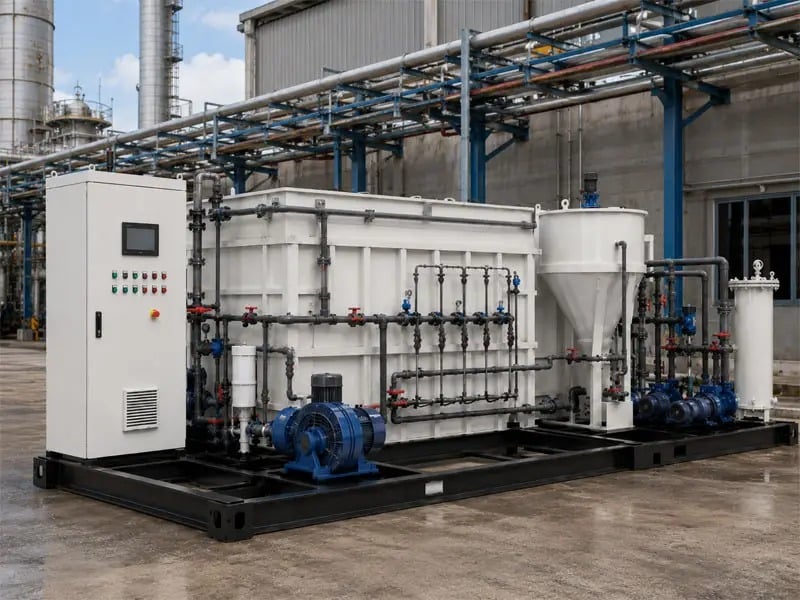
A modular water treatment system offers facilities unprecedented flexibility in managing growing treatment demands without requiring complete infrastructure overhauls. Unlike traditional fixed-capacity plants that force expensive rebuilds, modular approaches let operators scale treatment capacity incrementally as operational needs evolve. This strategic advantage has made modular design the preferred choice for municipalities, industrial operations, and commercial water utilities planning long-term growth.

Effective capacity expansion planning begins with understanding how modular design frameworks enable phased implementation. By choosing equipment and infrastructure layouts that support future additions, facility managers can deploy initial treatment capacity quickly while preserving the ability to add parallel units, additional skid systems, or upgraded processes without disrupting current operations. This article explores how to structure planning for modular water treatment systems to achieve sustainable, cost-effective growth.
Understanding Modular Design Principles
Core Components of Modular Architecture
Modular design in water treatment separates treatment processes into discrete, independently operable units that share common infrastructure. Each skid contains primary process equipment—screening, settling, biological reactors, filtration, or disinfection—sized for specific flow volumes. These units connect through standardized piping, control systems, and utility hookups that allow new skid installations without redesigning foundational systems. The modular approach distributes treatment load across multiple parallel processes rather than forcing all flow through a single oversized reactor.
This structural flexibility transforms capacity expansion from a capital-intensive replacement event into a series of incremental upgrades. Planning for modular design means selecting initial equipment and building layouts that anticipate future skid additions. Civil foundations must support additional units; utility infrastructure—power, water, sewer—must be sized with headroom; and control systems must be architected to communicate with new modules as they come online. Early planning prevents costly retrofits and reduces expansion downtime.
Scalability Through Parallel Processing
Parallel processing lies at the heart of modular system scalability. Instead of one large reactor handling all incoming flow, multiple identical or staged units divide the treatment burden. Each skid processes a proportional share of total flow, allowing operators to activate units sequentially as demand increases. This approach ensures consistent treatment performance across capacity ranges because each unit operates within designed parameters regardless of total facility load. Planners benefit because they can order new skids incrementally, spreading capital expenditure across budget cycles.
Strategic Planning for Capacity Expansion
Forecasting and Right-Sizing Initial Capacity
Capacity expansion planning must begin with realistic demand forecasting and deliberate right-sizing of initial modular treatment capacity. Facilities that vastly oversize first-phase equipment waste capital and operational resources; those that undersize force expensive emergency upgrades. Best practice involves projecting demand for a 3–5 year horizon and sizing initial capacity to meet that baseline with modest operational margin. Beyond that window, planned additions fill incremental needs as demand materializes. This staged approach distributes investment and reduces the risk of stranded assets.
When forecasting growth, planners must account for variability in peak flows, seasonal demand swings, and process reliability margins. A modular design approach accommodates this uncertainty more gracefully than traditional plants because additional skid capacity can be deployed on proven timelines rather than guessed in advance. Document your baseline capacity assumptions in facility planning documents so future operations staff understand why initial modules were sized as specified and when additions should trigger.
Infrastructure Foundation for Future Growth
Physical space and utility infrastructure represent critical bottlenecks in capacity expansion planning. Sites must have adequate land area for multiple treatment skids, equalization basins, and auxiliary systems. Civil foundations should be specified and constructed to support the total anticipated facility footprint, not just the initial phase. Planning multiple skid positions now—even if some remain empty—proves far cheaper than relocating existing units or reinforcing foundations later. Similarly, water supply lines, electrical panels, and sewer outfalls must be sized for ultimate capacity.
Control system architecture profoundly influences expansion ease. Programmable logic controllers and SCADA systems should be specified with memory and input/output capacity to accommodate additional units without replacement. Communication protocols should use industry standards—Modbus, Ethernet, or modern IoT frameworks—that remain vendor-neutral and support third-party integrations. This forward-thinking approach eliminates costly control system upgrades triggered by capacity additions.
Phased Capital Planning and Implementation Schedules
Breaking capacity expansion into phases aligns capital expenditure with operational demand and budget availability. Initial phase implementation deploys core skid units, treatment processes, and support infrastructure sufficient for baseline forecasted needs. This foundation should be designed modular from inception so adding skids requires only connecting new equipment to existing utilities and control networks without process or structural modifications. Mid-phase and future-phase plans identify specific skid types, quantities, and deployment timelines tied to anticipated demand growth milestones.
Each phase should include space reservation and utility line sizing to support planned additions. When capacity expansion occurs on schedule, operators simply activate pre-positioned infrastructure and commission new skid systems. This orchestrated approach minimizes operational disruption, reduces emergency project costs, and ensures each expansion can proceed with planned staffing and budgets rather than as crisis management.
Practical Implementation and System Integration
Skid-Based Equipment and Standardization
Factory-built treatment skids accelerate capacity expansion because they arrive pre-assembled, tested, and ready for commissioning. Standardized skid designs ensure consistent performance across multiple units and simplify operations training—staff operate identical systems at different site locations or at successive expansion phases. Planners must specify modular treatment capacity using identical or closely matched equipment specifications across all phases so that operational procedures, spare parts inventories, and maintenance protocols remain consistent as capacity grows.
When selecting a modular water treatment system vendor, verify that equipment designs support future integration. Controls, piping connections, and utility requirements should be standardized across the full anticipated capacity range. Request scalability documentation that explicitly states how new skids will be integrated into the existing control network and process flow. Ensure spare parts availability for long-term system life because standardized skids purchased years apart must remain mutually compatible.
Operational Readiness and Staff Scaling
Capacity expansion requires coordinated scaling of operational and maintenance capabilities. Training programs should cover baseline modular design principles, individual skid operation, and system management at increased capacity. Staffing plans must accommodate the expanded monitoring and maintenance burden as treatment units multiply. Predictive maintenance programs become increasingly valuable as facility complexity grows, helping smaller teams manage more equipment by identifying issues before they cause failures.
Documentation is critical for sustainable operations at scaled capacity. As new skids are commissioned, update process flow diagrams, equipment lists, alarm logic, and emergency response procedures to reflect the expanded system. Maintain changeover records showing when each unit came online and any performance trends or issues encountered during that phase. This institutional knowledge supports future expansion phases and helps new staff understand facility evolution over time.
FAQ
How does modular design reduce costs compared to traditional fixed-capacity systems?
Modular design spreads capital expenditure across multiple budget cycles, reducing upfront investment and allowing facilities to match spending with actual demand growth. Fixed-capacity plants typically require oversizing to anticipate decades of potential growth, locking in unnecessary capital costs and ongoing operational expenses. Modular systems let operators deploy only the capacity currently needed, with planned expansions triggered by proven demand milestones rather than speculative projections.
What factors should guide the sizing decision for initial modular treatment capacity?
Initial capacity should meet baseline demand forecasted for 3–5 years, plus operational margin for reliability and peak flow variability. Factors include population growth projections, industrial connection trends, seasonal flow patterns, and treatment process recovery targets. Consulting historical data from comparable facilities helps ground assumptions. Capacity expansion planning works best when initial sizing deliberately leaves room for phased additions rather than attempting to estimate ultimate facility size and building for it immediately.
How should planning for modular design address future utility and control system limitations?
Specify water, electrical, and sewer infrastructure sized for ultimate anticipated capacity, not initial phase capacity. Control systems should use industry-standard protocols and include excess programmable logic controller memory and input/output capacity to support additional units without replacement. Foundation and site layout should reserve space for future skid positions and permit utility lines to be extended easily. This foresight during initial planning prevents costly retrofits and bottlenecks when capacity expansion timelines arrive.

 EN