Industrial water reuse has become essential for organizations seeking to reduce operational costs, minimize environmental impact, and build sustainable manufacturing practices. Matching reclaimed water quality to specific end use applications is the critical challenge that separates successful water recycling programs from failed investments. Water treatment professionals and facility managers must understand the relationship between water quality parameters and the demands of each downstream application to design systems that deliver both reliability and cost efficiency.

The fundamental principle underlying industrial water reuse is that not all reclaimed water needs the same treatment level. Cooling towers, boiler feed systems, process wash applications, and sanitary uses each require different levels of purity and safety. By tailoring treatment processes to match end use requirements, facilities optimize treatment investment and avoid over-engineering systems that waste energy and resources. Understanding how to align reclaimed water quality with specific end use scenarios is the foundation of effective water recycling strategy.
Understanding Reclaimed Water Quality Standards for Different End Uses
End use classification determines the minimum water quality parameters required for safe and reliable system operation. Reclaimed water used in cooling tower makeup typically requires suspended solids removal and hardness control but may tolerate higher dissolved solids than applications requiring high-purity feed. Industrial process water for electronics manufacturing, textile production, or food processing demands significantly higher quality standards, including removal of specific ions, bacteria, and organic compounds. Each end use has distinct tolerance thresholds for turbidity, conductivity, biological oxygen demand, and other critical parameters.
The reuse quality specifications must balance technical requirements with treatment cost and operational feasibility. A facility processing industrial wastewater for cooling system reuse needs different treatment intensity than one producing ultra-pure water for precision manufacturing. Matching reuse quality to end use prevents costly equipment fouling, product contamination, and system downtime while avoiding unnecessary treatment expenses. Water quality testing protocols must clearly document which parameters matter most for each application within your facility.
Advanced Filtration Technologies: RO and UF for Industrial Water Reuse
Ultrafiltration (UF) as Pre-Treatment and Primary Membrane Solution
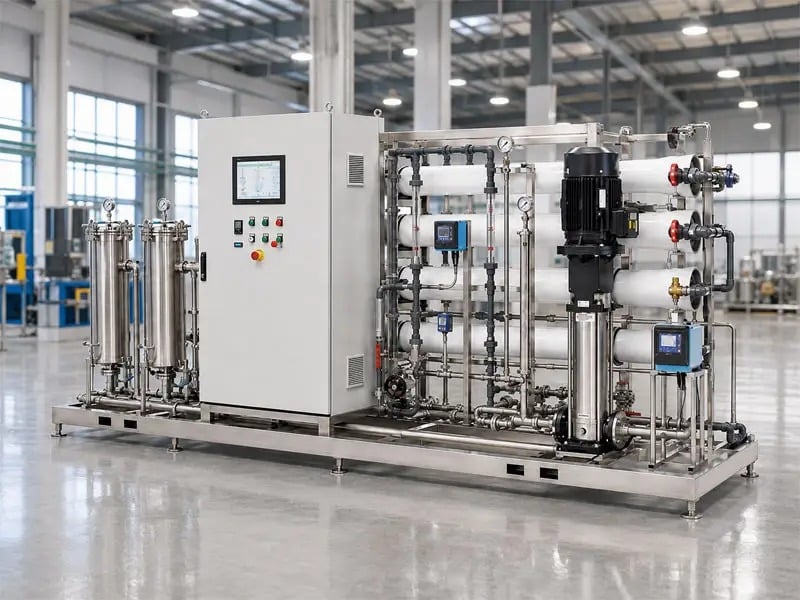
Ultrafiltration membranes function as a critical bridge between wastewater treatment and end use applications. UF technology removes suspended solids, bacteria, viruses, and colloids through physical separation, producing water suitable for many industrial applications including cooling systems, non-potable cleaning, and certain process applications. UF operates at relatively low pressure compared to reverse osmosis, reducing energy consumption while delivering reliable turbidity reduction and biological contaminant removal. For industrial water reuse systems treating secondary effluent or process water, UF provides cost-effective pretreatment that protects downstream equipment and extends system lifespan.
The primary advantage of UF in industrial water reuse applications lies in its ability to handle high suspended solids loads without frequent membrane replacement. Systems designed with proper prefilter stages and backflush protocols maintain consistent flux rates and water quality. UF-treated water typically achieves turbidity below 0.1 NTU, suitable for most cooling tower applications, washdown services, and landscape irrigation end use scenarios. Operators appreciate UF's robustness and relatively straightforward maintenance compared to more sophisticated membrane technologies.
Reverse Osmosis (RO) for High-Purity Reclaimed Water Applications
Reverse osmosis delivers the highest level of demineralization and solute removal available in membrane technology, making it essential when end use applications demand ultra-pure water. RO systems remove dissolved salts, ions, and trace contaminants, producing water with conductivity below 50 µS/cm suitable for boiler feed, electronics manufacturing, pharmaceutical processes, and other sensitive applications. Industrial water reuse programs utilizing RO technology can recycle process water streams that would otherwise require disposal, creating genuine closed-loop manufacturing systems. RO technology transforms industrial wastewater into a valuable resource rather than an environmental liability.
The trade-off with RO is higher energy consumption and lower recovery rates compared to UF, since RO must overcome osmotic pressure to force water through semi-permeable membranes. However, for end use applications where water quality directly impacts product quality or equipment longevity, RO investment provides compelling return on investment. Combined RO and UF configurations maximize efficiency by using UF as pretreatment for RO systems, extending RO membrane life and improving overall treatment reliability. Modern industrial water reuse facilities often employ hybrid membrane strategies to match specific end use requirements while optimizing operational expenses.
Designing Treatment Systems That Match End Use Demands
Assessing Your Facility's Water Consumption and Quality Needs
Effective industrial water reuse begins with comprehensive water audit identifying all potential source streams and end use opportunities. Facilities must map cooling water discharge volumes, process wash effluent, rinse water streams, and other wastewater sources against identified end use applications like cooling tower makeup, equipment washdown, landscape irrigation, or process recirculation. This matching process reveals which reclaimed water quality specifications and treatment technologies suit your facility's specific reuse quality requirements. Understanding the volume and consistency of available source water directly influences treatment system design and expected payback timelines.
End use demand forecasting prevents treating too much or too little reclaimed water, ensuring system investment aligns with actual facility needs. Seasonal variation in water demand requires flexible treatment systems capable of adjusting capacity based on real-time consumption patterns. Water reuse quality monitoring protocols should include testing schedules and parameter thresholds specific to each end use category rather than applying uniform standards across all applications. This targeted approach to reuse quality management improves system reliability while controlling operational costs.
Integrating Treatment Stages for Optimal Performance
Multi-stage treatment sequences ensure consistent achievement of end use water quality targets while providing operational resilience. Typical industrial water reuse systems employ screening, coagulation, sedimentation, sand filtration, UF, and potentially RO stages arranged to progressively achieve required reuse quality levels. The selection and sequencing of treatment stages depends on source water characteristics, end use specifications, and economic constraints. Automated control systems continuously monitor treatment performance, adjusting chemical doses and backflush frequencies to maintain reliable water quality delivery to end use applications.
Redundancy in critical treatment components protects against equipment failure and maintains continuous water supply to essential end use processes. Storage capacity between treatment and end use allows flexibility in operational scheduling and compensates for fluctuations in wastewater generation. Regular preventive maintenance programs focused on membrane integrity, filter performance, and chemical injection accuracy prevent unexpected deterioration in reclaimed water quality. Facilities investing in robust monitoring and maintenance infrastructure maximize system reliability and achieve sustainable long-term water reuse programs.
FAQ
What water quality parameters are most important for different end uses in industrial water reuse?
Cooling tower makeup requires turbidity control and hardness management but tolerates higher dissolved solids, while boiler feed demands low conductivity and silica levels. Process water for manufacturing may require removal of specific ions or microorganisms depending on the application. Each end use has unique parameter thresholds; identifying these requirements before designing treatment systems ensures your reuse quality matches actual operational needs and prevents costly system failures or product contamination.
Can UF and RO work together in industrial water reuse systems?
Yes, hybrid systems combining UF pretreatment with RO downstream significantly improve overall performance and cost efficiency. UF removes suspended solids and biological contaminants that could damage RO membranes, extending RO life and reducing maintenance requirements. This two-stage membrane approach allows facilities to achieve ultra-pure reclaimed water for demanding end use applications while managing operational costs more effectively than standalone RO systems treating untreated wastewater.
How do I determine the right treatment technology for my facility's water reuse needs?
Begin with a comprehensive audit of available wastewater streams, your facility's end use applications, and quality requirements for each application. Conduct pilot testing with candidate treatment technologies using actual facility wastewater to verify performance under real operating conditions. Evaluate capital costs, operating expenses, energy consumption, and maintenance requirements for different technology combinations. Select the most cost-effective approach that reliably achieves the reuse quality specifications necessary for your identified end use applications while providing operational flexibility for future demand changes.

 EN