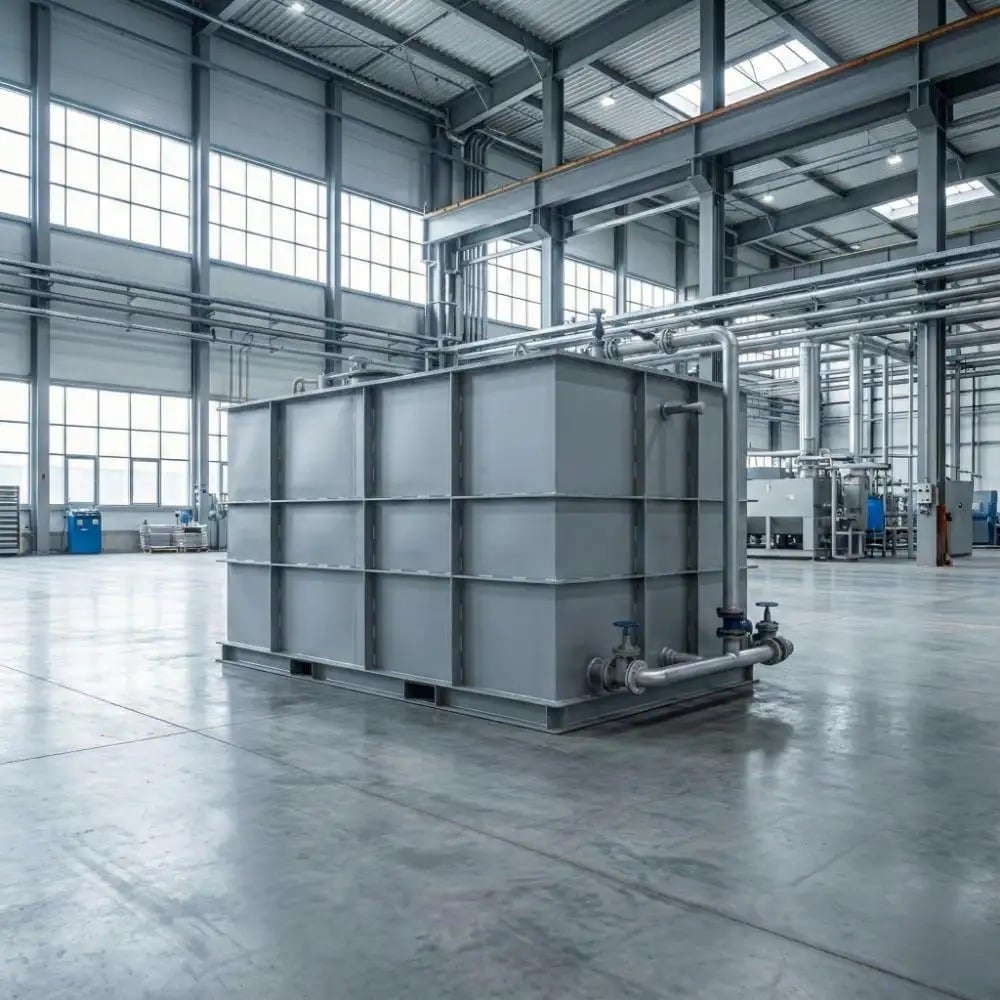
Selecting the right industrial wastewater evaporator is one of the most critical decisions in wastewater management, yet many facilities overlook a fundamental design factor: feed variation. The performance, reliability, and operating cost of your evaporation system depend heavily on how well you account for fluctuations in incoming wastewater composition and volume. Facilities that ignore feed variability often find themselves with undersized equipment during peak loads or oversized systems during lean periods, both of which waste capital and reduce efficiency.
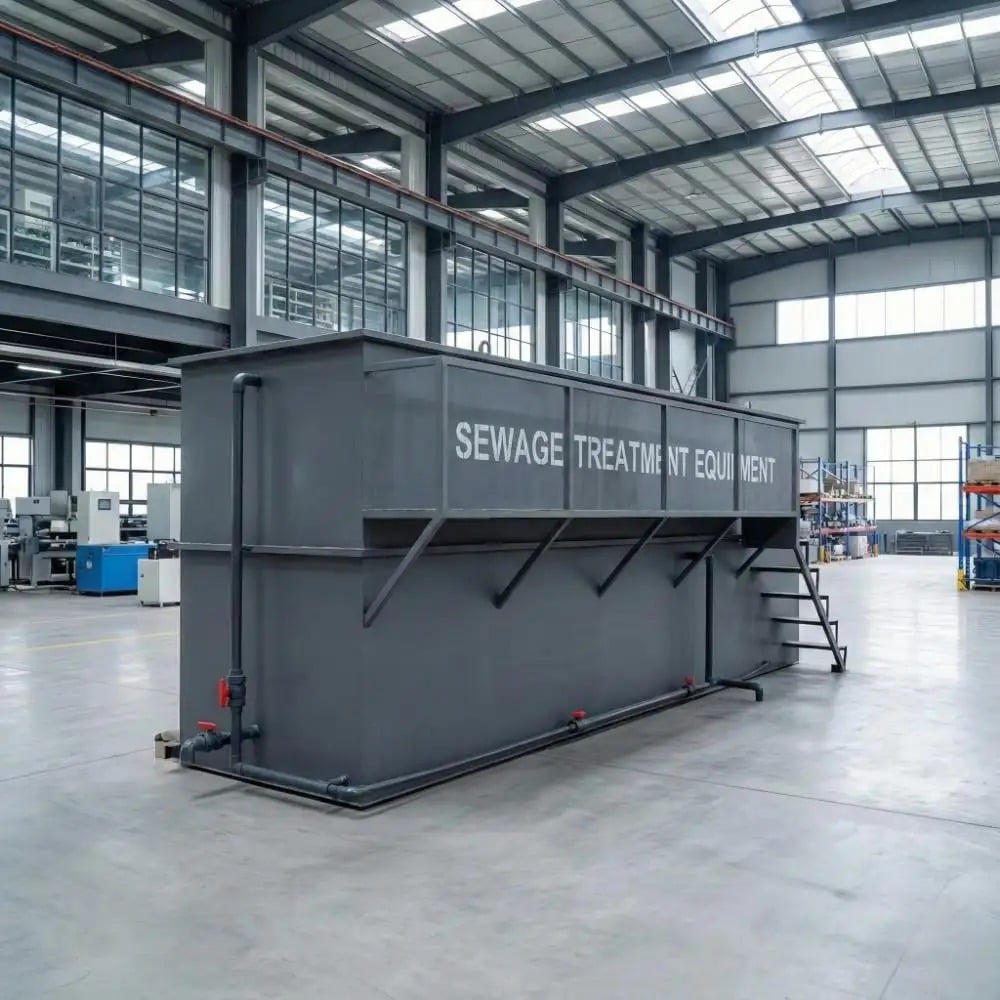
Feed variability—shifts in flow rate, temperature, dissolved solids concentration, and chemical composition—directly influences how an industrial wastewater evaporator must be sized and operated. Understanding this relationship transforms sizing from a simple nameplate capacity calculation into a strategic engineering decision. This article explores why feed variation matters, how it affects capacity planning, and what sizing parameters you must consider to ensure your evaporator system performs reliably across real-world operating conditions.
Understanding Feed Variation and Its Impact on Sizing
What Constitutes Feed Variability in Industrial Applications
Feed variability encompasses multiple dimensions of incoming wastewater characteristics. Volume fluctuations are the most obvious: production schedules, batch processes, and seasonal demand create peaks and troughs in daily throughput. Many facilities experience 30–50% variation between minimum and maximum daily flows. Equally important is TDS variability—the concentration of total dissolved solids changes based on production chemistry, cleaning cycles, and water reuse practices. A facility might receive 5,000 mg/L TDS on one day and 12,000 mg/L the next, depending on process operations.
Temperature variation also affects sizing decisions. Incoming wastewater may arrive at 25°C or 65°C depending on whether it comes fresh from hot processes or has cooled during holding. TDS composition itself varies: chlorides, sulfates, organics, and other solutes shift based on upstream process changes. These interconnected variables mean that an industrial wastewater evaporator designed for average conditions will struggle during peaks and sit idle during valleys, both scenarios representing poor capital utilization and operational risk.
Why Standard Capacity Ratings Miss Real Operational Reality
Equipment manufacturers provide sizing charts based on ideal conditions: stable feed rates, constant TDS, and standard influent temperature. A nameplate capacity of 50 gallons per hour represents performance under those controlled assumptions. Real operations rarely match these assumptions. When feed TDS climbs unexpectedly, evaporation rate drops because the system must concentrate solution further against increasing osmotic pressure. When flow surges, residence time compresses, and vapor generation may lag behind feed demand. An industrial wastewater evaporator rated for 50 gal/hr at 5,000 mg/L TDS might deliver only 35 gal/hr at 10,000 mg/L, a 30% capacity reduction that catches operators off guard.
Sizing only to average conditions creates a hidden efficiency tax. The system overshoots capacity during low-concentration, high-flow periods (wasting thermal energy), and undershoots during high-concentration, low-flow periods (creating backlog or requiring alternative disposal). Proper sizing accounts for the realistic operating envelope by establishing design basis around the 80th or 85th percentile of anticipated conditions, not the average or peak.
Sizing Methodology Accounting for Feed Variation
Establishing Design Basis Parameters
Correct industrial wastewater evaporator sizing begins with establishing realistic design feed specifications. Collect 4–12 weeks of operating data on flow rate, inlet temperature, TDS concentration, and any available composition breakdown. Calculate mean, median, standard deviation, and percentile distributions. The 80th percentile flow and the 85th percentile TDS become your primary sizing targets—these represent conditions that occur regularly but are not peak extremes. For capacity planning, use these percentile values rather than theoretical maximum flows.
Document the relationship between TDS and flow: do high flows correlate with low TDS, or do they move together? Anticorrelation (high flow, low TDS) is common in rinse-heavy operations and means the evaporator must handle both high throughput and low-concentration feed simultaneously. High correlation (both peak together) simplifies sizing somewhat because peak concentrate generation occurs at peak TDS, but both demands still require adequate heat and surface area. This relationship shapes equipment selection because you must handle the worst-case combination, not independent worst cases.
Translating Variability into Evaporation Duty
Once design feed parameters are established, calculate evaporation duty accounting for feed variation impact on concentrate volume. The crucial metric is solids loading: feed flow multiplied by TDS concentration. A facility receiving 40 gal/min average at 6,000 mg/L average but experiencing 50% flow variation and TDS swings from 4,000 to 9,000 mg/L faces very different sizing demands depending on which combination occurs. Sizing the industrial wastewater evaporator around the 80th–85th percentile of combined solids loading ensures equipment handles typical high-load conditions without oversizing for rare extremes.
Capacity must account for concentrate handling as well. As feed TDS increases toward saturation, concentrate volume decreases but concentrate disposal burden may increase if facilities are near crystallization limits. Some facilities size for an intermediate TDS target—say 45,000 mg/L or 50,000 mg/L—rather than pursuing maximum concentration, accepting higher concentrate disposal costs in exchange for stable, reliable sizing that rarely hits saturation limits. This pragmatic approach prevents sizing complications and reduces operational risk from unexpected high-TDS events.
Operational Considerations and Long-Term Sizing Strategy
Balancing Peak Capacity Against Average Utilization
Oversizing an industrial wastewater evaporator to handle absolute peak feed (rare 95th percentile conditions) is economically inefficient. You pay full capital cost for equipment that runs at partial load most of the time, wasting energy and reducing thermal efficiency. Undersizing to average conditions leaves you vulnerable to backup, emergency disposal, or process shutdown during foreseeable high-load periods. The optimal strategy sizes to the 80th–85th percentile, accepting that a few days per month might require feed reduction, tank storage, or temporary alternative disposal. This approach balances capital efficiency, operational reliability, and realistic budget allocation.
Build in operational flexibility when possible. Equip the system with surge capacity—a holding tank that can absorb 4–8 hours of excess feed during peaks—allowing the evaporator to process at its design rate rather than spike capacity demand. Feed variability becomes manageable if the system can time-shift loads rather than meet every instantaneous fluctuation. This is especially valuable for batch operations or facilities with predictable production cycles.
Managing Sizing Across Equipment Lifecycle
Feed characteristics may shift over time as production processes evolve, product mix changes, or water reuse intensifies. An industrial wastewater evaporator sized appropriately today might become mismatched in five years. Specify equipment with thermal and operational headroom so modest TDS increases or flow adjustments do not immediately throttle performance. Modular evaporator designs or dual-unit installations provide long-term flexibility: you can start with one unit sized to 75% anticipated maximum, then add capacity later as needs evolve. Turnkey single-unit designs lack this adaptability, making long-term variability planning critical at the sizing stage.
Include performance monitoring provisions: differential pressure gauges, temperature sensors, and flow instrumentation allow operators to track whether actual feed variation aligns with design assumptions. If measured variability significantly exceeds the design basis within 1–2 years, early retrofit or expansion decisions become data-driven rather than reactive.
FAQ
How does feed variation affect concentrate disposal costs?
When an industrial wastewater evaporator handles higher TDS than expected, concentrate disposal volume may shrink but disposal cost per unit sometimes increases if saturation limits force lower final concentration targets or specialized handling. If sizing underestimates variability, equipment runs at reduced efficiency more often, increasing total thermal energy per unit of waste processed, which raises operational cost. Proper sizing to the realistic variability envelope minimizes both concentrate volume surprises and energy waste.
What data should I collect before sizing an industrial wastewater evaporator?
Collect minimum eight weeks of daily records: inlet flow rate, inlet temperature, TDS or conductivity, any composition analysis available, and production volume or batch cycle information. Calculate statistical distributions and identify correlation patterns. Distinguish between predictable variation (batch cycles, seasonal patterns) and random noise. This data foundation transforms sizing from guesswork into engineering-based capacity planning that accounts for realistic feed variability.
Can a single industrial wastewater evaporator handle both high flow and high TDS conditions?
Yes, but sizing must account for the realistic duty envelope: the combination of flow and TDS that occurs most frequently, not independent peak values. Most evaporator designs handle such variation through excess thermal capacity and vapor generation headroom. However, extreme simultaneous peaks (very high flow plus very high TDS occurring together) may exceed single-unit capacity, making dual-unit or hybrid approaches necessary if that combination is foreseeable.

 EN