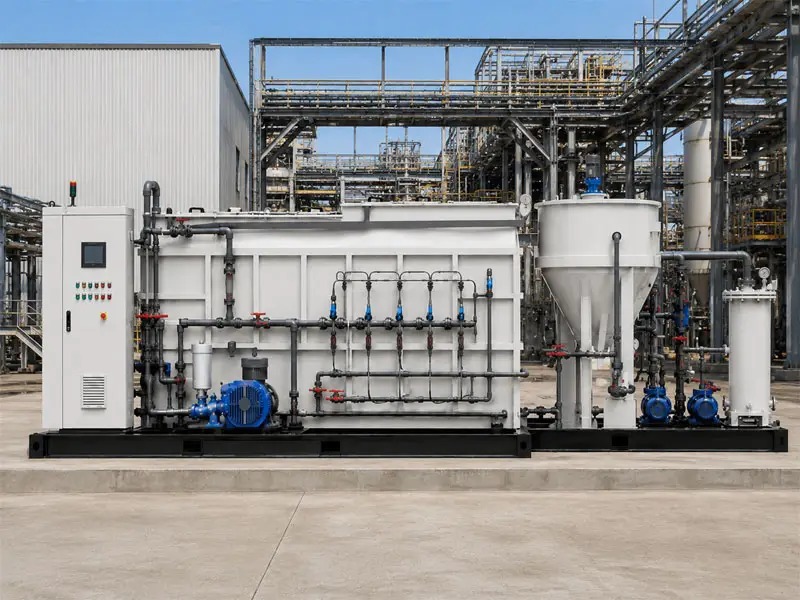
The food processing sector consumes significant resources to manage wastewater, with food industry wastewater treatment representing one of the largest operational expenses for many facilities. Energy consumption in these treatment systems often accounts for 30–40% of total plant operating costs, making efficiency improvements both economically attractive and environmentally responsible. Reducing energy use without compromising treatment stability requires a strategic understanding of where resources are spent and how modern technologies can deliver measurable results.
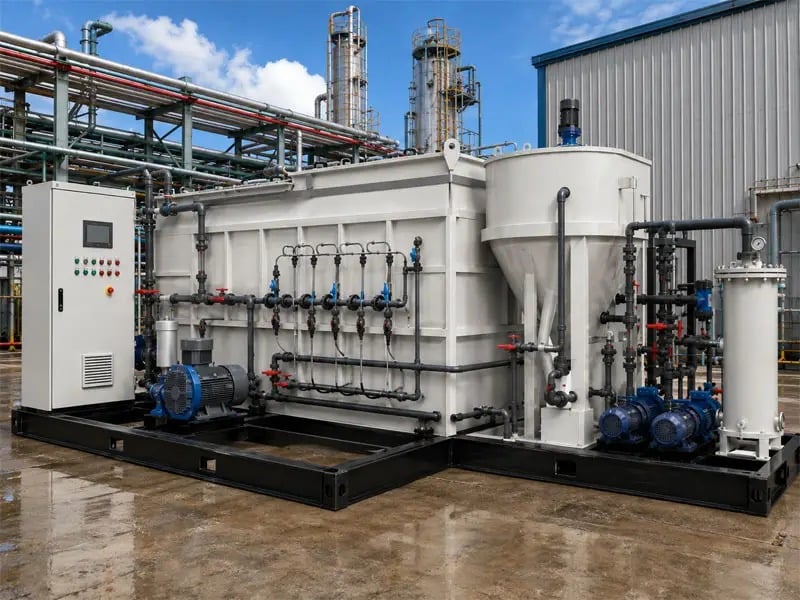
Food processing facilities face unique wastewater challenges due to high organic loads, variable flows, and diverse contaminants from meat, dairy, beverage, and produce operations. Traditional treatment approaches often rely on continuous high-intensity aeration and mechanical processes that consume excessive power. Modern optimization strategies balance treatment effectiveness with intelligent operational controls, allowing facilities to maintain regulatory compliance while cutting energy consumption by 15–25% in many cases.
Understanding Energy Consumption in Food Wastewater Systems
Where Energy Use Concentrates
In food industry wastewater treatment plants, aeration typically consumes 40–60% of total electrical demand. Pumping, mechanical mixing, sludge handling, and thermal processes account for the remainder. Food processing wastewater often requires aggressive biological treatment due to high biochemical oxygen demand (BOD) and chemical oxygen demand (COD) levels. Without optimization, operators run blowers and pumps at constant, conservative settings designed for worst-case scenarios, ignoring actual treatment needs during periods of lower contamination loads.
The challenge intensifies because food processing generates highly variable wastewater flows and strengths. Weekend shutdowns, seasonal production changes, and product-line switches create dynamic conditions that static system designs cannot accommodate efficiently. Aeration equipment sized for peak loads often operates at part-load conditions, delivering excess oxygen and consuming unnecessary energy.
Treatment Stability as a Non-Negotiable Requirement
Regulatory frameworks and discharge permits establish strict limits on suspended solids, BOD, nutrients, and other parameters. In food industry wastewater treatment, any efficiency approach that compromises biological stability risks permit violations, fines, and operational shutdowns. Effective optimization therefore requires technologies and methods that reduce energy input while maintaining or improving treatment performance metrics. This distinction separates genuine optimization from dangerous cost-cutting.
Strategic Optimization Approaches
Advanced Aeration Control Systems
Modern dissolved oxygen (DO) sensors and real-time process controls allow aeration equipment to adjust automatically based on actual treatment demand rather than fixed schedules. Variable frequency drives (VFDs) on blowers and compressors enable smooth speed adjustment, delivering precise oxygen transfer rates and eliminating the efficiency loss from throttling valves or bypass systems. When integrated with process analytics, these systems reduce energy consumption by 20–30% while improving treatment consistency.
In food industry applications, adaptive control responds to incoming load variations within minutes, preventing both oxygen depletion and wasteful excess aeration. Nitrification and denitrification phases can be optimized independently, and sludge retention time can be adjusted for seasonal product changes. The result is a system that delivers stable, predictable treatment while using substantially less energy than conventional fixed-operation designs.
Process Integration and Alternative Technologies
Mechanical vapor recompression (MVR) evaporation and membrane bioreactor (MBR) technologies offer pathways to reduce overall treatment plant energy profiles when properly designed. food industry wastewater treatment systems that incorporate thermal recovery and concentrate recycling can reduce the volume of wastewater requiring biological treatment, thereby lowering aeration demand downstream. Pretreatment technologies such as dissolved air flotation (DAF) or screening remove settleable and floatable solids before biological treatment, reducing the organic load and treatment intensity required.
Sequencing batch reactors (SBRs) allow flexible cycle times that match incoming flow and load patterns, optimizing aeration duration and intensity for each batch cycle. In food industry operations with predictable production schedules, this flexibility translates directly to measurable energy savings compared to continuous-flow activated sludge plants.
Operational Best Practices and Monitoring
Baseline Measurement and Performance Tracking
Identifying savings opportunities requires accurate baseline measurement of current energy consumption patterns in food industry wastewater treatment systems. Disaggregating energy use by process unit—aeration, pumping, heating, sludge dewatering—reveals which areas offer the highest savings potential. Establishing specific metrics such as kilowatt-hours per cubic meter of wastewater treated or per kilogram of BOD removed enables objective progress tracking and benchmarking against industry standards.
Real-time dashboards displaying aeration efficiency, oxygen transfer rates, and energy consumption per unit of treatment help operators identify deviations from optimal performance. Many food industry facilities benefit from periodic audits by wastewater specialists who apply advanced diagnostic tools and data analysis to identify hidden inefficiencies.
Sludge Management and Solids Handling
Sludge handling frequently accounts for 15–25% of total plant energy consumption in food industry wastewater treatment operations. Optimizing thickening, digestion, and dewatering processes yields substantial energy savings without affecting primary treatment performance. Anaerobic digestion of excess sludge produces biogas that can offset energy costs when properly captured and utilized.
In food industry applications, adjusting solids retention time and mixed liquor suspended solids (MLSS) concentration based on seasonal production volumes and incoming waste characteristics reduces both aeration demands and sludge output. This operational flexibility requires skilled staffing and robust process instrumentation but delivers substantial cumulative savings.
FAQ
Can reducing aeration in food wastewater treatment maintain regulatory compliance?
Yes, when optimization uses real-time monitoring and adaptive control systems instead of simple cutbacks. Maintaining precise dissolved oxygen levels and solids retention times ensures treatment performance remains stable while aeration operates only at necessary intensity. Regulatory compliance depends on achieving discharge limits, not on static aeration rates, so intelligent systems can reduce energy while improving or maintaining effluent quality.
What is the typical payback period for energy optimization investments in food industry wastewater treatment?
Most food industry wastewater treatment optimization projects deliver positive return on investment within 2–4 years through reduced energy bills alone. Variable frequency drives, control systems, and process upgrades typically cost $50,000–$500,000 depending on facility size and complexity. With energy cost reductions of 15–25% and potential operational improvements, payback timelines are attractive for most food processors.
Are there maintenance considerations when implementing energy-saving technologies?
Advanced aeration controls and sensors require more frequent calibration and maintenance than conventional systems, but modern equipment is designed for industrial reliability. Training operators on new systems and establishing preventive maintenance schedules ensures sustained energy savings and prevents unplanned downtime. Many food industry facilities find that improved process visibility and control actually reduce emergency maintenance events by operating equipment at optimal conditions rather than stressing it with oversized designs.

 EN