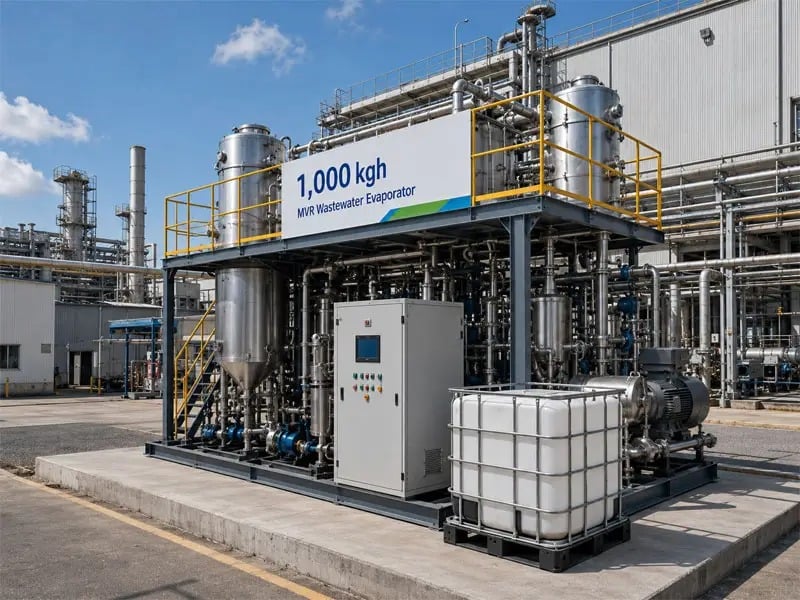
Preparing a water sample for evaporation and crystallization testing is a critical step that determines the accuracy and reliability of your entire assessment process. The quality of your initial preparation directly impacts whether the evaporative crystallizer will perform as expected in full-scale operations. Without proper sample preparation, you risk making incorrect design decisions that could lead to operational failures, increased costs, and regulatory compliance issues downstream.
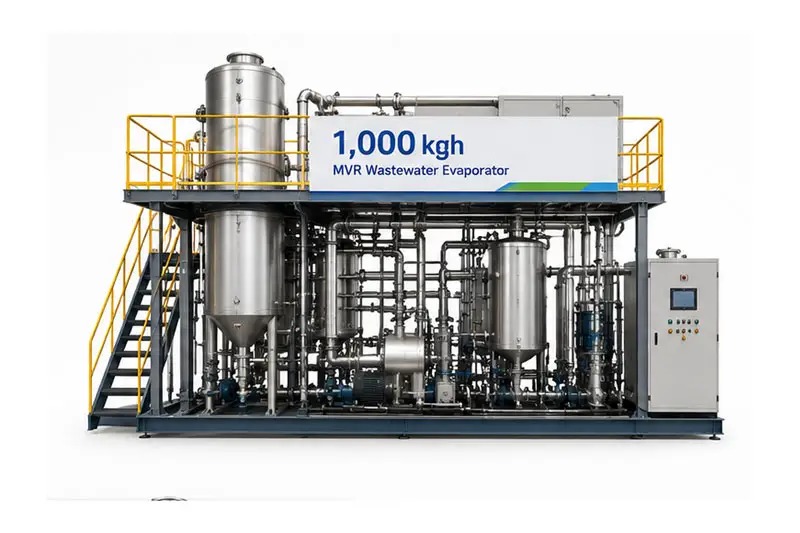
The foundation of effective testing begins with understanding your wastewater composition and collection methodology. A representative water sample must capture the true chemical and physical characteristics of your actual feed stream. This means collecting samples across multiple operational periods, accounting for seasonal variations, and ensuring that your sample handling procedures preserve the integrity of dissolved solids, pH balance, and ionic species present in the original wastewater.
Understanding Your Feed Chemistry
Characterizing the Water Sample Composition
Before any testing occurs, you must thoroughly characterize your water sample through comprehensive analytical testing. This includes measuring total dissolved solids (TDS), specific gravity, pH, conductivity, and the concentration of key ionic species. Understanding feed chemistry is essential because different wastewater streams behave differently during evaporation. Salts that are highly soluble at ambient temperature may precipitate at elevated temperatures, while others remain in solution and require crystallization techniques to separate.
The feed chemistry analysis establishes baseline conditions for your testing protocol. Document the concentration of sodium, potassium, chloride, sulfate, and any specialty compounds unique to your industrial process. These measurements provide the reference point against which you will measure performance during evaporation testing. An evaporative crystallizer designed without this foundational knowledge of feed chemistry cannot operate efficiently.
Managing Sample Stability and Storage
Water sample stability is paramount during the period between collection and testing. Store samples in clean, sealed containers away from direct sunlight and extreme temperature fluctuations. Microbial growth, chemical precipitation, or gas exchange can alter your water sample composition, invalidating your testing results. For samples containing volatile compounds or pH-sensitive species, refrigeration between 2 and 8 degrees Celsius is recommended, and testing should commence within 24 to 72 hours of collection depending on the specific contaminants present.
Label all containers with collection date, location, sample identification number, and initial analytical results. This documentation chain is crucial for regulatory compliance and for correlating testing outcomes back to specific feed conditions. If delays occur before testing, reanalyze your water sample to verify that composition has not shifted, ensuring that your evaporation and crystallization testing reflects current conditions rather than degraded or altered samples.
Preparing Samples for Evaporation Testing
Setting Up Laboratory-Scale Testing Protocols
Laboratory testing of your water sample typically involves heating a measured volume in controlled conditions to observe evaporation behavior and crystalline product formation. Begin by calculating the theoretical maximum recovery based on feed chemistry data, then design your testing to verify or adjust those calculations. Heat your water sample at controlled rates, typically between 5 and 15 degrees Celsius per minute, while recording temperature, volume reduction, and any visible phase changes or crystal formation.
Prepare multiple replicates of your water sample under identical conditions to ensure reproducibility of results. This is essential for design validation because industrial-scale systems must perform consistently across varying feed conditions. Document the temperature at which crystallization begins, the rate of crystal growth, the morphology and size distribution of solid products, and the composition of the final concentrate. Each parameter informs critical decisions about evaporative crystallizer selection, temperature control requirements, and downstream processing steps.
Monitoring Evaporation Behavior and Product Quality
During testing, track the volume of liquid remaining, the mass of dry solids produced, and the composition of both phases. When your water sample begins crystallizing, maintain records of crystal formation temperature, duration, and any operational challenges such as scaling, foaming, or rapid nucleation. These observations are invaluable for design because they reveal potential operational constraints that could impact an industrial evaporative crystallizer's performance.
Analyze the solid products recovered from your water sample using techniques such as X-ray diffraction (XRD) or scanning electron microscopy (SEM) to identify crystal phases and morphologies. This testing reveals whether your feed chemistry promotes formation of desired crystalline products or undesirable mineral scales. Understanding these behaviors allows engineers to specify appropriate design features such as circulation patterns, heating surface materials, and seeding strategies for an industrial system.
Translating Laboratory Results to System Design
Connecting Testing Data to Industrial Evaporative Crystallizer Specifications
Your laboratory testing of the water sample generates critical design parameters that direct the selection and configuration of an evaporative crystallizer for your facility. The evaporation rate observed during testing, combined with your expected daily wastewater volume, determines the capacity and heating duty required. The crystallization temperature and rate define heat exchanger specifications and residence time requirements. The composition and physical properties of crystals produced inform material selection and equipment configuration to prevent scaling and ensure product quality.
Working with equipment designers, translate your testing observations into design specifications. If your water sample demonstrated rapid crystallization and difficult scaling behavior, the design may require stronger mixing, specialized heating surfaces, or frequent cleaning protocols. If testing revealed sensitivity to temperature fluctuations, the system design must include precise temperature control and automated feedback loops. The investment in thorough feed chemistry characterization and comprehensive testing ensures that the evaporative crystallizer specified for your facility will operate reliably and cost-effectively throughout its service life.
Validating Design Assumptions Through Pilot Testing
Before committing to full-scale deployment, consider pilot-scale testing using an actual evaporative crystallizer unit with your water sample at conditions that closely mimic production scenarios. This validates laboratory observations under realistic operational stress, revealing potential scaling, fouling, or performance variations that bench-scale testing cannot fully capture. Pilot testing confirms that the design will deliver projected capacity, product quality, and energy efficiency when scaled to production volumes.
Document all pilot results and compare them against your original laboratory testing projections. Deviations signal necessary design adjustments, such as modified circulation rates, different heating approaches, or altered crystallization temperatures. Successful alignment between laboratory testing and pilot validation provides confidence that the specified evaporative crystallizer will perform as intended and justify the investment in equipment and operational infrastructure.
FAQ
How long can I store a water sample before testing begins?
Most wastewater samples should be tested within 24 to 72 hours of collection to prevent compositional changes from microbial activity, precipitation, or gas exchange. Refrigeration between 2 and 8 degrees Celsius extends stability. Always reanalyze your water sample if delays exceed these timeframes to confirm that feed chemistry remains representative of actual wastewater composition before conducting evaporation and crystallization testing.
What is the minimum information needed from feed chemistry analysis?
At minimum, measure total dissolved solids (TDS), pH, specific gravity, conductivity, and concentrations of major ionic species including sodium, chloride, sulfate, and potassium. This baseline feed chemistry data allows engineers to model evaporation behavior, predict crystallization temperatures, and inform design specifications for your evaporative crystallizer and associated treatment systems.
Why is pilot-scale testing necessary after laboratory results?
Pilot-scale testing with an actual evaporative crystallizer validates that laboratory observations translate accurately to operational conditions. Pilot testing reveals scaling potential, fouling risks, and performance variations under realistic stress that bench-scale testing cannot fully simulate. This validation step ensures that design assumptions are sound before investing in full-scale equipment deployment and operational infrastructure for your wastewater treatment facility.

 EN