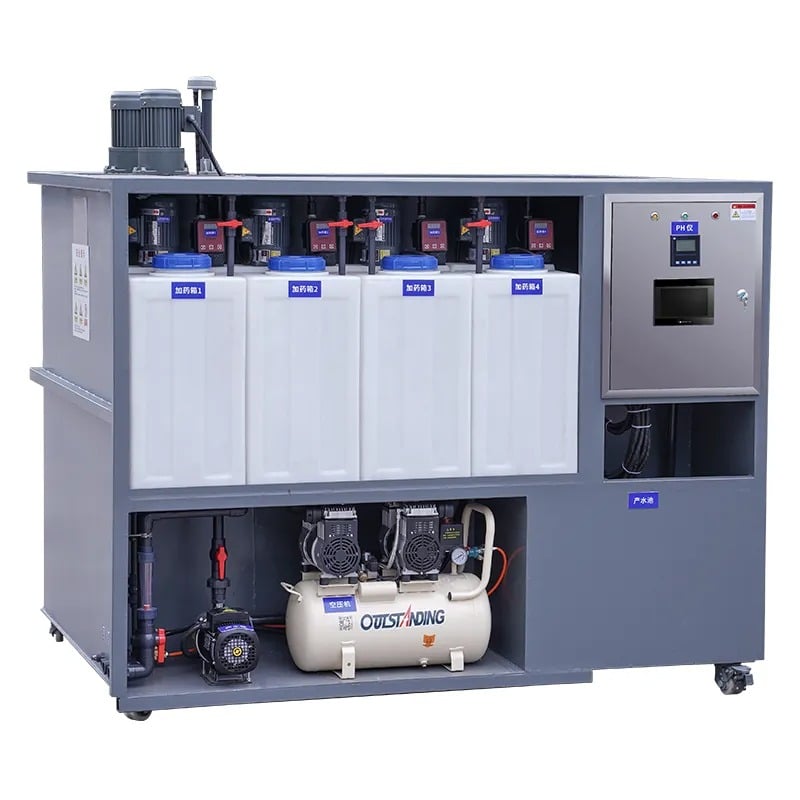
Coagulant dosing before daf wastewater treatment is a critical optimization point that directly influences treatment efficiency, chemical costs, and final effluent quality. Many industrial operations struggle to balance effective solids removal with chemical economy, often resulting in either overdosing that inflates operational expenses or underdosing that compromises treatment performance. Understanding the fundamentals of coagulation and how it integrates with DAF systems enables operators to achieve optimal results while minimizing waste and expense.
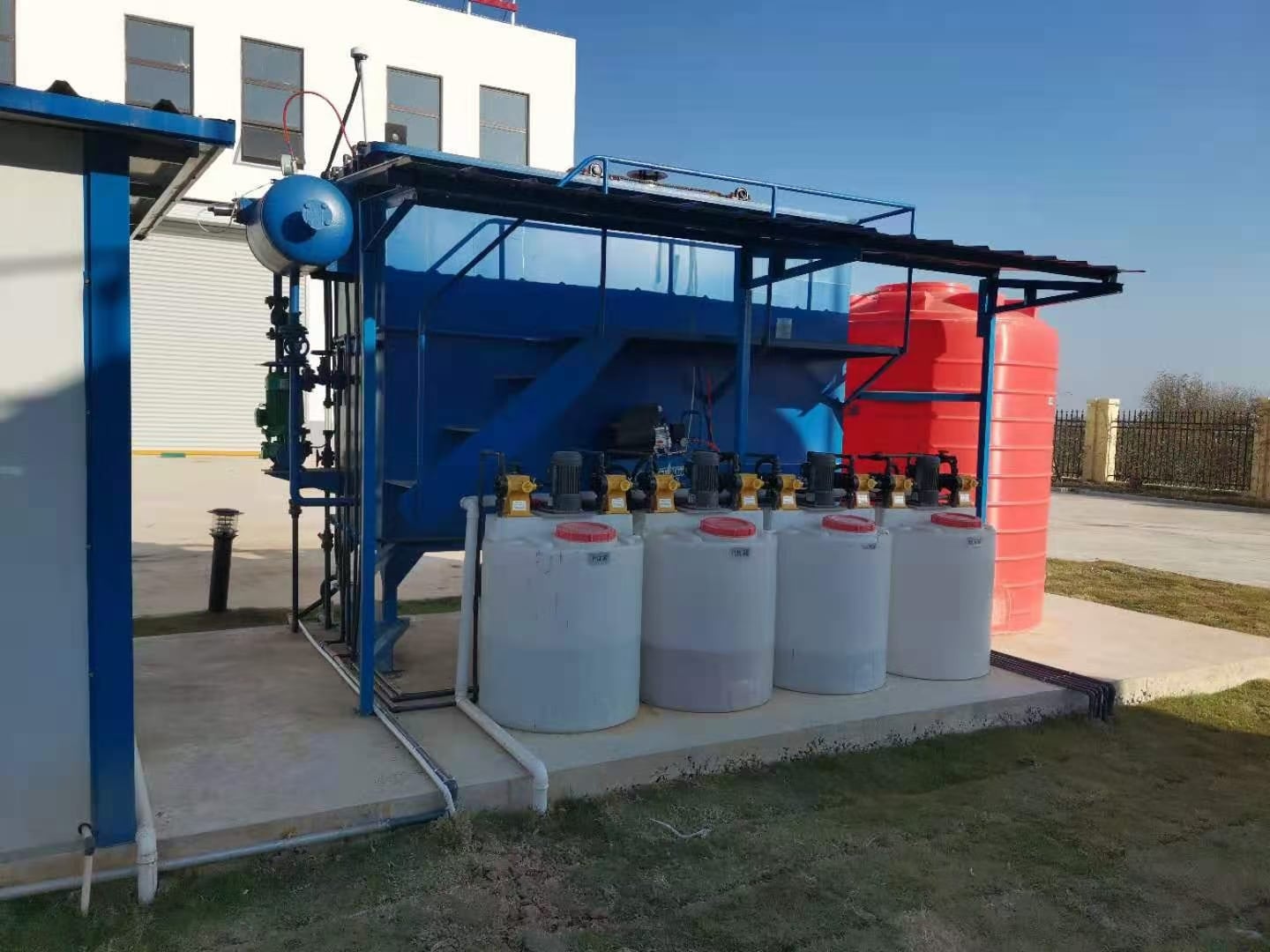
The relationship between coagulation and DAF performance cannot be overstated. Proper dosing of coagulants prepares the wastewater stream by neutralizing colloidal particles and promoting their aggregation into larger flocs. This pre-treatment step is essential because the DAF process relies on precise solids conditioning to achieve reliable separation. When coagulation fails, even the most advanced DAF equipment cannot compensate for poorly conditioned influent, resulting in carryover solids and inconsistent discharge quality.
Understanding Coagulation Before DAF
The Chemistry of Coagulant Selection
Coagulation is the process of destabilizing colloidal particles suspended in wastewater through chemical addition and gentle mixing. The choice of coagulant depends on wastewater composition, pH range, suspended solids concentration, and oil content. Common coagulants include ferric chloride, aluminum sulfate, and polyaluminum chloride, each offering distinct advantages for specific industrial applications. The initial coagulant selection sets the foundation for successful dosing optimization and determines the range of effective dosing rates.
Different coagulants react differently across pH ranges, and many industrial wastewaters naturally exist outside optimal coagulation windows. Understanding the pH-dependent behavior of your chosen coagulant is fundamental to achieving consistent solids removal. When coagulation chemistry is misaligned with the raw wastewater characteristics, operators often compensate by increasing dosing rates, which drives up chemical costs without improving outcomes. Proper coagulant selection eliminates this inefficiency at the source.
Jar Testing for Optimal Dosing Rates
Jar testing is the industry-standard method for determining optimal coagulant dosing before full-scale DAF implementation. The procedure involves adding graduated doses of coagulant to sample bottles representing different treatment scenarios, then observing floc formation, settling characteristics, and supernatant clarity. This empirical approach reveals the dosing sweet spot where solids removal is maximized while chemical consumption remains economical. Performing jar tests regularly—especially when influent characteristics change seasonally or due to process modifications—keeps dosing parameters aligned with current conditions.
Jar testing reveals important insights about solids behavior at different dosing levels. Under-dosed samples display poor floc formation and turbid supernatants, while over-dosed samples may show excessive floc carryover or even re-stabilization of particles. The optimal dose typically produces large, stable flocs with clear supernatant and minimal residual turbidity. This visual feedback from jar testing is invaluable for training operators and building confidence in dosing adjustments before they are implemented in production DAF systems.
Dosing Strategy and System Integration
Inline Monitoring and Real-Time Adjustment
Modern DAF facilities increasingly incorporate inline monitoring instruments to measure turbidity, streaming potential, or particle size distribution between coagulation and DAF stages. These real-time instruments provide objective feedback on coagulation effectiveness and enable operators to adjust dosing automatically or manually within minutes rather than hours. Streaming potential monitoring is particularly valuable because it detects the electrokinetic state of particles before they enter the DAF vessel, offering a direct signal of coagulation completeness. When integrated with proportional-integral-derivative control systems, inline monitoring transforms dosing from a static, operator-dependent practice into a dynamic, responsive process.
The cost of inline instrumentation is often recouped within months through chemical savings alone, making it a rational investment for medium to large-scale operations. By preventing both overdosing and sudden underdosing events, inline systems reduce chemical expenses, minimize sludge volume, and improve DAF overflow clarity. Additionally, continuous data collection enables trend analysis that reveals seasonal patterns and longer-term drift in treatment efficiency, supporting proactive maintenance and process optimization.
Residence Time and Mixing Intensity
Effective coagulation requires both adequate residence time and appropriate mixing intensity between dosing and DAF inlet. The typical rapid-mix retention time should be 1 to 3 minutes at moderate shear rates, followed by a flocculation step of 10 to 20 minutes with low shear conditions that allow particles to collide and build larger aggregates. If residence time is too short, coagulants cannot fully react and solids remain dispersed. Conversely, excessive residence time allows flocs to break apart or become so large they fragment during subsequent handling. Balancing these competing factors requires understanding your facility's hydraulic profile and actual contact times.
Many industrial DAF installations inherit facility layouts that do not naturally support ideal residence times, necessitating design modifications such as dedicated rapid-mix tanks or flocculation chambers. The solids removal efficiency gains from optimizing residence time and mixing intensity often exceed 10 to 15 percent without any increase in coagulant dosing. Conversely, poor mixing can obscure the true optimal dosing range because underdosed, well-mixed systems outperform overdosed, poorly mixed systems in terms of both economics and DAF performance.
Monitoring Performance and Economic Impact
Tracking Chemical Costs and Solids Reduction
Establishing baseline metrics before dosing optimization enables quantification of improvements. Key performance indicators include coagulant consumption per unit of wastewater treated, turbidity reduction in DAF overflow, sludge volume and solids concentration, and chemical cost as a percentage of total treatment expense. Regular tracking of these metrics reveals whether dosing adjustments are delivering expected results and highlights unexpected changes that may signal influent variation or equipment deterioration. Many operators find that optimized coagulation reduces chemical consumption by 15 to 30 percent while simultaneously improving DAF overflow quality, a rare situation where both cost and performance improve together.
Documentation of dosing adjustments and corresponding performance outcomes builds institutional knowledge that supports training, troubleshooting, and long-term process stability. When staff turnover occurs, this documentation enables new operators to understand the rationale behind current dosing practices and avoids regression to suboptimal or wasteful habits. Additionally, regulatory agencies increasingly request demonstration of process optimization efforts, making documented dosing management a compliance advantage.
Seasonal Adjustment and Contingency Planning
Many industrial facilities experience seasonal variations in wastewater characteristics due to weather, production cycles, or raw material sourcing changes. Temperature variations alone can shift optimal coagulant dosing by 10 to 20 percent because reaction kinetics change across the typical operating range. Establishing seasonal dosing profiles through planned jar testing ensures that operators have validated target doses ready before seasonal transitions occur. This proactive approach prevents the period of uncertainty and potential treatment failures that often accompany reactive adjustments.
Contingency planning for influent upsets—such as sudden influxes of non-routine waste streams or unexpected changes in pH or oil content—should include pre-determined dosing increase limits and procedures for supplemental jar testing if upset conditions persist. Operators who understand the theoretical basis for coagulation and have practiced response scenarios respond faster and more confidently to disturbances, reducing treatment failures and regulatory exceedances.
FAQ
What is the primary goal of coagulant dosing optimization before DAF?
The primary goal is to maximize solids removal efficiency and DAF overflow clarity while minimizing chemical consumption and sludge production. Optimal dosing ensures that suspended particles and colloidal material are fully conditioned for separation, enabling the DAF system to achieve its design performance at the lowest cost per unit of effluent treated.
How often should jar testing be performed to maintain optimal dosing?
For stable influent characteristics, jar testing should be performed at least monthly or whenever significant process changes occur. For facilities with highly variable influent streams or those experiencing seasonal shifts, jar testing every two weeks ensures that dosing recommendations remain aligned with current wastewater composition and treatment objectives.
Can inline monitoring replace manual jar testing entirely?
Inline monitoring significantly reduces the frequency of manual jar testing but does not eliminate it entirely. Manual jar testing remains valuable for confirming instrument calibration, evaluating response to new influent conditions, and training operators on coagulation principles. Combining both approaches provides robust assurance that dosing remains optimal across all operating scenarios.

 EN