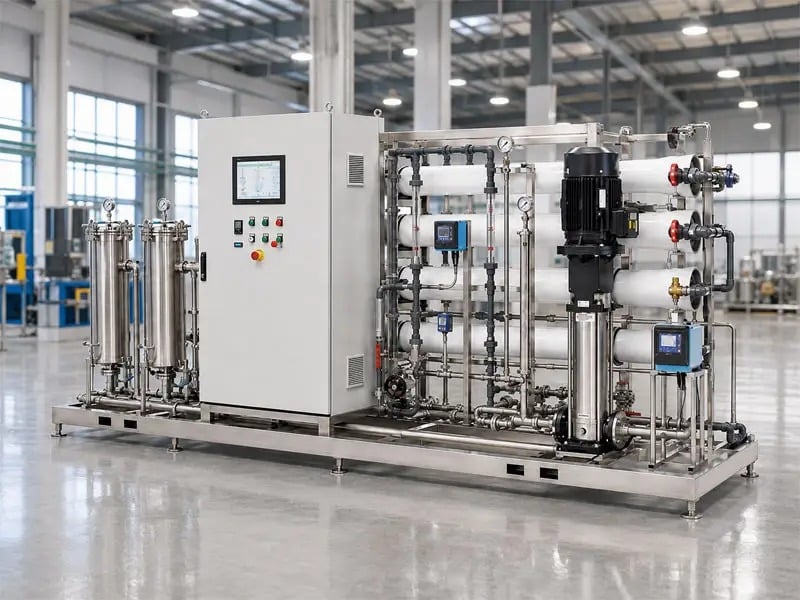
Selecting the right industrial water reuse supplier for your manufacturing facility is a critical operational decision that directly impacts production efficiency, compliance, and long-term cost management. An industrial water reuse supplier delivers the systems, expertise, and ongoing support needed to treat wastewater and return it to productive use within your plant. This choice extends beyond price comparison; it requires careful assessment of technical capabilities, water quality standards, reliability, and alignment with your facility's specific operational demands.

Manufacturing environments rely on consistent water supply for cooling, processing, and cleaning operations. An effective industrial water reuse supplier transforms this challenge into a competitive advantage by enabling your facility to recirculate treated water, reduce municipal consumption, lower operational costs, and strengthen environmental compliance. The reuse capability your supplier provides directly influences sustainability metrics, regulatory standing, and profitability.
Assess Technical Capability and System Design
Evaluate Treatment Technology and Performance
The core strength of any industrial water reuse supplier lies in their treatment technology and proven performance record. Examine the specific treatment methods they employ—membrane filtration, biological processes, chemical treatment, or hybrid systems—and confirm these technologies match your facility's wastewater composition and reuse targets. Request detailed specifications on how their systems achieve the water quality standards your manufacturing processes require. A credible supplier will provide transparent data on contaminant removal rates, effluent consistency, and performance under varying inlet conditions. Ask for case studies from similar manufacturing environments and request site visits to observe their systems in operation. This direct evaluation of their reuse infrastructure reveals whether they understand industrial-grade reliability and can maintain the water quality your operations demand.
Confirm System Scalability and Integration
Your facility's water needs may change as production volumes shift or processes evolve. An experienced industrial water reuse supplier should demonstrate how their system scales to accommodate growth without complete redesign or replacement. Review their modularity design, expansion protocols, and track record adapting existing installations to higher throughput. Discuss integration points with your existing water infrastructure, wastewater systems, and control systems. A supplier who understands industrial integration challenges will clarify installation sequencing, downtime requirements, connection specifications, and compatibility with your monitoring equipment. This assessment prevents costly retrofits and ensures the supplier can support your facility's long-term operational roadmap.
Evaluate Water Quality and Regulatory Compliance
Verify Water Quality Testing and Documentation
Water quality represents the non-negotiable foundation of any reuse program. Conduct detailed discussions with your potential supplier about their testing protocols, quality assurance methods, and compliance with applicable regulations. Confirm they perform regular third-party water quality analysis, maintain detailed records, and provide transparent reporting of treated water characteristics. A reputable supplier will define the specific parameters they guarantee—turbidity, microbial content, chemical composition, and pH—and show how these meet your manufacturing requirements and local environmental standards. Request their quality assurance certifications, laboratory accreditation, and historical performance data. This transparency on water quality standards prevents operational disruptions from out-of-spec water and demonstrates the supplier's commitment to consistent, reliable reuse delivery.
Understand Regulatory Alignment and Support
Environmental regulations governing industrial water reuse vary by region and industry sector. Your supplier evaluation must include their expertise in local discharge permits, reuse standards, and reporting requirements applicable to your jurisdiction. A knowledgeable supplier will guide you through regulatory pathways, help document your reuse system's compliance status, and support permit applications with technical documentation and performance data. Verify they maintain updated knowledge of evolving environmental standards and can adapt their service as regulations change. This regulatory competence protects your facility from compliance violations and demonstrates whether the supplier can be a trusted partner in your ongoing environmental management obligations.
Assess Service, Support, and Long-Term Partnership Value
Review Maintenance, Monitoring, and Response Protocols
An industrial water reuse supplier relationship extends well beyond installation. Evaluate their ongoing service commitment through maintenance scheduling, monitoring capabilities, and response time for system issues. A quality supplier will offer predictive monitoring, routine preventive maintenance, rapid troubleshooting, and spare parts availability. Ask about their service hours, geographic coverage, and backup support protocols to ensure your facility won't face extended downtime during equipment failures. Clarify who manages day-to-day operation and monitoring—whether you perform it in-house, the supplier provides managed service, or a hybrid model applies. Review their staffing, training programs, and technical depth to confirm they can handle complex troubleshooting and process optimization. Strong service infrastructure directly impacts your facility's uptime, reuse system reliability, and total cost of ownership.
Validate Experience, References, and Financial Stability
The longevity and credibility of your industrial water reuse supplier matters significantly for multi-year partnerships. Investigate their industry experience, focusing on installations within your specific manufacturing sector and comparable facility scale. Contact existing references from comparable clients and ask detailed questions about service quality, problem resolution, and partnership satisfaction. Evaluate the supplier's financial stability and business continuity planning to ensure they'll remain operational and able to support your facility throughout the system lifecycle. Assess their investment in technology development and commitment to innovation, as these indicate their capacity to evolve with your facility's needs and emerging industry standards. A stable, experienced supplier with strong references provides confidence in long-term partnership reliability and reduces transition risk.
FAQ
What is the typical cost structure for engaging an industrial water reuse supplier?
Industrial water reuse supplier pricing varies based on system complexity, capacity, treatment technology, and service model. Most suppliers structure costs as equipment capital expense, installation and engineering fees, and ongoing service agreements covering maintenance and monitoring. Request detailed proposals from multiple suppliers to compare total installed cost, financing options, and long-term service fees. Many suppliers also offer operational cost modeling to demonstrate payback periods through reduced municipal water consumption and wastewater discharge charges. Transparent cost discussion early in your supplier evaluation process prevents budget surprises and enables accurate project justification.
How long does it typically take to implement a reuse system from an industrial water reuse supplier?
Implementation timelines depend on system size, facility complexity, regulatory requirements, and site-specific integration challenges. A straightforward reuse installation may require 8 to 16 weeks from final design through operation, while larger or more complex systems often extend to 6 months or longer. During supplier evaluation, ask for detailed project schedules, milestone definitions, and factors that influence timeline. Discuss potential constraints like equipment lead times, permitting delays, facility access, and your ability to accommodate installation activities. A supplier who provides realistic schedules and proactively manages timeline risks demonstrates professional project management and reduces operational disruption.
What maintenance and training does an industrial water reuse supplier provide after system startup?
Comprehensive post-startup support distinguishes quality suppliers from basic equipment vendors. Expect training on system operation, water quality monitoring, routine maintenance procedures, and troubleshooting protocols. Many suppliers provide operator certification programs, online documentation, and accessible technical support for day-to-day questions. Clarify whether the supplier includes preventive maintenance visits, spare parts, calibration services, and system optimization support within their service agreement. Discuss escalation procedures for equipment failures and emergency response availability. Strong supplier evaluation includes confirming their training depth, support accessibility, and commitment to your operational team's long-term capability development and system confidence.

 EN