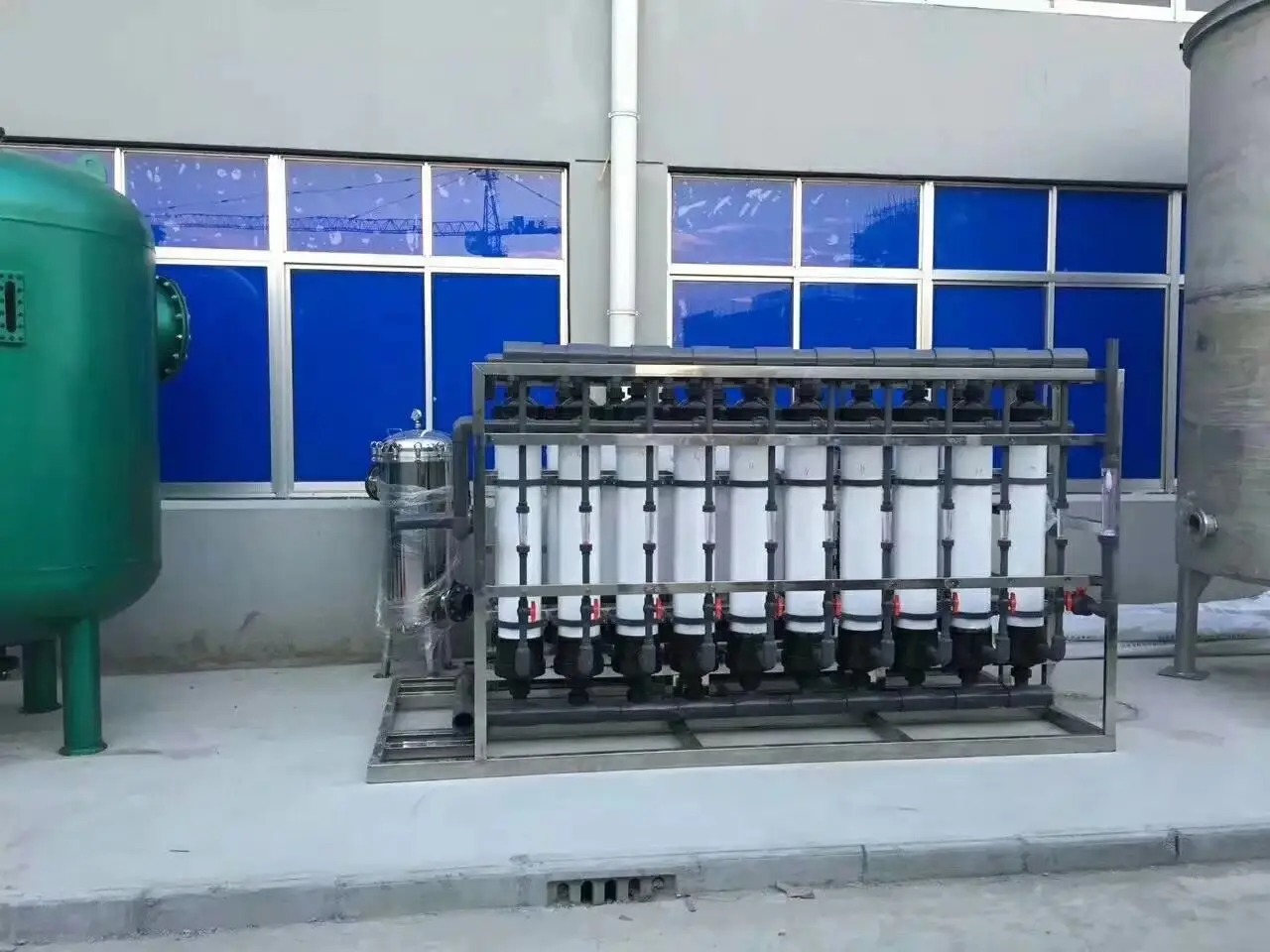
Deciding whether your facility needs ultrafiltration (UF), reverse osmosis (RO), or a combination of both is one of the most critical decisions in designing an effective industrial water reuse system. The choice directly impacts your capital investment, operating costs, water recovery rates, and compliance with discharge and reuse regulations. Getting this decision right requires understanding your water quality goals, the contamination profile of your source water, and the specific demands of your intended reuse applications.
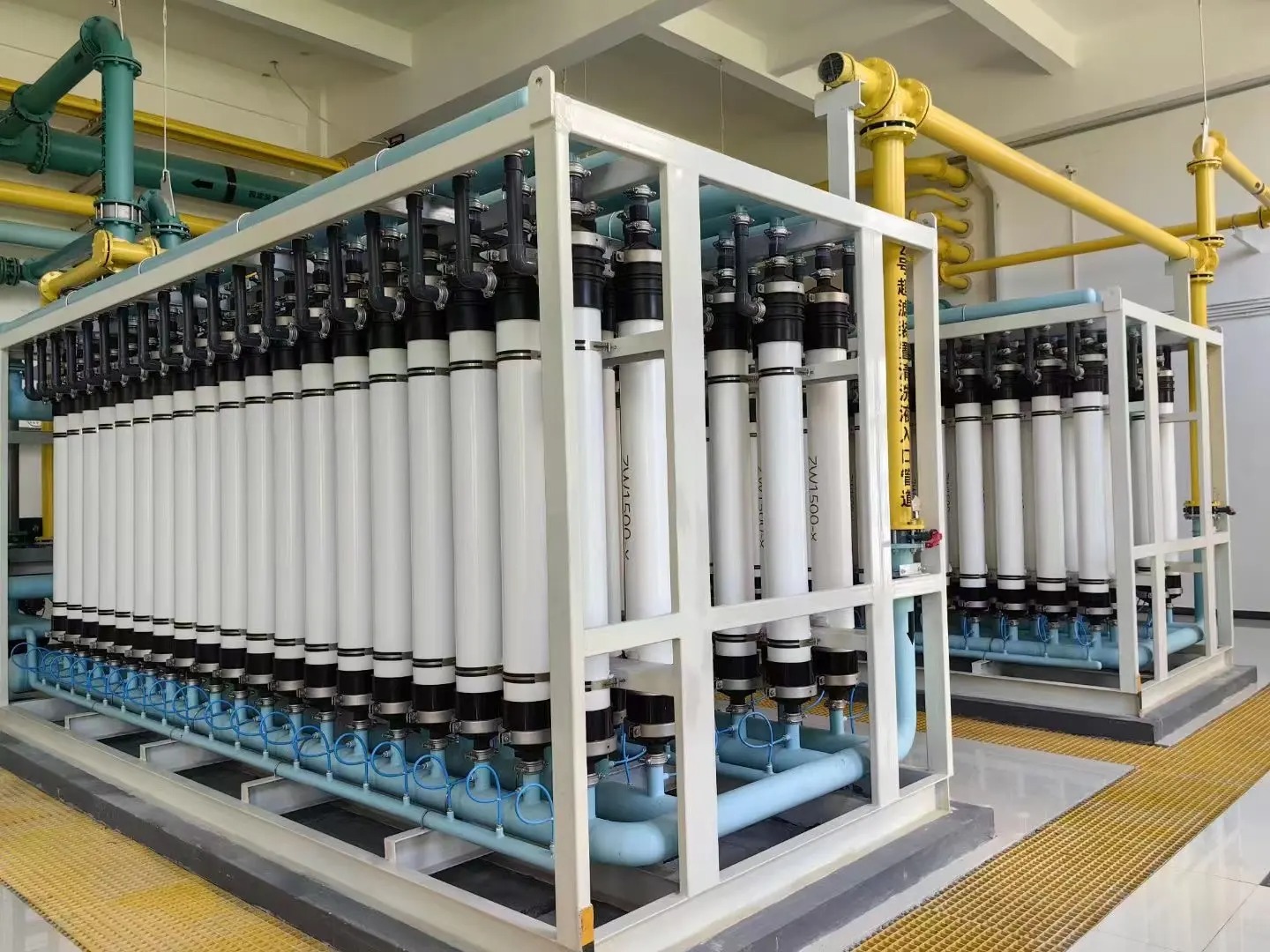
Many industrial facilities treat this question in isolation, but effective treatment design integrates both technologies into a logical sequence based on reuse quality requirements, source water characteristics, and budget constraints. UF excels at removing suspended solids and large molecular contaminants, while RO provides ultra-high purity for sensitive applications. Understanding when each technology becomes necessary—and when both work together—ensures your system delivers reliable performance and maximum water recovery value.
Understanding Your Reuse Quality Requirements
Defining Reuse Application Standards
The starting point for any treatment decision is clarity on what your recovered water will do. Different industrial applications demand vastly different reuse quality standards. Cooling tower makeup water, boiler feed, or process water for non-contact applications typically require less stringent treatment than applications involving direct product contact or sensitive manufacturing processes.
Regulatory and Application Benchmarks
Industrial water reuse is governed by local regulations, industry standards, and customer requirements that specify minimum treatment levels. Cooling water systems often accept UF-treated water with turbidity below 1 NTU, while pharmaceutical manufacturing or semiconductor fabrication may require RO-treated water with conductivity below 10 µS/cm. Clarifying these benchmarks early prevents overtreatment that wastes capital and energy, and undertreatment that risks process failures or regulatory violations. Process selection becomes straightforward once these quality targets are defined and documented.
Evaluating Source Water Characteristics and Contaminant Profiles
Assessing Suspended Solids and Particulate Load
Your source wastewater composition fundamentally shapes whether UF alone suffices or whether RO becomes necessary. Wastewater with high suspended solids, colloidal material, and biological content benefits significantly from UF pretreatment because these contaminants would rapidly foul RO membranes if they entered directly. UF removes particles typically down to 0.01 to 0.1 micrometers, protecting downstream RO units and extending their operating life. If your source water already shows low turbidity and minimal suspended load—such as treated effluent from a secondary clarifier—you may achieve acceptable reuse quality with UF alone for many applications.
Dissolved Solids and Salt Content Evaluation
Beyond particles, dissolved minerals and salts present in your source water determine whether RO becomes essential. High TDS sources, especially those with divalent ions like calcium and magnesium, cannot be adequately treated by UF because UF does not remove dissolved ions. If your reuse application cannot tolerate elevated TDS—such as cooling water that requires low TDS to prevent scaling, or process water for sensitive manufacturing—RO becomes necessary after UF pretreatment. Conversely, if your reuse quality standards allow modest TDS levels and your application tolerates some salinity, UF pretreatment may be sufficient without the capital and energy expense of RO.
Process Selection Framework for Treatment Approach
Single-Stage UF Systems and Their Application Scope
UF alone represents the most cost-effective entry point for industrial water reuse when source water and reuse quality standards align favorably. Single-stage UF works well for applications including cooling tower makeup, landscape irrigation, toilet flushing, and general process water that tolerates modest TDS and has minimal sensitivity to dissolved contaminants. UF membrane systems typically operate at 40–60 psi, consume moderate electrical energy, and generate 75–85% recoverable water with limited brine disposal challenges. If your reuse quality requirements fall within this envelope and your wastewater source shows manageable particulate loading, process selection favors UF as a standalone solution that delivers strong capital and operating economics.
Hybrid UF and RO Systems for Advanced Reuse Scenarios
When reuse quality standards are stringent or source water contains problematic dissolved contaminants, combining UF and RO in sequence delivers superior results compared to either technology alone. UF pretreatment removes suspended solids, biofilm precursors, and colloidal foulants, allowing RO membranes to operate cleanly with extended service intervals and reduced chemical cleaning frequency. This hybrid configuration optimizes both capital deployment and long-term reliability because RO elements are not overwhelmed by particulate fouling that shortens membrane life. Many industrial facilities opt for this approach when handling challenging source water streams or when reuse applications demand pharmaceutical-grade purity, process water for electronics manufacturing, or feed for critical thermal processes.
Standalone RO Systems for Ultra-Pure Reuse Water
In rare cases where source water is already clarified through prior treatment stages and reuse requirements demand ultra-high purity, standalone RO without UF pretreatment may be viable. However, this approach requires robust source water characterization and typically includes supplementary pretreatment such as cartridge filtration or media filtration to prevent RO fouling. Most industrial water reuse professionals recommend UF pretreatment ahead of RO because the additional capital cost of UF is modest compared to the operational disruptions and membrane replacement costs triggered by RO fouling. Process selection generally favors the UF-RO hybrid unless the source water is already exceptionally clean and regulatory or application constraints justify the risks of direct RO operation.
Economic and Operational Trade-Offs in Process Selection
Capital Investment and System Footprint
UF systems require less equipment space and lower upfront investment than hybrid UF-RO arrangements, making them attractive for facilities with budget constraints or space limitations. A single-stage UF installation might cost 40–60% less than an equivalent hybrid system while still recovering 75–85% of input water. However, if your reuse quality standards genuinely require RO-level treatment, installing UF alone creates false economy because subsequent compliance failures or product quality issues will exceed the initial savings. Conversely, specifying RO when UF satisfies your reuse quality requirements wastes capital on unnecessary membrane elements and associated pretreatment infrastructure. Accurate process selection balances initial capital against long-term reliability and compliance risk, not lowest upfront cost alone.
Operating Energy and Chemical Costs
Operating expenses diverge significantly between single-stage UF and hybrid systems. UF typically consumes 2–5 kWh per 1,000 gallons treated, while RO adds 5–15 kWh per 1,000 gallons depending on feed TDS and target recovery rate. Chemical expenses for membrane cleaning, pretreatment pH adjustment, and scale inhibition accumulate more rapidly with RO than with UF alone. For industrial water reuse scenarios where lower reuse quality is acceptable, the lower energy and chemical profile of UF-only systems translates into multi-year operational savings. For applications demanding advanced reuse quality standards, hybrid systems justify their operating costs through reliable performance and compliance certainty. Understanding your facility's actual reuse quality requirements prevents over-specifying treatment technology that inflates operating budgets unnecessarily.
FAQ
When is UF sufficient for industrial water reuse without adding RO?
UF alone is typically sufficient when your reuse application tolerates TDS levels in the 1,000–2,000 mg/L range, your source water shows manageable suspended solids and biological content, and regulatory standards do not mandate ultra-low TDS or dissolved contaminant removal. Cooling tower makeup, landscape irrigation, and general process water often fall into this category. If your wastewater source is already clarified and your reuse quality standards focus on particulate and microbial safety rather than dissolved mineral reduction, process selection normally favors UF as a cost-effective standalone solution. However, verify your specific reuse quality requirements and local regulations before finalizing a UF-only approach.
What are the primary advantages of combining UF and RO for industrial water reuse?
Combining UF and RO delivers superior pretreatment for RO membranes, extends membrane life by 50–100% through reduced fouling, enables higher recovery rates by protecting RO elements from particulate damage, and ensures consistent ultra-high purity water that meets stringent reuse quality standards. Hybrid systems reduce chemical cleaning frequency, lower membrane replacement costs over the system lifespan, and provide operational flexibility if source water quality fluctuates seasonally or due to upstream process changes. For industrial water reuse scenarios involving sensitive manufacturing, process control, or compliance-critical applications, the hybrid approach justifies its additional capital investment through improved reliability and lower long-term total cost of ownership.
How do I determine the best treatment approach for my facility's reuse quality needs?
Begin by clearly documenting your intended reuse applications and their specific water quality requirements—TDS limits, turbidity targets, microbial standards, and any contaminant restrictions. Analyze your source wastewater composition including suspended solids concentration, TDS level, and biological content through pilot testing or historical data. Compare your reuse quality targets against the performance envelope of single-stage UF, then determine whether RO becomes necessary to meet dissolved mineral or contaminant restrictions. Consult local regulations and industry standards governing your reuse applications, then conduct a cost-benefit analysis comparing UF alone, RO alone, and hybrid configurations. Process selection emerges logically from this systematic evaluation rather than from generic industry assumptions.

 EN