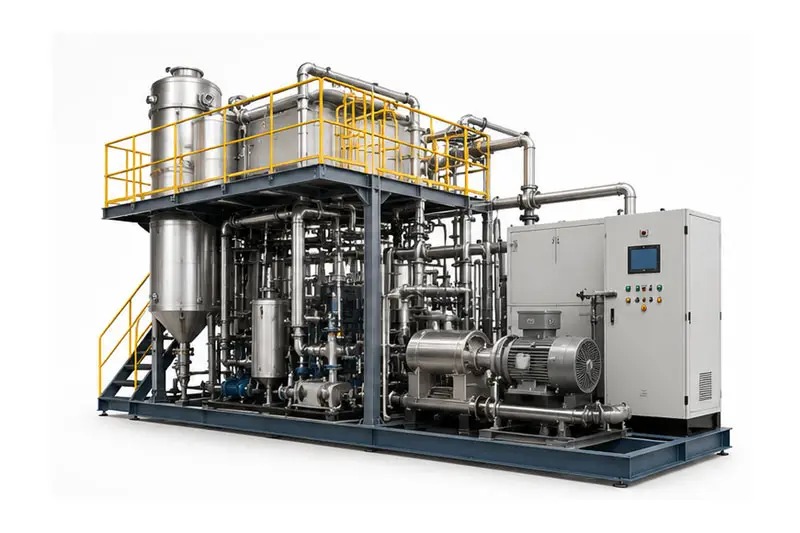
Selecting an evaporator manufacturer based solely on purchase price often leads to poor long-term outcomes in industrial wastewater treatment operations. While cost certainly matters in capital equipment decisions, the true value of an evaporator system emerges through engineering rigor, material quality, comprehensive testing protocols, and robust after sales support. Understanding what separates premium manufacturers from cost-driven suppliers enables procurement teams to identify partners that deliver operational reliability, reduced downtime, and genuine cost savings over the equipment lifecycle.
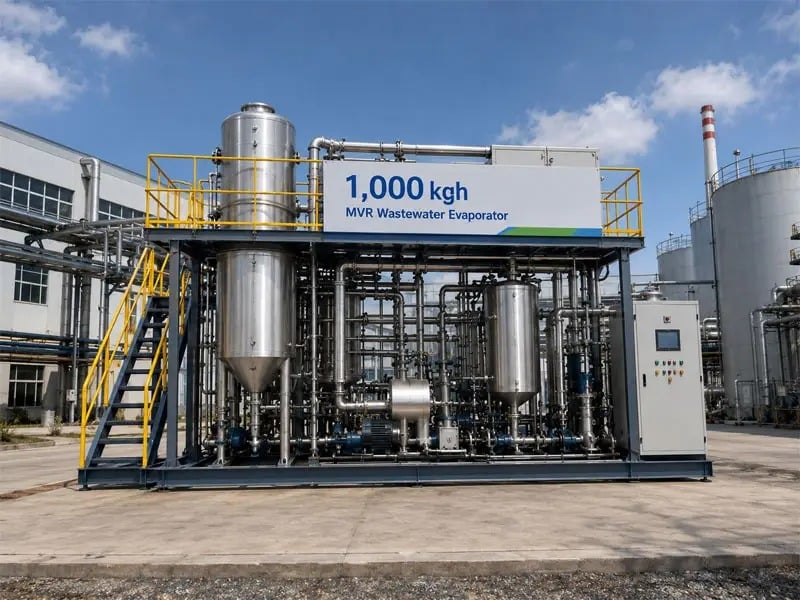
Many operators discover too late that low-cost evaporators lack the design depth and quality oversight needed for demanding industrial applications. This article explores the critical evaluation framework that separates true partnership with an evaporator manufacturer from transactional procurement relationships. By assessing engineering capabilities, materials specifications, testing rigor, and after sales commitment, decision-makers can confidently select equipment that performs reliably in high-salinity, corrosive, and challenging wastewater environments.
Evaluating Engineering Capabilities and Design Philosophy
Design Approach and System Customization
The engineering foundation of an evaporator manufacturer directly determines whether equipment performs predictably under your specific process conditions. Leading manufacturers conduct detailed site assessments, understand your feedstock chemistry, evaluate thermal integration opportunities, and design systems that match your operational constraints rather than forcing standard configurations onto unique challenges. This engineering-first approach prevents costly field modifications, reduces commissioning delays, and ensures performance targets are met from startup.
Premium manufacturers employ process engineering teams that model system behavior, validate thermal balances, and design control strategies specific to your waste stream. Standard evaporators often arrive on-site only to require expensive retrofitting when capacity falls short or equipment cannot handle the actual feedstock salinity and viscosity. An evaporator manufacturer that invests in application engineering will have engineers available to discuss your process requirements during quotation, not after installation complications emerge.
Thermal Efficiency and Energy Optimization
Operating cost over a ten-year equipment lifecycle typically exceeds purchase price by five to eight times, making thermal efficiency a dominant evaluation criterion often overlooked when comparing by price alone. Superior engineering delivers mechanical vapor recompression, multi-effect staging, or hybrid thermal recovery that reduces steam consumption and lowers operational expense substantially. An evaporator manufacturer committed to engineering excellence will provide detailed energy modeling, steam savings projections, and validated performance guarantees rather than generic efficiency claims.
Poorly engineered systems waste thermal energy through inadequate heat integration, oversized heat exchangers, or inefficient condensation management. Over ten years of operation, an inefficient evaporator may consume an additional 30 to 50 percent more energy than an optimized design, representing tens of thousands of dollars in unnecessary operating cost. Evaluating an evaporator manufacturer's engineering track record in your industry reveals whether they consistently deliver systems that perform within predicted efficiency ranges.
Material Selection, Corrosion Resistance, and Construction Quality
Corrosion-Resistant Materials and Component Durability
High-salinity wastewater and concentrated brine environments create extreme corrosion challenges that demand material specifications far beyond standard carbon steel. An evaporator manufacturer that cuts corners typically specifies lower-cost metals that corrode rapidly, leading to equipment failure, unplanned downtime, and expensive unscheduled maintenance during critical production periods. Premium manufacturers specify duplex stainless, nickel alloys, or specialized coatings for every component exposed to process liquid or corrosive vapor.
Material durability directly correlates to equipment lifespan and operational reliability. An evaporator manufacturer that invests in appropriate materials ensures your system operates reliably for fifteen to twenty years. Conversely, systems manufactured with inadequate materials may require component replacement or complete system replacement within five to seven years, eliminating any purchase price advantage and creating hidden lifecycle costs. Request detailed material specifications for the evaporator body, tubes, gaskets, fasteners, and valves to identify whether materials match your specific wastewater chemistry.
Quality Control and Manufacturing Standards
Manufacturing precision and quality oversight separate reliable equipment from units prone to early failure. A conscientious evaporator manufacturer implements rigorous incoming material inspection, fabrication documentation, dimensional verification, and hydrostatic testing before shipment. Budget manufacturers often skip quality control steps, resulting in equipment arriving with fabrication defects, tolerance problems, or assembly issues that create leaks, inefficiency, or safety hazards during operation.
ISO 9001 certification, third-party inspection protocols, and documented quality procedures indicate an evaporator manufacturer that prioritizes consistency and reliability. Ask prospective manufacturers about their quality assurance process, inspection points during fabrication, and documentation provided with equipment delivery. Manufacturers unwilling to discuss quality procedures often lack the discipline needed to ensure consistent performance across multiple unit deliveries.
Comprehensive Testing, Performance Validation, and Technical Support
Factory Acceptance Testing and Performance Documentation
A premium evaporator manufacturer conducts factory acceptance testing that validates performance specifications before equipment ships to your site. Testing typically includes capacity verification, energy consumption measurement under controlled conditions, safety system function checks, and data collection that documents baseline performance. This testing protects your investment by confirming specifications are achievable and providing documentation that demonstrates performance during commissioning and throughout the equipment warranty period.
Budget manufacturers often skip factory testing, relying instead on field performance to verify specifications. When equipment underperforms at your site, disputes arise regarding whether the equipment was defective or was simply installed incorrectly. A testing-focused evaporator manufacturer eliminates ambiguity by documenting that all systems meet specification before leaving the factory. Request test reports showing capacity, steam consumption, and system stability data from factory acceptance tests conducted on your specific equipment.
After Sales Support and Technical Assistance
After sales commitment reveals whether an evaporator manufacturer views your relationship as a long-term partnership or a one-time transaction. Reliable manufacturers provide comprehensive startup support, operator training, preventive maintenance guidance, troubleshooting assistance, and spare parts availability throughout the equipment lifecycle. When operational issues arise, responsive after sales teams help you troubleshoot quickly, minimizing downtime and protecting your production schedule.
Evaluate after sales capacity by inquiring about technical support availability, typical response times for urgent issues, spare parts inventory, and whether the manufacturer offers field service visits if needed. An evaporator manufacturer with limited after sales resources may leave you stranded when equipment requires expert assistance during critical moments. Conversely, manufacturers with strong after sales programs reduce your operational risk and provide valuable troubleshooting partnership when unexpected issues emerge in your specific operating environment.
FAQ
What specific engineering questions should I ask when evaluating evaporator manufacturers?
Request detailed information about how the evaporator manufacturer will customize design for your specific waste stream, including feedstock analysis methodology, thermal modeling approach, and energy consumption projections with validation assumptions. Ask about their engineering process for handling unexpected operational scenarios and how they ensure control systems remain stable across varying feed conditions. Inquire whether engineers are available for troubleshooting support after installation and how they track performance data to identify optimization opportunities.
How should I verify that materials specified by an evaporator manufacturer match my wastewater chemistry?
Request the full bill of materials identifying every component exposed to process liquid or vapor, including metal grade specifications, coating or lining details, and gasket materials. Cross-reference material specifications against published corrosion resistance data for your specific waste stream chemistry, salinity level, and operating temperature. Ask the evaporator manufacturer for case studies showing systems operating successfully in waste streams similar to yours and request reference customers who can confirm material performance in their specific applications.
What testing and warranty documentation should I expect from a quality evaporator manufacturer?
Professional manufacturers provide factory acceptance test reports documenting capacity achieved, energy consumed, and all safety systems functioning correctly. Request warranty terms specifying coverage duration, what defects are covered, and how the evaporator manufacturer will respond if equipment fails to meet guaranteed performance specifications. Review documentation carefully for specific performance guarantees rather than vague promises, and confirm that the evaporator manufacturer will support you with technical expertise if performance issues emerge during the warranty period.

 EN