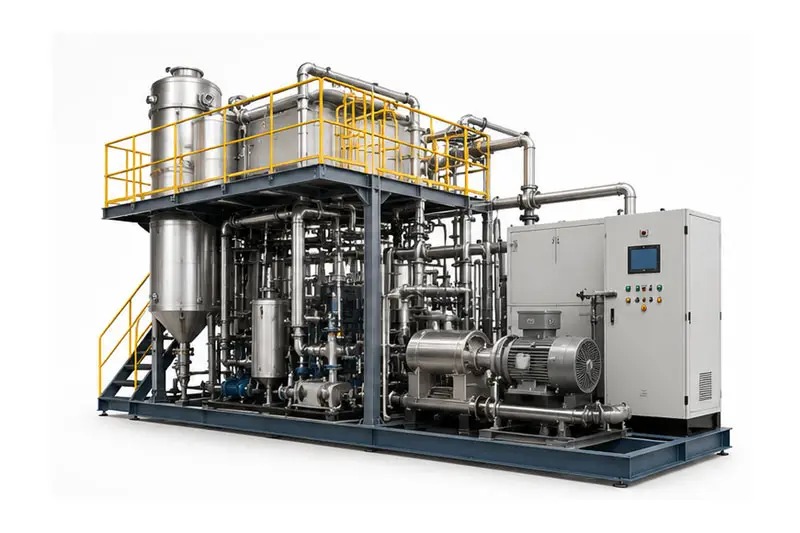
A wastewater evaporation system represents one of the most critical environmental and operational challenges facing industrial facilities today. The balance between energy consumption and recovery efficiency directly impacts both operating costs and environmental compliance. Understanding how to optimize this balance is essential for any facility managing high-volume liquid waste streams. The complexity lies in the fact that higher energy input can improve concentration rates and recovery volumes, yet excessive energy use undermines profitability and sustainability goals.
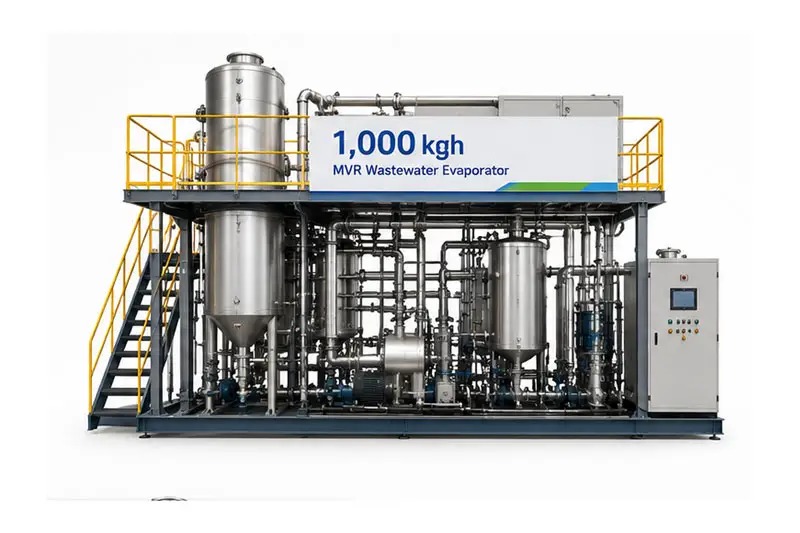
Modern industrial operation demands strategic thinking about resource allocation within wastewater treatment infrastructure. The goal is not simply to evaporate maximum volumes or achieve the deepest concentration, but to establish sustainable operation that minimizes energy consumption while meeting discharge standards and recovery targets. This article explores how facility managers and process engineers can achieve this critical equilibrium through informed design choices, operational controls, and performance monitoring.
Energy Efficiency Fundamentals in Wastewater Evaporation
Understanding Energy Input Requirements
The wastewater evaporation system requires thermal energy to convert liquid into vapor, and the amount needed depends on waste characteristics, desired concentration levels, and ambient conditions. Most industrial evaporation systems consume between 0.5 and 2 kilowatt-hours per liter evaporated, depending on technology type and operating parameters. The energy demand increases significantly when treating highly concentrated streams or targeting minimal discharge volumes. Facility managers must first understand their baseline energy consumption before implementing efficiency improvements in operation.
Mechanical Vapor Recompression Technology
Mechanical vapor recompression (MVR) represents a major advancement in energy efficiency for wastewater evaporation system design and operation. Instead of releasing vapor to the atmosphere, MVR compresses vapor and reuses it as heat source within the evaporator, dramatically reducing external energy input. This recovery approach can cut energy consumption by 50 to 70 percent compared to traditional single-effect evaporators. The energy efficiency gains make MVR systems increasingly common in industrial facilities where operational cost reduction justifies the higher capital investment.
Recovery Optimization and Material Balance
Maximizing Concentration and Byproduct Recovery
Recovery in a wastewater evaporation system extends beyond water volume reduction to include recovery of valuable materials or achieving specified concentration thresholds. Many industrial waste streams contain dissolved salts, metals, or chemical compounds that concentrate during operation and may have commercial value or require specialized handling. The concentration process must be carefully controlled to prevent scaling, crystallization, or equipment fouling that could interrupt operation. Balancing recovery rates with equipment protection requires real-time monitoring and adjustment of temperature, residence time, and feed rates.
Heat Recovery and Cascading Systems
Advanced operation strategies employ heat recovery from hot effluent streams or vapor exhaust to preheat incoming feed, reducing the thermal load on the primary evaporator. Some facilities use multiple-effect evaporation where vapor from one stage supplies heat to the next stage, creating cascading concentration without proportional energy increases. This recovery configuration requires sophisticated operation control to maintain proper temperature differentials and pressure balances across stages. When properly implemented, cascading systems demonstrate energy efficiency improvements of 30 to 40 percent in operation compared to single-stage alternatives.
Operational Control and Performance Monitoring
Real-Time Parameter Optimization
Successful operation of a wastewater evaporation system depends on continuous monitoring and adjustment of key parameters including feed rate, steam or heat input, vacuum levels, and product withdrawal rates. Automated control systems with real-time feedback sensors enable dynamic operation adjustments that maintain target concentration while minimizing energy consumption. Feed rate optimization is particularly critical because slower feed allows more complete evaporation at lower temperature, improving energy efficiency in operation. Temperature monitoring helps operators maintain the minimum viable operating temperature that still achieves required concentration and recovery targets.
Maintenance and System Reliability
Preventive maintenance directly supports both energy efficiency and recovery performance in wastewater evaporation system operation. Scale buildup on heat transfer surfaces reduces thermal efficiency, forcing operators to increase temperature and energy input to maintain concentration rates. Regular cleaning cycles, chemical treatment of feed streams, and corrosion monitoring extend equipment life and preserve heat transfer performance. Reliable operation with minimal downtime ensures consistent recovery achievement and prevents emergency-mode energy consumption that occurs during startups or recovery periods.
Energy Recovery Systems and Integration
Some advanced facilities integrate wastewater evaporation system operation with broader facility energy management, recovering waste heat from compressors, reactors, or exhaust streams to supply thermal input. This cross-process energy recovery approach improves overall facility energy efficiency by eliminating otherwise wasted thermal resources. Heat exchangers can capture vapor or liquid heat before final release, channeling it to space heating, water preheating, or other thermal processes. Integration of evaporation operation with facility-wide energy management often yields efficiency improvements of 15 to 25 percent beyond system-specific optimization.
FAQ
How can energy consumption in a wastewater evaporation system be reduced without sacrificing recovery performance?
Energy consumption can be reduced through mechanical vapor recompression technology, heat recovery from product streams, multiple-effect evaporation staging, and automated real-time operation control. Optimizing feed rate, maintaining heat transfer surfaces through preventive maintenance, and integrating facility-wide heat recovery systems all contribute to lower energy input while maintaining or improving concentration and recovery targets. The key is balancing operating temperature, residence time, and feed characteristics to achieve required performance with minimum thermal input.
What is the relationship between concentration level and energy efficiency in wastewater evaporation system operation?
Higher concentration targets typically require more energy input because additional evaporation must occur to remove more liquid from the waste stream. However, this relationship is not perfectly linear—achieving 80 percent concentration may require only slightly more energy than 70 percent, depending on waste characteristics and system design. The energy efficiency point exists where operational benefits from higher concentration and recovery offset the increased thermal input required. Facility managers must calculate the breakeven point for their specific waste streams and recovery needs.
Can a wastewater evaporation system achieve recovery goals while reducing operational energy costs?
Yes, modern technologies and optimization strategies can simultaneously improve recovery performance and reduce energy costs in wastewater evaporation system operation. Mechanical vapor recompression, multi-effect configuration, heat recovery integration, and automated process control work together to lower energy input while increasing water recovery and byproduct concentration. The initial capital investment in efficient equipment is typically recouped within 2 to 5 years through reduced energy expenses and potentially higher revenue from recovered materials, making energy efficiency investments economically justified alongside environmental and operational benefits.

 EN