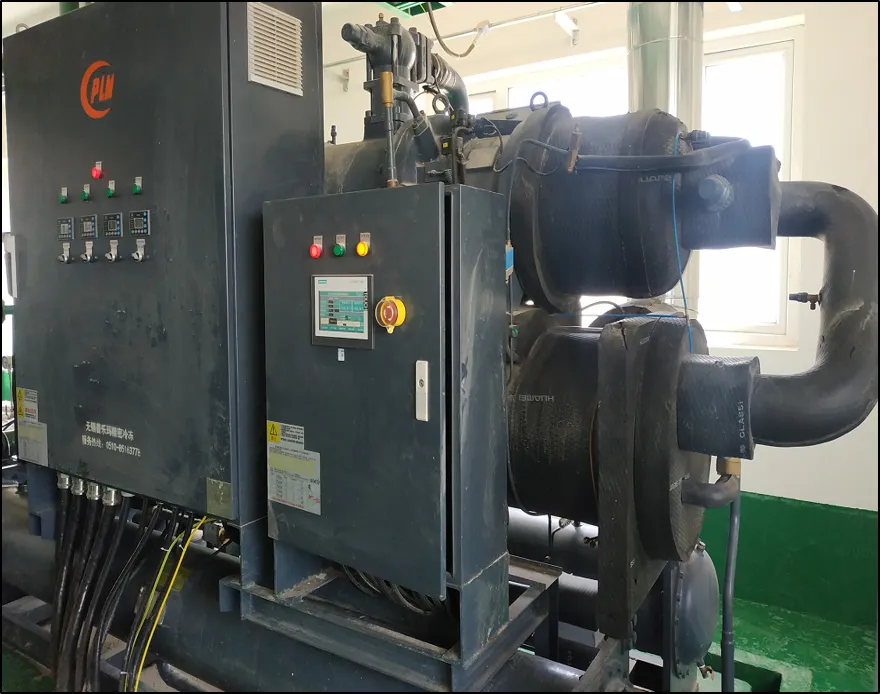
The performance of an industrial crystallizer depends fundamentally on understanding how salt composition influences every stage of the crystallization process. Salt composition determines solubility behavior, crystal nucleation rates, and final product purity, making it a critical factor in designing equipment that meets production targets and maintains operational efficiency. Engineers and process designers must account for specific salt characteristics when selecting crystallizer types, sizing vessels, and establishing operating parameters to achieve desired yield and crystal quality.
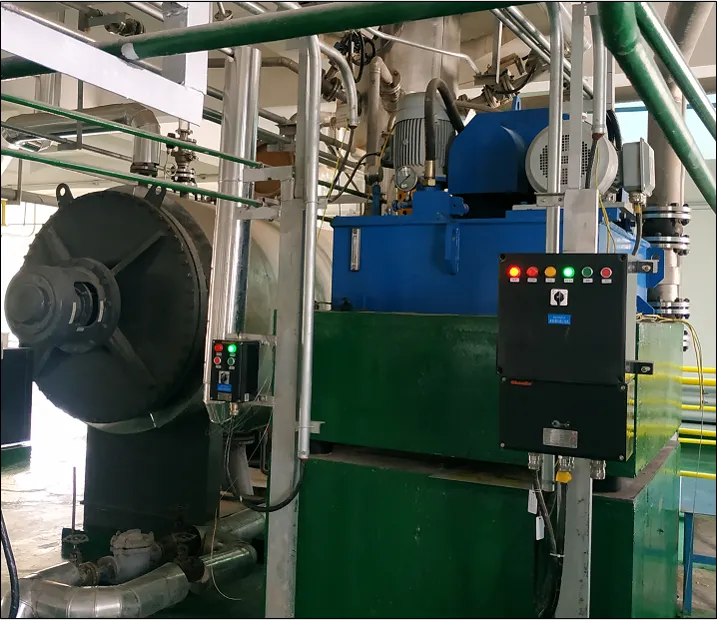
Different salts exhibit unique solubility profiles across temperature ranges, and these profiles directly shape how an industrial crystallizer must be configured. The relationship between salt composition and solubility curves influences residence time, agitation speed, and heat transfer requirements. Understanding these interactions allows process engineers to optimize crystallization parameters, reduce waste, and improve product consistency, which ultimately reduces operational costs and enhances profitability.
Salt Composition and Solubility Dynamics
Temperature-Dependent Solubility Behavior
Salt composition determines how solubility changes with temperature, a relationship known as the solubility curve. Some salts exhibit steep solubility gradients, meaning small temperature changes produce large changes in dissolved concentration. Others display gentler slopes, requiring greater temperature adjustments to achieve the same supersaturation level. This solubility behavior directly impacts the cooling rate, hold time, and overall crystallization efficiency within an industrial crystallizer. Process designers must model these curves precisely to establish optimal operating windows that balance crystal size distribution and throughput.
Impact on Crystallization Kinetics
The molecular structure of a salt influences nucleation and growth rates during crystallization. Salts with complex ionic structures often exhibit slower nucleation but produce larger, more uniform crystals. Simpler salt compositions may nucleate rapidly but produce smaller crystal distributions. An industrial crystallizer must provide sufficient residence time and mixing intensity to match the salt's inherent crystallization kinetics. Engineers adjust vessel geometry, agitator design, and cooling profiles based on salt composition to achieve target crystal specifications and product yield targets.
Design Parameters Influenced by Salt Composition
Vessel Sizing and Geometry Selection
Different salt compositions require different vessel configurations within an industrial crystallizer system. Salts prone to agglomeration benefit from vessels with higher length-to-diameter ratios and gentler agitation. Salts that crystallize rapidly may require smaller vessels with enhanced cooling surfaces. The choice between draft-tube crystallizers, fluidized-bed designs, or batch crystallizers depends on the specific salt composition, desired crystal size, and production scale. Solubility patterns inform heat transfer calculations, which determine the surface area needed for reliable cooling control.
Agitation and Residence Time Requirements
Salt composition affects how agitation must be managed to prevent crystal breakage, ensure uniform mixing, and maintain suspension. Some salts produce brittle crystals requiring gentle agitation, while others form robust crystals that tolerate higher shear forces. The crystallization process also depends on residence time; salts with slow growth kinetics demand longer hold periods, affecting industrial crystallizer volume and operational throughput. Process engineers calculate agitation intensity based on salt composition, crystal size targets, and desired production rates to balance energy efficiency with crystallization quality.
Process Control and Optimization
Supersaturation Management
Controlling supersaturation is essential for consistent crystallization in an industrial crystallizer, and the target supersaturation level varies with salt composition. Salts with steep solubility curves require tight temperature control to maintain the optimal precipitation zone. Salts with gentler solubility slopes offer more operational flexibility but may produce undesirable crystal morphologies if supersaturation drifts too far. Real-time monitoring of concentration and temperature allows operators to adjust cooling rates and maintain the supersaturation window where salt composition and crystallization kinetics align to produce the desired crystal structure and purity.
Impurity Handling and Product Quality
Salt composition in feed material includes co-ions and impurities that influence how they partition during crystallization. Some impurities preferentially incorporate into growing crystals, degrading product purity. Others concentrate in the mother liquor, allowing mechanical separation. An industrial crystallizer design must account for these partitioning behaviors by adjusting residence time, cooling strategy, and separation methods. Understanding the relationship between feed salt composition and impurity rejection enables engineers to achieve product specifications and reduce purification costs downstream.
FAQ
How does salt composition affect the choice between batch and continuous crystallization?
Salt composition influences residence time requirements, nucleation behavior, and crystal growth kinetics. Salts with slow crystallization rates and favorable solubility slopes often suit continuous crystallization in an industrial crystallizer because consistent conditions can be maintained. Salts with rapid nucleation or temperature sensitivity may favor batch processes where cooling profiles and residence times can be tightly controlled. The specific solubility curve, impurity content, and desired crystal size guide the selection between batch and continuous modes.
What role does salt composition play in minimizing crystal loss in industrial crystallizers?
Salt composition determines crystal strength, size distribution, and agglomeration tendency. Brittle salts require gentle agitation in an industrial crystallizer to minimize mechanical breakage, while robust crystalline forms tolerate higher shear forces. The solubility characteristics also influence attrition; salts with steep solubility curves may cause partial dissolution if temperature control drifts, leading to crystal loss. Tailoring agitation, temperature profile, and hold time to the specific salt composition prevents unnecessary waste and improves overall recovery rates.
Can salt composition variations in feed material affect industrial crystallizer performance?
Yes, variations in feed salt composition directly impact crystallizer performance and product consistency. Different sources or batches of salt may have varying impurity profiles, particle size, or trace ion concentrations. These variations alter solubility curves, nucleation behavior, and crystal morphology within an industrial crystallizer. Process engineers must establish feed specifications and use real-time composition monitoring to detect changes that could affect crystallization kinetics or product quality, then adjust operating parameters to maintain stable performance.

 EN