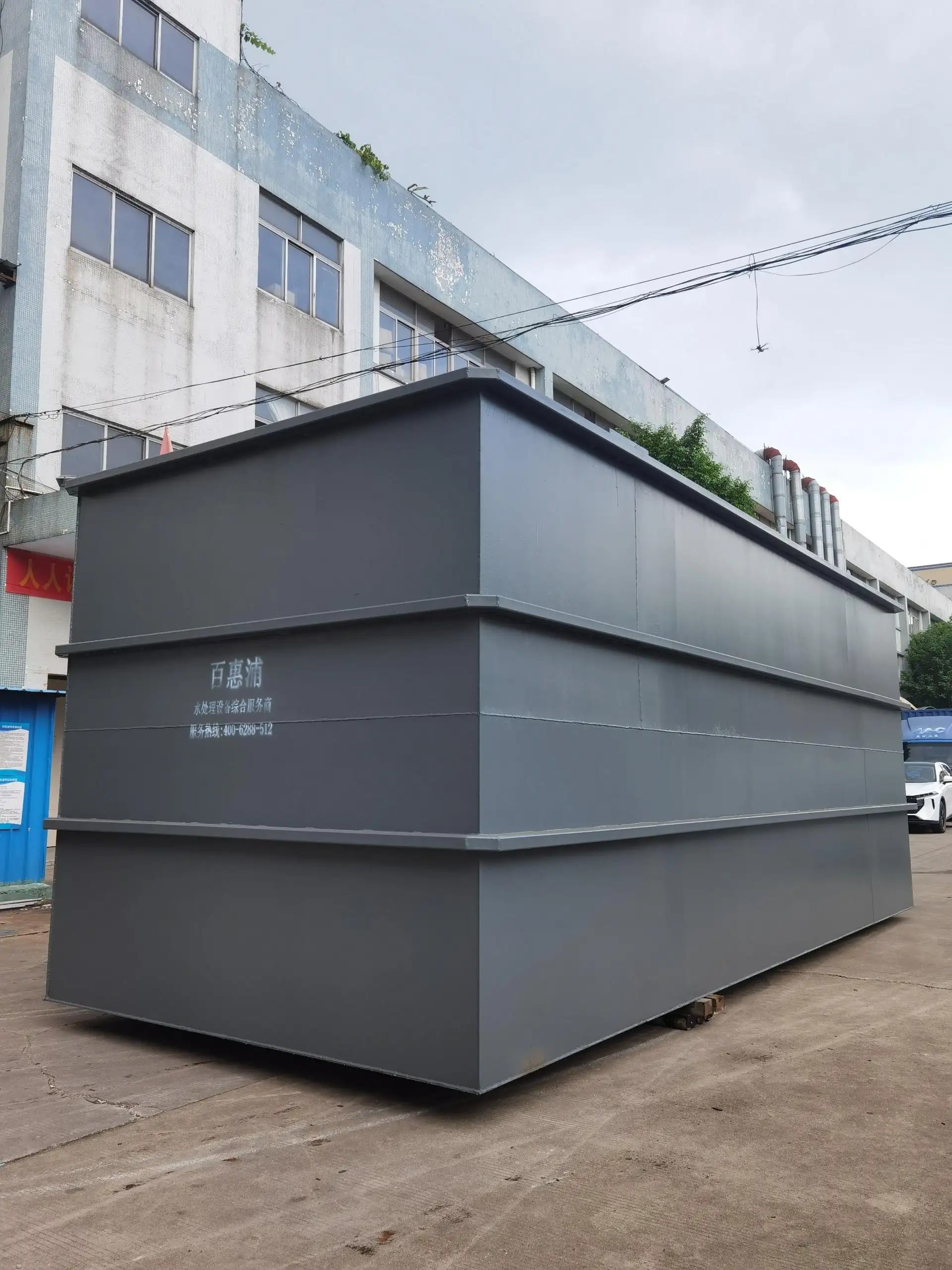
Facilities facing growing wastewater volumes often encounter a critical challenge: traditional fixed-capacity treatment plants cannot adapt without major reconstruction, lengthy downtime, and prohibitive costs. A modular wastewater treatment system eliminates this constraint by offering incremental scalability that matches your facility's actual growth timeline and budget cycles.
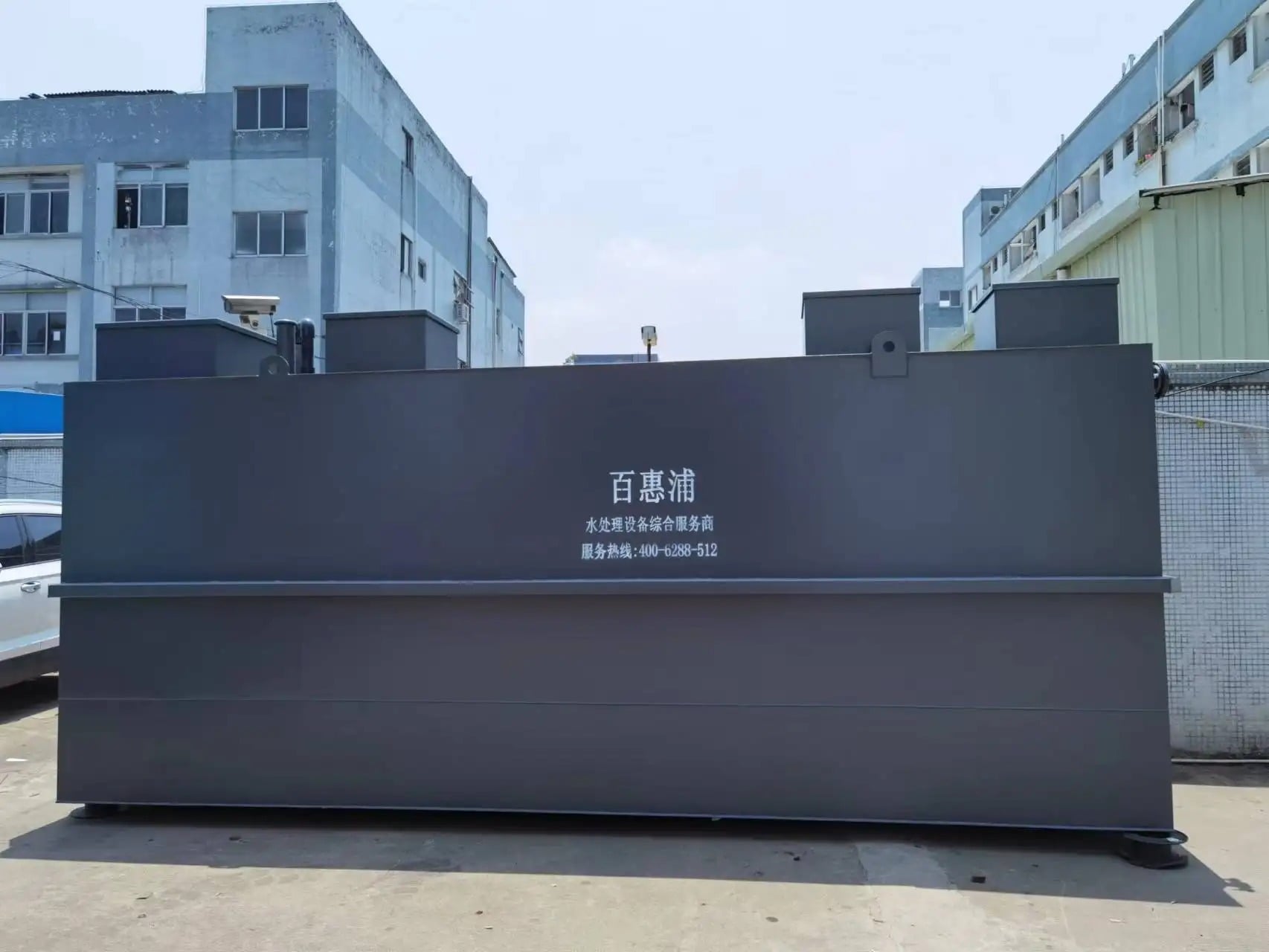
This article explores how modular design principles reduce the operational, financial, and regulatory risks inherent in conventional wastewater treatment expansion. By understanding the advantages of modular capacity planning, facility managers can make informed decisions that protect long-term operational viability and maintain compliance during growth phases.
Understanding Modular Capacity Architecture
Design Flexibility and Staged Implementation
A modular wastewater treatment system is engineered as a series of independent, standardized treatment units that operate both independently and in parallel configurations. Unlike monolithic plants that require full redesign and replacement to increase capacity, modular units can be deployed incrementally as demand rises. This staged approach allows facilities to expand treatment capability without shutting down existing operations, a critical advantage for continuous-duty industrial and municipal environments.
The modular architecture also reduces engineering risk by relying on proven, pre-tested designs rather than custom-built solutions. Each module undergoes factory quality assurance before arrival on site, minimizing commissioning delays and performance variability. When expansion becomes necessary, operators simply add identical or compatible modules, ensuring consistent performance across the enlarged system.
Space Efficiency and Footprint Control
Many facilities operate on constrained sites where land availability limits expansion options. A modular system occupies minimal floor space per unit and can be configured vertically or in compact clusters, preserving valuable real estate for other operations. This spatial efficiency also means lower installation risk, since compact modular units fit within existing facility boundaries without requiring site acquisition or major civil works that could trigger regulatory delays.
Mitigating Financial and Operational Risk
Reducing Capital Exposure and Budget Cycle Alignment
Traditional expansion projects consume large capital budgets in single fiscal cycles, straining financial resources and creating budget uncertainty. Modular systems distribute capacity investments across multiple years, aligning capital deployment with annual budget cycles and cash flow realities. This incremental funding approach reduces financial risk by preventing over-capitalization and allowing facilities to validate demand assumptions before committing to the next expansion phase. If business conditions change, operators can defer module additions without stranding capital in partially completed infrastructure.
Operational risk also diminishes because modular systems require no extended shutdown periods during expansion. Traditional plant upgrades often necessitate weeks or months of treatment downtime, creating discharge permit violations, environmental compliance exposure, and service disruptions. Modular expansion occurs in parallel with ongoing operations, maintaining treatment continuity and eliminating regulatory risk during the growth transition.
Performance Predictability and Quality Assurance
Each modular unit is manufactured under controlled factory conditions and undergoes rigorous testing before deployment. This standardization ensures consistent treatment performance across all modules and eliminates the performance variability common in field-engineered custom systems. Operators benefit from predictable effluent quality, reduced troubleshooting complexity, and lower maintenance risk across the entire system. Because modules are identical, spare parts inventory is simplified and maintenance technicians require training on a single design rather than a hybrid collection of subsystems.
Scaling Strategy and Long-Term Flexibility
Demand Forecasting Without Overbuilding
Capacity decisions carry significant risk when facilities must predict demand years in advance. A modular system minimizes this forecasting risk by allowing real-time capacity decisions based on observed growth patterns rather than theoretical projections. Facilities can start with conservative capacity, monitor actual loadings, and expand precisely when demand justifies the investment. This responsiveness prevents both under-capacity constraints that compromise operations and over-capacity buildout that wastes capital and energy on unnecessary treatment volume.
The flexibility inherent in modular design also protects against regulatory expansion. Environmental agencies frequently impose stricter effluent standards or impose limits on discharge volumes. A modular system can accommodate capacity reductions by temporarily taking modules offline or focusing flow through higher-efficiency modules, adapting to tighter constraints without facility-wide reconstruction.
Asset Lifecycle and Technology Evolution
Treatment technology advances continuously, introducing more efficient, compact, or sustainable methods. With a modular architecture, aging modules can be replaced with improved units without disrupting the entire system or forcing wholesale technology transitions. This staged technology upgrade approach reduces obsolescence risk and allows facilities to adopt innovations incrementally, aligning improvements with budget cycles and operational readiness rather than all-or-nothing replacement events.
FAQ
What makes modular wastewater treatment systems less risky than traditional expansion?
Modular systems reduce risk through incremental, non-disruptive expansion that avoids lengthy shutdowns, distributes capital over multiple budget cycles, maintains operational continuity, and relies on factory-tested standardized components rather than custom field engineering. This parallel growth model eliminates the capacity chokepoints and financial strains inherent in monolithic plant upgrades.
Can a modular system adapt if business demand changes unexpectedly?
Yes. Modular capacity is inherently flexible; operators can defer, delay, or scale module additions based on actual demand patterns and business conditions. This demand-responsive approach prevents over-investment in unused capacity and allows facilities to right-size expansion investments to real operational needs without losing capital in suspended projects or underutilized infrastructure.
How does modular design reduce compliance and environmental risk during expansion?
Because modular expansion occurs in parallel with ongoing operations, there is no treatment downtime that could violate discharge permits or trigger environmental violations. Standardized modules with proven performance also simplify compliance documentation and regulatory approval, reducing permitting delays that typically accompany custom system modifications and large-scale facility upgrades.

 EN