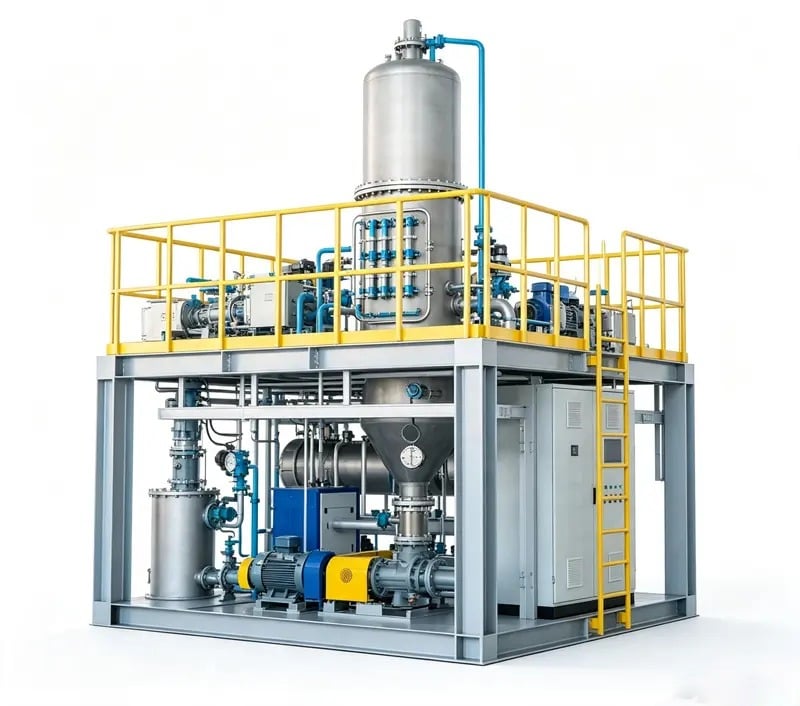
Concentrated wastewater streams present one of the most challenging disposal problems in industrial operations. Whether generated from mining, chemical processing, food production, or desalination facilities, these streams contain dissolved solids, salts, and contaminants that make conventional treatment ineffective. A forced evaporation system addresses this challenge by using thermal processes and controlled circulation to separate water from dissolved solids, dramatically reducing waste volume and enabling cost-effective disposal or recovery.
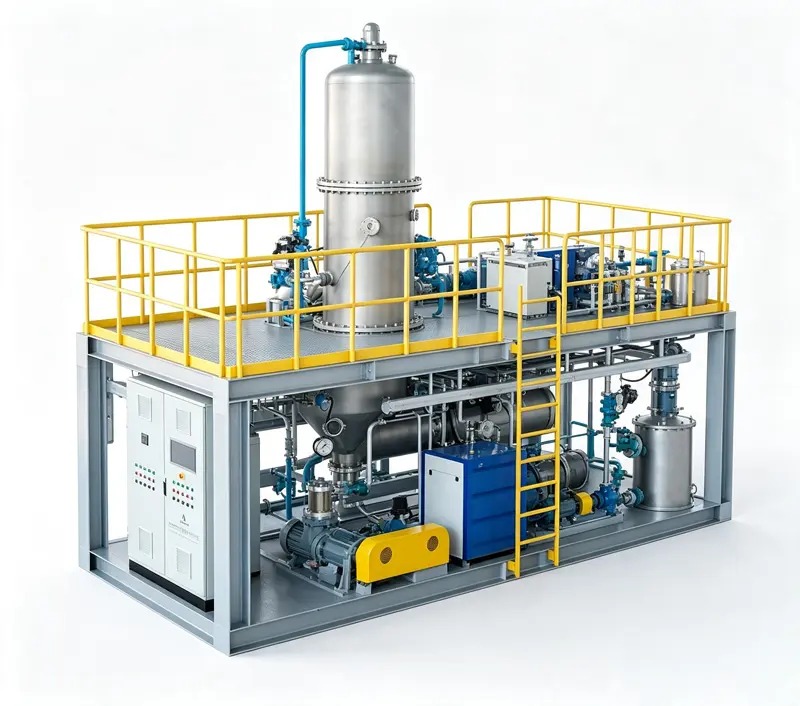
The mechanics of a forced evaporation system rely on proven thermodynamic principles combined with intelligent material handling design. By managing circulation rates, optimizing heat transfer efficiency, and controlling concentration levels, these systems prevent the mechanical and chemical problems that plague traditional evaporators. Understanding how these systems function reveals why they have become essential infrastructure in industries handling high-salinity or heavily contaminated wastewater.
Core Operating Principles of Forced Evaporation Technology
How Circulation Drives Efficiency
Circulation is the foundation of forced evaporation system performance. Unlike passive evaporators, forced systems use pumps to continuously move concentrated liquid through the evaporation chamber at controlled velocities. This circulation pattern ensures uniform exposure to heat sources, prevents localized stagnation, and maintains consistent temperature gradients throughout the system. The circulation speed directly influences both evaporation rate and equipment longevity, as improper flow can cause settling, channeling, and uneven concentration that leads to operational failures.
The circulation design in modern systems incorporates variable-speed drives that adapt flow rates based on feed composition and system conditions. Higher circulation rates improve heat transfer efficiency but consume more energy, while lower rates reduce operating costs but risk concentration unevenness. Advanced forced evaporation system controllers automatically balance this trade-off by monitoring real-time parameters and adjusting circulation to optimize throughput while maintaining product quality and equipment reliability.
Heat Transfer Mechanisms in Evaporation
Heat transfer is the engine that drives water removal in any forced evaporation system. Steam or hot oil from external sources is transferred to the circulating liquid through specialized heat exchanger surfaces. The effectiveness of this heat transfer depends on surface area, temperature differential, fluid velocity, and fouling resistance. Forced circulation systems maintain higher bulk liquid velocities than natural convection designs, which significantly improves heat transfer coefficients and accelerates evaporation without requiring larger equipment.
The engineering challenge lies in maintaining consistent heat transfer rates as the wastewater becomes increasingly concentrated. As concentration rises, the boiling point elevation increases and viscosity changes, both of which reduce natural heat transfer efficiency. Forced evaporation systems address this by maintaining aggressive circulation that strips away insulating boundary layers and keeps fresh liquid constantly in contact with heating surfaces. This active management approach enables forced systems to handle concentration levels that would cause conventional evaporators to stall or crystallize.
Managing Concentration and Preventing Scaling
Concentration Control Strategies
Concentration is the measure of dissolved solids per unit volume of liquid, and controlling it is essential to preventing scaling and product degradation. A forced evaporation system manages concentration by continuously removing water vapor while recirculating the densifying liquid. The system operator can control final concentration by adjusting feed rates, evaporation intensity, and bleed-off rates. Different industries require different final concentration levels: some seek maximal water removal to minimize sludge disposal, while others need intermediate concentration to facilitate downstream crystallization or precipitation.
Real-time density or conductivity sensors monitor concentration in modern systems, providing feedback that maintains target values automatically. When concentration reaches predetermined thresholds, the system can reduce feed flow, increase bleed-off, or adjust heat input to prevent overconcentration. This closed-loop control prevents the sudden precipitation and scaling events that disable manual or passive systems and ensures stable, predictable operation throughout each shift.
Scaling Prevention and Material Selection
Scaling occurs when dissolved minerals exceed their solubility limits and deposit on hot surfaces inside the evaporator. Salts like calcium carbonate, sodium sulfate, and silica commonly form scale layers that reduce heat transfer efficiency, increase energy consumption, and eventually force equipment downtime for mechanical cleaning. A forced evaporation system minimizes scaling through multiple overlapping strategies. The aggressive circulation keeps scale precursors in suspension longer and physically dislodges forming deposits before they can build thick layers. Temperature management prevents localized hot spots where scaling accelerates, and antifoam or antiscalant chemical additives modify crystal formation to favor dispersed particles over solid deposits.
Material selection further protects forced evaporation system internals from scaling damage. Equipment fabricated from titanium, duplex stainless steel, or specialized coatings resists both corrosion and scale adhesion far better than carbon steel alternatives. The combination of robust materials, active circulation, thermal management, and chemical dosing creates a multi-layer defense that extends operational intervals to months or years between cleanings, compared to weeks for traditional atmospheric evaporators.
Industrial Applications and Performance Outcomes
Wastewater Reduction and Resource Recovery
The forced evaporation system delivers tangible business outcomes by dramatically reducing wastewater volumes requiring disposal. Industrial operations handling concentrated brines or contaminated streams face escalating disposal costs, regulatory compliance risks, and environmental liability. By evaporating 80 to 95 percent of water content from incoming feed, these systems reduce disposal volume by a proportional amount, translating to immediate cost savings. Some facilities recover valuable minerals from the remaining concentrate through crystallization, precipitation, or further processing, creating secondary revenue streams that offset capital investment.
Energy consumption remains the primary operating cost for any forced evaporation system. Modern designs incorporate heat recovery systems that capture waste heat from condenser output, multiple-effect configurations that cascade vapor from one stage to the next, or mechanical vapor recompression (MVR) technology that recycles evaporated vapor as the heating medium. These advanced configurations reduce energy demand by 50 to 70 percent compared to single-effect systems, making the technology economically viable even for continuous-duty applications.
Equipment Reliability and Operational Efficiency
Reliability distinguishes leading forced evaporation system designs from marginal alternatives. Predictable operation requires proper feed characterization, system sizing that matches actual wastewater composition and flow rates, and skilled operator training. Systems equipped with automated monitoring, self-cleaning heat exchanger surfaces, or external circulation loops that bypass the evaporation chamber for pre-concentration achieve uptime rates exceeding 95 percent. In contrast, undersized or poorly maintained systems experience frequent shutdowns, emergency chemical cleanings, and premature component replacement that eliminate any cost advantage.
A well-designed forced evaporation system integrates alarms, interlocks, and diagnostic functions that alert operators to emerging problems before they cause equipment damage. Real-time data logging captures temperature, pressure, flow, and density trends that reveal gradual drift toward scaling risk or heat transfer degradation. This predictive maintenance approach allows operators to schedule preventive interventions during planned maintenance windows rather than responding to unexpected failures during production hours.
FAQ
What wastewater types can a forced evaporation system handle effectively?
Forced evaporation systems excel with high-salinity streams, mining discharge, chemical processing effluent, food waste streams, and desalination brine. The technology works effectively on any wastewater where volume reduction and solids separation are primary treatment goals. Extremely corrosive or biologically active streams may require pre-treatment, but the system's aggressive circulation and heat management make it suitable for concentrated waste that would foul or overwhelm conventional treatment methods.
How do you prevent scaling problems during long-term operation?
Scaling prevention combines chemical treatment, circulation management, and heat transfer optimization. Antiscalant chemicals modify crystal structure, aggressive circulation physically removes forming deposits, and controlled concentration prevents exceeding mineral solubility limits. Material selection using titanium or coated surfaces also reduces scale adhesion. Regular monitoring of density, temperature, and pressure allows operators to catch early scaling signs and adjust dosing or circulation rates before deposits build to problematic levels.
What operational factors most influence a forced evaporation system's energy efficiency?
Energy efficiency depends on system design, feed characteristics, and operating strategy. Multiple-effect designs, mechanical vapor recompression, and heat recovery substantially reduce steam or fuel consumption. Lower feed temperature improves efficiency but requires external heating. Matching circulation rate to actual solids concentration prevents unnecessary energy waste on oversized flow. System efficiency also improves when operators optimize bleed-off rates and final concentration targets to minimize processing time while meeting discharge or recovery specifications.

 EN