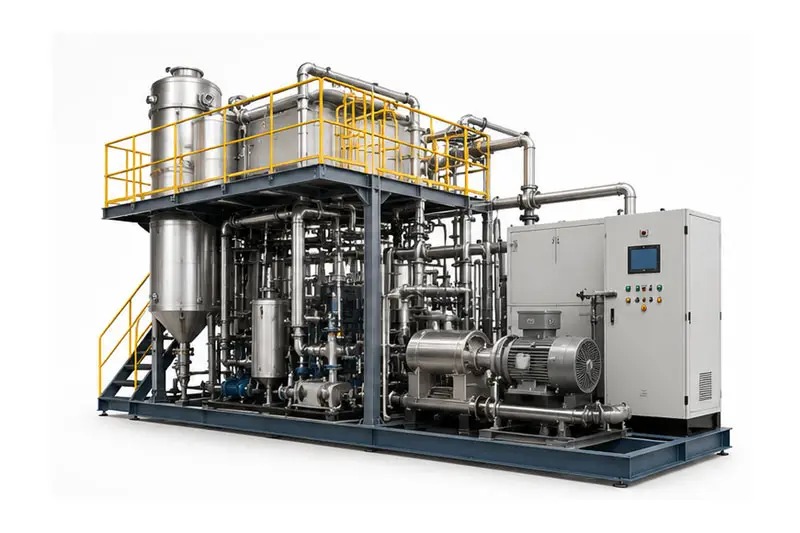
A wastewater evaporator system serves as a critical component within zero liquid discharge (ZLD) operations, transforming how industrial facilities manage their most challenging wastewater streams. Rather than functioning in isolation, the wastewater evaporator system operates as part of an integrated multi-stage process designed to eliminate liquid waste entirely while recovering valuable solids. Understanding this ecosystem is essential for facility managers, environmental engineers, and operators seeking to achieve true sustainability in their wastewater treatment strategies.
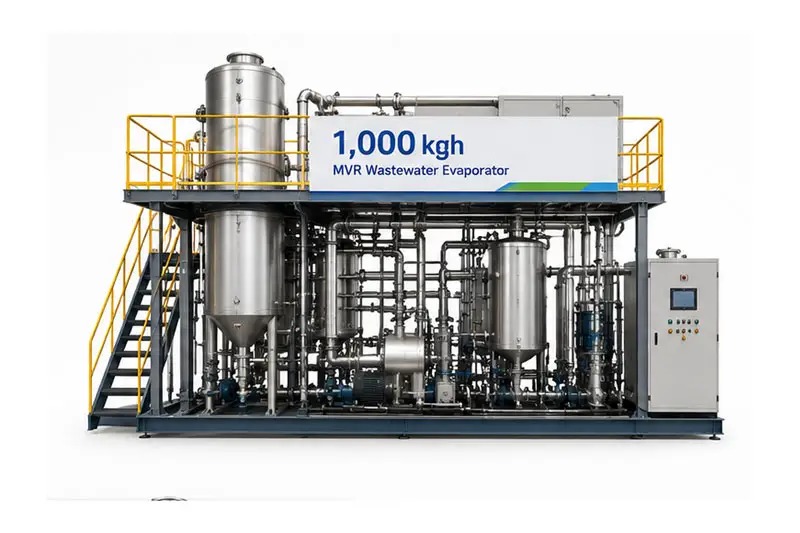
The architecture of a successful ZLD system depends on precise sequencing and material preparation before concentration occurs. Each stage builds upon the previous one, ensuring that the wastewater evaporator system receives feedstock optimized for thermal processing while minimizing scaling, corrosion, and operational complications. This multi-stage approach has become the industrial standard because it balances capital investment with operational reliability and environmental compliance.
Understanding ZLD and the Role of Pretreatment
What ZLD Means for Industrial Operations
Zero liquid discharge represents an engineering commitment to convert all process wastewater into either clean water for reuse or solid waste for disposal, eliminating environmental discharge entirely. The ZLD pathway requires both mechanical and thermal separation technologies working in concert, with the wastewater evaporator system handling the most demanding concentration duties. Industrial sectors including food processing, chemicals, pharmaceuticals, mining, and power generation increasingly adopt ZLD frameworks to meet regulatory mandates and corporate sustainability goals. This shift reflects growing water scarcity concerns and stricter environmental policies across global markets.
The Essential Pretreatment Stage
Before wastewater reaches the evaporator, comprehensive pretreatment removes suspended solids, oils, colloids, and other impurities that would interfere with thermal efficiency. Pretreatment typically includes dissolved air flotation (DAF), multimedia filtration, activated carbon adsorption, or membrane ultrafiltration depending on the wastewater composition. This upstream stage directly determines whether the wastewater evaporator system will operate smoothly or face fouling, downtime, and maintenance burden. Facilities that invest in robust pretreatment reduce their total system operating costs despite initial capital expenses, because prevention costs far less than remediation.
Concentration Stage: Where the Evaporator Becomes Essential
How the Wastewater Evaporator System Processes Dissolved Solids
The concentration stage transforms dilute treated wastewater into highly concentrated brine through thermal evaporation. The wastewater evaporator system applies heat energy to remove water molecules while solutes remain behind, dramatically reducing liquid volume before crystallization. Modern designs employ mechanical vapor recompression (MVR) or multi-effect evaporation to minimize energy consumption and operating costs while handling corrosive or scaling-prone feedstock. This stage is where the wastewater evaporator system earns its position as the centerpiece of ZLD technology, because no other technology can achieve the same volume reduction efficiency across diverse industrial wastewater types.
Operational Parameters and Material Balance
The wastewater evaporator system must maintain strict control over inlet temperature, residence time, and steam consumption to prevent scale deposition or equipment degradation. Engineers design the system around the specific salt composition, hardness, and corrosivity of the treated wastewater entering from pretreatment stages. Concentration typically reduces feedwater to 40-60% solids by weight before transfer to crystallization, creating a syrupy brine that demands careful handling. This precision in concentration ensures that downstream crystallization equipment receives material optimized for solid-liquid separation and salt recovery.
Crystallization and Final Solids Management
Crystallization as the Final Recovery Stage
After the wastewater evaporator system has concentrated the brine, crystallization equipment further removes water by cooling the concentrate and precipitating dissolved salts into solid crystals. Crystallizers may employ forced circulation, cooling, or salting-out methods depending on the target solids and their market value. The crystallization stage produces a dry or semi-dry cake separated through centrifuges or vacuum filters, leaving only trace moisture. By combining evaporation with crystallization, the ZLD process converts virtually all input wastewater into either recovered water or manageable solids, closing the sustainability loop that pretreatment and concentration make possible.
Solids Disposal and Revenue Opportunities
The crystallized solids emerging from the final stage can be disposed of as industrial waste, but increasingly they offer revenue opportunities through recovery markets. Recovered salts, minerals, or metal compounds often attract buyers in chemical, food, or manufacturing sectors, offsetting treatment costs. The wastewater evaporator system's role in this value chain cannot be overstated, as it enables the concentration precision that makes salt recovery economically viable. Facilities that balance ZLD compliance with solids monetization achieve the best financial outcomes while maintaining strict environmental responsibility.
Integrating the System: Design Considerations
Sizing and Capacity Planning
Designing a multi-stage ZLD process requires accurate flowrate projections, contaminant profiling, and seasonal variation analysis to ensure the wastewater evaporator system is sized appropriately. Undersizing creates bottlenecks and treatment delays; oversizing inflates capital and energy expenses. Engineers must also consider feedwater temperature fluctuations, salt saturation points, and recovery fluid specifications when selecting evaporator duty and steam supply requirements. The integrated ZLD approach demands that pretreatment, evaporation, and crystallization capacities remain balanced to prevent upstream accumulation or downstream underutilization.
Energy Recovery and Sustainability
The wastewater evaporator system consumes significant thermal energy, making energy recovery and efficiency upgrades critical to ZLD economics. Waste heat from industrial processes can preheat influent wastewater or feed vapor streams, reducing net steam consumption dramatically. Some facilities integrate renewable heating sources such as solar thermal arrays or waste-to-energy systems to lower carbon footprints while enhancing profitability. Modern wastewater evaporator system designs prioritize energy optimization because operational cost reduction directly improves the competitive advantage of ZLD technology over traditional discharge approaches.
FAQ
What happens if pretreatment fails or is inadequate for my ZLD system?
Inadequate pretreatment allows suspended solids, silica, oils, or organics to enter the wastewater evaporator system, where they accumulate on heat transfer surfaces and reduce efficiency. Scaling and fouling increase maintenance frequency, energy consumption, and downtime while shortening equipment life. Poor pretreatment fundamentally undermines the entire multi-stage ZLD process because the evaporator cannot compensate for upstream deficiencies. Investing in proper pretreatment removes this risk and ensures long-term system reliability.
Can the wastewater evaporator system handle all types of industrial wastewater?
While the wastewater evaporator system is highly versatile, some wastewaters require specialized pretreatment or modified evaporator designs to handle extreme salinity, corrosive chemistry, or high organics content. Silica-rich water, sulfate-laden streams, or wastewater with volatile organic compounds may need additional treatment before concentration. Engineers conduct bench-scale testing and pilot trials to confirm compatibility before full-scale implementation, ensuring the wastewater evaporator system operates within design parameters and achieves predicted performance.
How does crystallization fit into the ZLD workflow after evaporation?
Crystallization is the final separation stage that removes the remaining water from the concentrated brine produced by the wastewater evaporator system, yielding solid salts for disposal or recovery. The concentrated stream from evaporation is cooled or chemically modified to promote crystal nucleation and growth, then separated through mechanical dewatering equipment. This two-stage liquid-solid separation—first in the evaporator, then in the crystallizer—achieves the near-zero liquid discharge target that makes ZLD economically and operationally feasible for diverse industries.

 EN