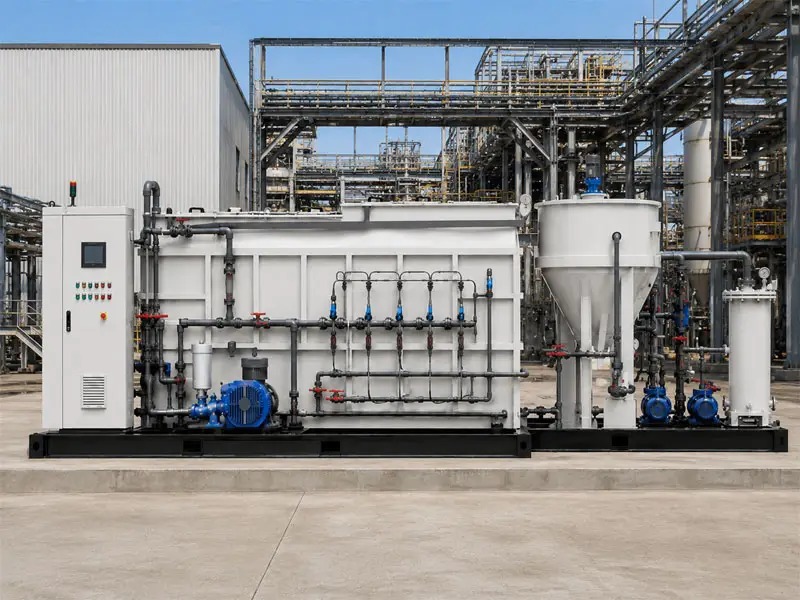
Industrial operations generate wastewater streams that pose significant environmental and operational challenges. When these streams contain elevated dissolved salts and minerals, standard treatment methods often prove inadequate. High salinity wastewater treatment becomes essential when conventional biological and physical processes cannot sufficiently reduce salt concentrations. Understanding when evaporation and crystallization become necessary is critical for industries managing complex waste streams, as these technologies directly impact regulatory compliance, operational costs, and environmental outcomes.
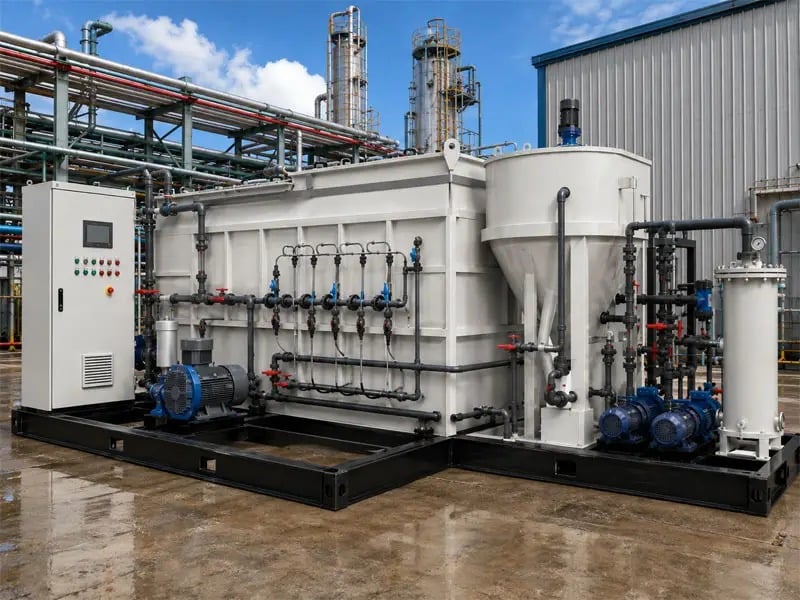
The decision to implement evaporation and crystallization in your treatment strategy hinges on specific triggers. When high TDS concentration levels remain stubbornly elevated after conventional treatment stages, and when regulatory discharge limits demand near-zero liquid discharge, advanced separation technologies become mandatory. Recognizing these decision points allows facilities to invest in appropriate solutions before environmental violations occur and before treatment inefficiencies accumulate costly operational waste.
Understanding High TDS Concentration and Treatment Triggers
When Conventional Methods Fall Short
Traditional wastewater treatment operates effectively on most contaminants but encounters fundamental limitations with dissolved salts. Biological treatment processes, filtration, and reverse osmosis all struggle when high TDS concentration reaches critical thresholds. These conventional methods cannot economically eliminate all dissolved minerals, leaving residual salt levels that violate discharge permits or create reuse barriers. Understanding this limitation clarifies why high salinity wastewater treatment demands specialized approaches when standard processes deliver insufficient results.
The threshold for intervention typically occurs between 3,000 and 5,000 mg/L total dissolved solids, though facility-specific permits may require action at lower concentrations. At these levels, conventional technologies reach diminishing returns, consuming excessive energy while producing marginal improvements in water quality. Operators recognize the signal: when high TDS concentration persists despite multiple treatment stages, evaporation becomes the logical next step.
Regulatory Drivers for Advanced Treatment
Environmental regulations increasingly demand stricter discharge standards and promote water conservation through zero liquid discharge (ZLD) frameworks. High salinity wastewater treatment now often targets complete elimination of liquid discharge, meaning all dissolved salts must be separated and managed separately. This regulatory pressure transforms wastewater from a disposal problem into a resource management challenge, where salt recovery becomes economically viable alongside environmental compliance.
Facilities operating in water-stressed regions face particularly stringent requirements. When ZLD mandates apply, evaporation and crystallization shift from optional optimization to mandatory compliance infrastructure. The regulatory environment thus dictates treatment philosophy: high TDS must be addressed not merely reduced to acceptable levels but eliminated entirely from the discharge stream.
Evaporation and Crystallization Technologies in High Salinity Treatment
How Evaporation Separates Dissolved Salts
Evaporation operates on a simple principle: applying heat to wastewater causes water molecules to vaporize while dissolved salts remain behind, creating a concentrated brine stream. Mechanical vapor recompression (MVR) evaporators enhance efficiency by capturing latent heat from the vapor and reusing it to drive further evaporation, reducing energy demand significantly compared to conventional thermal evaporators. This technology addresses high salinity wastewater treatment by progressively concentrating dissolved minerals until crystallization becomes possible, effectively separating water from salt in a controlled, recoverable manner.
The resulting vapor condenses into purified water suitable for discharge or recycling, while the concentrated brine advances to crystallization. For industrial operators managing high TDS concentration streams, evaporation represents the first major separation barrier. The concentration process is scalable and adaptable to varying feed compositions, making it suitable across diverse industrial sectors from chemical processing to mining operations.
Crystallization as Final Salt Separation
Following evaporation, crystallization further concentrates and solidifies remaining dissolved minerals. As concentrated brine cools, dissolved salts exceed solubility limits and precipitate as solid crystals. This process completes the separation of water from salt, enabling ZLD objectives by eliminating residual liquid discharge. Crystallizers process the brine from evaporators, producing dry or semi-dry salt solids that can be disposed, recovered, or utilized in other industrial applications.
The combination of evaporation and crystallization represents the most comprehensive approach to high salinity wastewater treatment. Where high TDS concentration previously required disposal or dilution strategies, these technologies recover both water and salt as valuable outputs. For facilities committed to ZLD goals, this sequential approach transforms wastewater management from cost center to resource recovery operation.
Salt Recovery and Economic Viability in ZLD Systems
Converting Waste Into Recoverable Resources
Modern high salinity wastewater treatment increasingly prioritizes salt recovery as a core objective within ZLD frameworks. The crystallized salts produced through evaporation and crystallization represent recoverable minerals with potential market value. Sodium chloride, magnesium salts, and other dissolved minerals retain commercial applications in chemical manufacturing, de-icing, and agricultural sectors. By implementing proper crystallization and salt recovery protocols, facilities transform high TDS concentration waste streams into potential revenue-generating byproducts.
The economic equation shifts dramatically when salt recovery enters the calculation. Initial capital investment in evaporation and crystallization equipment becomes more justified when recovered salts offset operational costs through sale or beneficial reuse. This financial reality increasingly drives adoption of ZLD technologies among industrial operators who previously accepted high TDS as an unavoidable consequence of their operations.
Operational Efficiency and Long-Term Cost Reduction
While evaporation and crystallization demand significant energy input, modern systems significantly reduce operational expenses through technological advancement. MVR technology captures waste heat that would otherwise be lost, improving overall system efficiency. Optimized crystallizer designs reduce downstream equipment fouling and maintenance costs. Together, these improvements make high salinity wastewater treatment increasingly economical for long-term facility operations.
Facilities analyzing whether to implement these technologies must consider total cost of ownership across equipment lifespan. Energy costs represent the primary operational expense, but avoided disposal fees, potential salt revenue, reduced environmental liability, and enhanced regulatory compliance collectively justify the investment. Many industrial operators discover that comprehensive high salinity wastewater treatment with ZLD capability delivers superior financial performance over time compared to outdated treatment methods.
Practical Decision Framework for Treatment Selection
Assessing Your Facility's Specific Needs
The decision to implement evaporation and crystallization for high salinity wastewater treatment depends on facility-specific factors including wastewater volume, salt concentration, regulatory requirements, geographic location, and available capital. Operators should begin by measuring baseline high TDS concentration levels and reviewing facility discharge permits to understand regulatory thresholds. Geographic water stress and local environmental policies further influence treatment technology selection and ZLD feasibility.
Conducting a thorough treatment audit identifies where conventional processes reach performance limits and where advanced separation becomes necessary. This analysis reveals the precise concentration levels at which high salinity wastewater treatment transitions from optional to mandatory, guiding capital planning and technology investment decisions.
Implementation Timeline and Phased Approaches
Most facilities implement evaporation and crystallization through phased approaches rather than complete system overhauls. Initial phases might optimize existing treatment stages to minimize wastewater volume before advanced equipment installation. Subsequent phases introduce evaporation capacity, followed by crystallization infrastructure as high TDS concentration management requirements solidify. This staged approach reduces financial risk and allows operators to validate technology performance at increasing scales before committing to full-scale deployment.
Phased implementation provides operational learning opportunities as staff develop expertise in managing ZLD systems. Facility managers can adjust treatment parameters based on actual performance data, fine-tuning salt recovery economics and system reliability. This practical approach transforms technology adoption from a single massive investment into a manageable progression supporting operational confidence and financial viability.
FAQ
At what TDS levels does high salinity wastewater treatment require evaporation and crystallization?
Evaporation and crystallization typically become necessary when high TDS concentration exceeds 3,000 to 5,000 mg/L total dissolved solids, though facility-specific permit limits may demand intervention at lower levels. When conventional treatment methods cannot reduce dissolved salts to acceptable discharge standards and when ZLD requirements apply, advanced separation becomes mandatory regardless of initial TDS concentration. Your facility's specific regulatory requirements and treatment objectives ultimately determine the precise activation threshold.
Can high salinity wastewater treatment through evaporation and crystallization achieve zero liquid discharge objectives?
Yes, integrated evaporation and crystallization systems are specifically designed to achieve ZLD by separating all dissolved salts from water through sequential concentration and solidification. The evaporation stage removes most dissolved minerals while condensing purified vapor into reusable water. The crystallization stage solidifies remaining salt minerals, eliminating liquid discharge entirely. Together, these technologies convert high TDS wastewater into two separate streams: clean water for discharge or reuse, and solid salts for recovery or disposal, fulfilling complete ZLD compliance.
What economic benefits justify investment in high salinity wastewater treatment with salt recovery?
High salinity wastewater treatment investment becomes economically justified through multiple pathways including avoided disposal costs, recovered salt revenue, reduced environmental liability, energy efficiency improvements in modern MVR systems, and long-term regulatory compliance. Facilities treating high TDS wastewater streams can convert waste disposal expenses into potential revenue through salt recovery while simultaneously eliminating environmental risks. Modern evaporation and crystallization equipment, particularly MVR technology, reduces energy consumption compared to older thermal processes, further improving operational economics over the equipment lifespan.

 EN