Industrial operations generate wastewater containing dissolved and suspended heavy metals that pose serious environmental and regulatory risks. Selecting the right approach to remove these contaminants is critical for compliance, cost control, and operational efficiency. Heavy metal wastewater treatment involves multiple proven technologies, each with distinct advantages and limitations depending on your specific influent composition, flow rate, and discharge standards.
Three primary treatment pathways dominate industrial practice: chemical precipitation, dissolved air flotation (DAF), and membrane polishing systems. Each method operates on different principles and delivers variable removal efficiency, residual sludge volume, and downstream handling requirements. Understanding how these technologies complement or compete with one another helps you design a treatment train that meets your specific regulatory mandates and operational constraints.
Chemical Precipitation: Foundation Treatment for Heavy Metal Removal
How Precipitation Works in Heavy Metal Wastewater Treatment
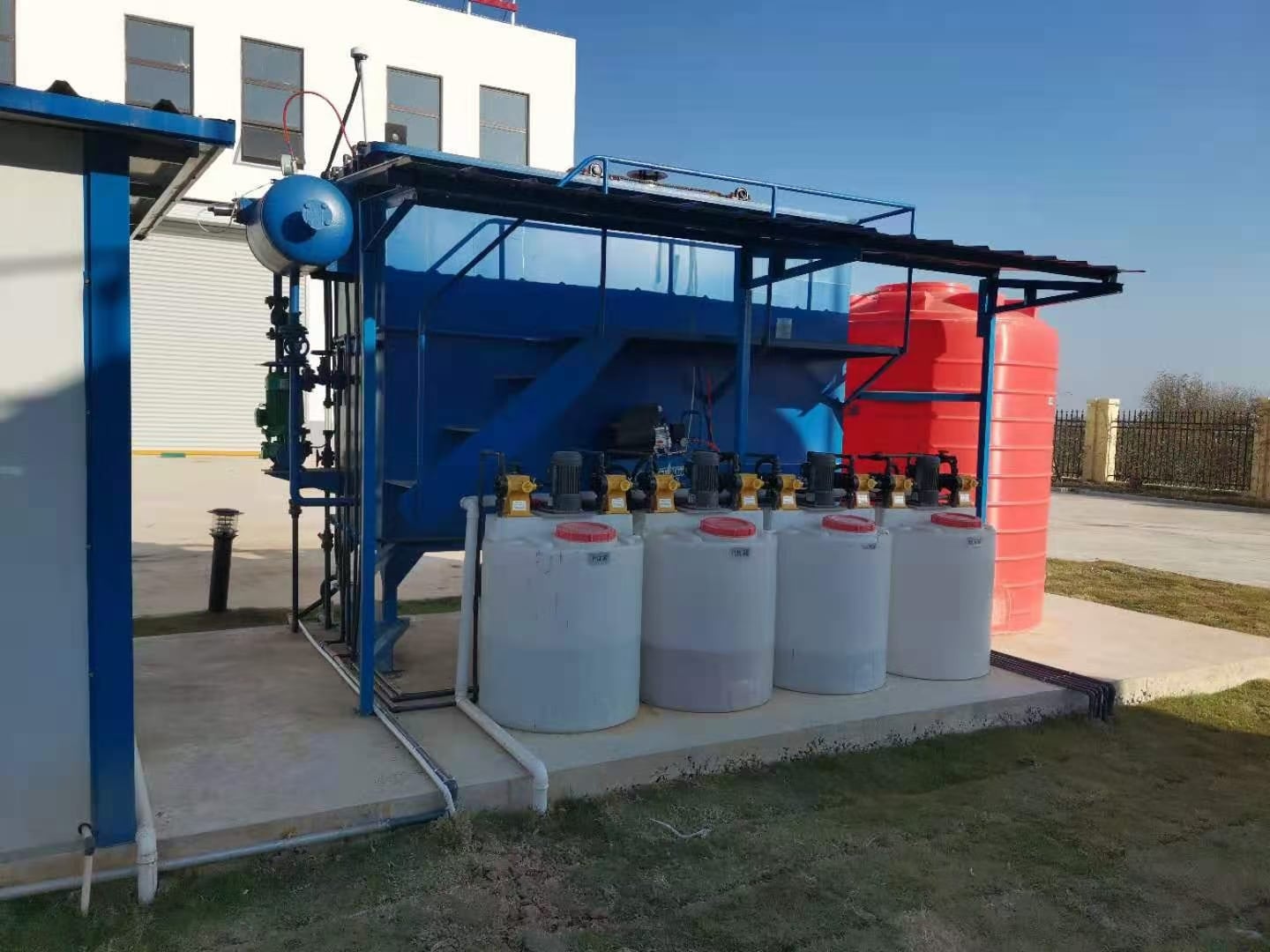
Chemical precipitation is the oldest and most widely deployed method for heavy metal wastewater treatment in industrial settings. The process involves adding alkaline or complexing reagents that convert soluble heavy metals into insoluble particles, which then settle or are mechanically separated. Common precipitation agents include lime, sodium hydroxide, and chelating polymers that bind metals and reduce their solubility to near-zero levels.
Precipitation typically achieves removal rates of 85–95% for many heavy metals, including cadmium, chromium, copper, lead, and zinc. The resulting metal hydroxide or chelate sludge settles to the bottom of a clarifier, allowing clean water to overflow. This approach is cost-effective at moderate flow rates and works well for operations that can tolerate moderate sludge generation and require straightforward chemical handling.
Advantages and Practical Limitations
The main strength of precipitation is its simplicity and low capital cost compared to membrane or specialized DAF systems. Once the metal hydroxide forms, it is physically separated from the liquid phase through gravity settling or mechanical clarification. However, precipitation-treated water often contains residual suspended solids and dissolved metals that exceed stringent discharge limits, particularly for sensitive receiving waters or zero-liquid-discharge (ZLD) operations.
Sludge volume from precipitation can be substantial, requiring dewatering equipment and final disposal management. Additionally, pH control must be carefully maintained to optimize precipitation efficiency and prevent re-dissolution of metals at incorrect pH values. For operations with tight effluent standards or highly variable influent composition, precipitation alone frequently requires supplementary polishing stages.
Dissolved Air Flotation: Secondary Separation for Enhanced Clarity
DAF Mechanism and Role in Heavy Metal Treatment Trains
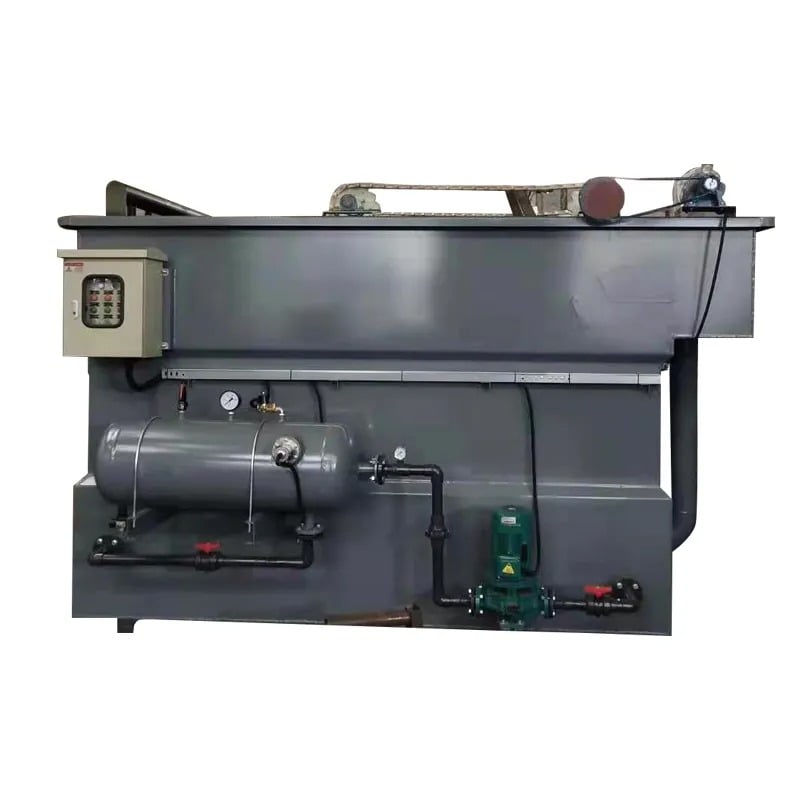
DAF uses pressurized air to generate microscopic bubbles that attach to suspended solids and carry them to the water surface, where they are skimmed off as concentrated sludge. In heavy metal wastewater treatment applications, DAF is typically deployed after initial precipitation to capture fine metal hydroxide particles and colloidal matter that would otherwise remain suspended and pass through conventional settling.
DAF achieves 90–98% solids removal and produces a denser, more concentrated sludge cake compared to conventional settling. The technology works particularly well when metal hydroxide particles are small or slow-settling, which is common in industrial wastewater containing complex chemistry or competing anions. Retention time in a DAF unit is typically 15–20 minutes, offering rapid throughput suitable for medium to high-flow operations.
Integration with Precipitation and Downstream Impacts
When combined with preceding precipitation, DAF removes a substantial portion of residual suspended solids, reducing turbidity from 50–200 NTU to 5–15 NTU. This intermediate clarity is sufficient for many industrial reuse applications but still exceeds drinking water or ultra-pure discharge standards. DAF also concentrates heavy metals into a compact sludge stream, simplifying dewatering and final disposal logistics.
However, DAF cannot address dissolved heavy metal ions that remain in solution after precipitation. If influent metals bypass precipitation due to incomplete reaction kinetics or sub-optimal dosing, those dissolved metals will pass straight through the DAF unit unchanged. Therefore, DAF is a complementary separation step rather than a primary removal technology and must be combined with proper precipitation chemistry upstream.
Membrane Polishing: Final Barrier for Stringent Discharge and Reuse
Membrane Technologies in Heavy Metal Polishing
Membrane systems—including ultrafiltration (UF), nanofiltration (NF), and reverse osmosis (RO)—serve as the final polishing stage in advanced heavy metal wastewater treatment trains. These technologies physically separate particles and ions based on size and charge, delivering effluent clarity and purity well beyond what precipitation and DAF alone can achieve. Membrane systems consistently produce water with turbidity below 0.1 NTU and residual heavy metal concentrations in the low parts per billion range.
Ultrafiltration removes colloidal particles and provides a safety barrier against any remaining metal hydroxide solids. Nanofiltration can remove divalent ions including some heavy metals, while reverse osmosis offers near-complete removal of all dissolved and colloidal contaminants. The choice depends on your target effluent quality, recovery rate, and waste disposal tolerance.
Cost, Operational Complexity, and Suitability
Membrane systems demand higher capital investment and ongoing operational complexity compared to precipitation or DAF alone. Membrane fouling risk increases in streams with high suspended solids or oxidizable contaminants, requiring rigorous pretreatment and membrane cleaning protocols. Operating costs include energy, cleaning chemicals, and membrane replacement, which can range from 2–5 dollars per thousand gallons depending on feed quality and recovery rate.
Despite higher cost, membrane polishing is essential when discharge limits are extremely stringent, when water reuse is required, or when regulatory frameworks demand multi-barrier treatment. Many semiconductor, pharmaceutical, and food processing facilities rely on membrane polishing as the final assurance that heavy metal levels meet their internal quality standards. In these sectors, the cost of membrane treatment is outweighed by avoided regulatory penalties and process water reuse savings.
FAQ
Can precipitation alone meet strict heavy metal discharge limits?
Precipitation alone typically achieves 85–95% metal removal, leaving residual dissolved and colloidal metals that often exceed state or federal discharge standards, particularly for sensitive waters. Most facilities pair precipitation with DAF or membrane polishing to meet stringent limits reliably. If your regulatory threshold is very low (below 10 micrograms per liter for most heavy metals), membrane polishing or enhanced membrane treatment is usually necessary to guarantee compliance consistently.
What is the typical sludge volume and disposal cost from chemical precipitation versus DAF?
Chemical precipitation generates 1–3 percent sludge by volume, while DAF concentrates it to 3–8 percent, reducing the volume requiring dewatering and final disposal. Disposal costs depend on sludge classification; if heavy metals exceed hazardous waste thresholds, regulatory disposal can cost 200–800 dollars per ton. DAF's ability to produce denser sludge reduces handling frequency and disposal volume, but both methods require residue testing and licensed waste disposal to confirm regulatory compliance.
Is membrane treatment cost-effective for routine industrial wastewater or only for reuse applications?
Membrane treatment becomes cost-effective when discharge limits are extremely tight, when water reuse generates revenue or process savings, or when operating in water-stressed regions with high reuse mandates. For straightforward discharge to municipal systems with moderate heavy metal limits, precipitation plus DAF often satisfies requirements at lower cost. However, increasing regulations and stricter receiving water standards are pushing more facilities toward membrane polishing as part of long-term compliance strategy.

 EN