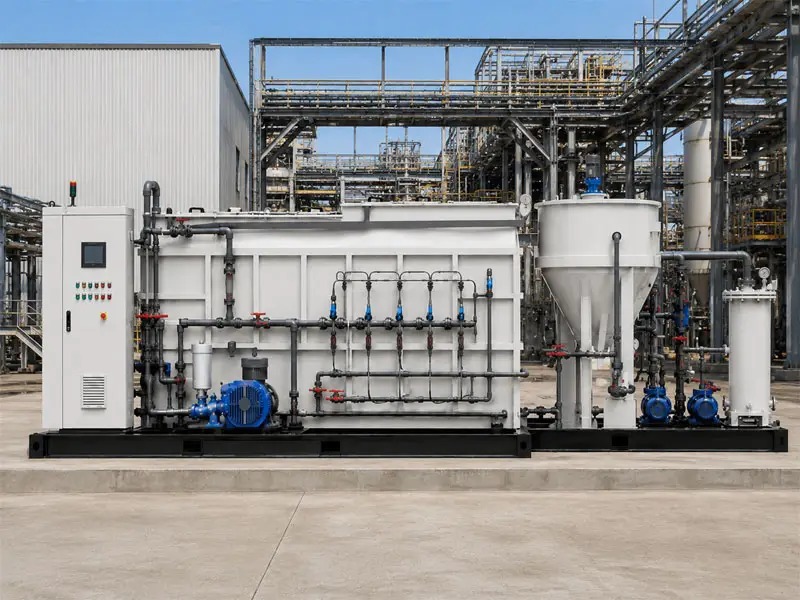
The food industry generates substantial volumes of wastewater containing fats, oils, suspended solids, and organic matter. Effective food industry effluent treatment requires a strategic approach to pretreatment that directly addresses the specific composition of your discharge stream. Matching the pretreatment method to the actual solids and oil content in your wastewater is essential for meeting environmental regulations, reducing treatment costs, and preventing downstream equipment fouling.
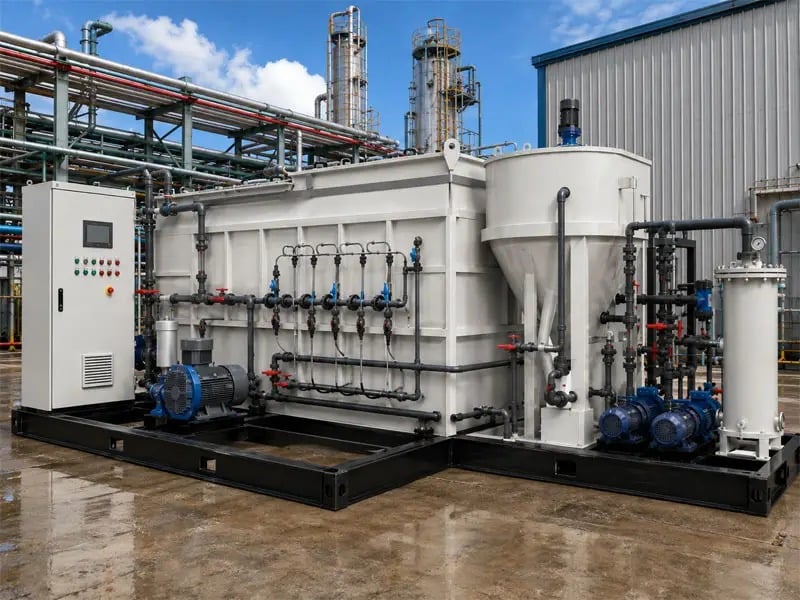
Characterizing your wastewater is the critical first step. Food processing facilities discharge different effluent profiles depending on product type, processing methods, and cleaning protocols. Understanding the solids concentration, oil and grease content, and organic load allows you to select pretreatment processes that remove contaminants efficiently before they reach secondary treatment or discharge. This targeted approach reduces operational complexity and improves overall system performance.
Understanding Solids Content and Its Role in Pretreatment
Types of Solids in Food Industry Wastewater
Suspended solids in food industry wastewater include fine food particles, starch, proteins, and inert material. Settleable solids settle under gravity within minutes to hours, while colloidal solids remain suspended and require coagulation or flotation. Understanding the solids distribution directly shapes pretreatment strategy. Meat processing facilities generate high levels of fine protein solids, while produce processing creates fibrous and sediment-heavy streams. Dairy operations discharge fine casein and fat particles that behave differently from solids in other food sectors.
Pretreatment Methods for High Solids Streams
Screening and grit removal are foundational pretreatment steps for food industry operations. Fine screens (0.5 to 2 millimeters) remove fiber, bone fragments, and large particles before the stream enters treatment basins. Grit chambers allow sand, eggshell, and mineral solids to settle while floatable solids and oil rise for separate recovery. For food industry effluent treatment systems handling slaughterhouse or meat processing waste, removing coarse solids prevents blade and pump wear downstream. Hydrocyclones offer an alternative for facilities with limited space, separating dense solids from lighter oil and organic matter through centrifugal force.
Matching Oil and Grease Removal to Your Discharge Profile
Oil Content Assessment and Treatment Implications
Oil and grease concentrations in food industry wastewater vary widely based on product and processing method. Rendering operations, deep fryers, and food manufacturing plants generate effluent with oil content ranging from 500 milligrams per liter to several thousand milligrams per liter. Dissolved and emulsified oils require different separation approaches than free-floating oil. Food industry effluent treatment must distinguish between easily removable free oil and stabilized emulsions that require coagulation or advanced flotation methods. API separators work for free oil removal but fail to capture fine oil droplets that complicate later biological treatment.
Pretreatment Technologies for Oil Recovery and Separation
Gravity separation removes free oil efficiently but handles only 60 to 70 percent of total oil in typical food industry discharge. Dissolved air flotation (DAF) systems inject fine air bubbles to float oil, grease, and suspended solids for removal in a froth layer. This pretreatment method is particularly effective for food industry effluent treatment because it handles both free and emulsified oil while removing colloidal solids simultaneously. Coalescing plate separators enhance oil capture by increasing contact surface area. For facilities with very high oil loads from frying or rendering operations, combining gravity separation with DAF ensures maximum oil removal before secondary biological treatment begins.
Integrated Pretreatment Strategy and System Design
Selecting Pretreatment Sequence for Food Processing Wastewater
Effective food industry effluent treatment sequences pretreatment methods based on contaminant priority and concentration. Coarse screening removes large solids first, preventing equipment damage downstream. Grit chambers then capture denser materials while allowing lighter oil to rise. The solids removed at this stage can often be recovered for byproduct use or animal feed, generating revenue to offset pretreatment costs. Following these initial steps, oil and grease removal via gravity or flotation ensures cleaner feed to biological treatment. This sequenced approach minimizes equipment stress and improves treatment efficiency across all downstream processes.
Balancing Pretreatment Intensity with Operational Cost
Over-treating wastewater with excessive pretreatment increases operational expense without proportional benefit. A facility with primarily settleable solids and low oil content may achieve compliance with simple screening and gravity separation. Conversely, high-strength food industry wastewater from rendering, meat processing, or frying operations justifies investment in DAF or multi-stage flotation. Conducting wastewater characterization studies identifies the minimal pretreatment necessary to meet discharge limits and protect downstream treatment assets. This data-driven approach ensures your pretreatment strategy removes solids and oil selectively without unnecessary capital or chemical costs.
FAQ
What is the typical solids concentration in food processing wastewater?
Food industry wastewater solids concentrations typically range from 500 to 3,000 milligrams per liter, depending on product type and processing method. Meat and poultry facilities often generate 1,500 to 2,500 milligrams per liter, while produce processing may yield 800 to 1,500 milligrams per liter. Characterizing your specific facility's discharge profile through sampling and testing ensures pretreatment sizing and method selection align with actual solids loading.
How does emulsified oil differ from free oil in pretreatment?
Free oil floats and separates easily via gravity or simple separation equipment. Emulsified oil remains suspended and requires coagulation, flocculation, or flotation for effective removal. Food industry effluent treatment must address both forms because processing operations create emulsions through mixing, heating, and mechanical action. Pretreatment methods must be selected to handle the actual oil state in your wastewater, not just total oil concentration.
Can pretreatment solids and oil be recovered as byproducts?
Yes, many food industry operations recover removed solids and oil for productive use. Rendered fats from food processing can be sold or repurposed. Protein solids from meat processing may become animal feed or fertilizer feedstock. Recovered materials offset pretreatment costs and reduce disposal expense. Establishing a waste valorization strategy alongside food industry effluent treatment design maximizes financial and environmental benefit from pretreatment operations.

 EN