Selecting the right evaporator crystallizer is one of the most consequential decisions a procurement team makes in water treatment and waste management operations. The technology sits at the intersection of thermal processing, mechanical reliability, and operational cost—making design comparison essential before capital deployment. This guide walks procurement professionals through the critical evaluation framework, helping teams avoid costly mistakes and identify the best fit for their specific operational requirements.
Procurement teams often approach equipment selection reactively, focusing solely on purchase price or vendor relationships. However, an evaporator crystallizer operates continuously, driving both operational expense and product quality over years of service. Thoughtful design comparison reveals long-term value alignment with process requirements, capital recovery timelines, and total cost of ownership.
Understanding Design Basis Fundamentals
Process Parameters and Operational Scope
The design basis defines the boundary conditions under which your evaporator crystallizer must perform reliably. This includes feed flowrate, inlet concentration, desired outlet concentration, product purity targets, and temperature constraints. Procurement teams must verify that vendor designs accommodate your full operational envelope, including seasonal variation or future capacity expansion. An undersized design basis creates bottlenecks; an oversized one wastes capital and reduces thermal efficiency. Cross-referencing design basis against actual plant requirements prevents purchasing equipment incapable of meeting production demands.
Thermal Load and Production Targets
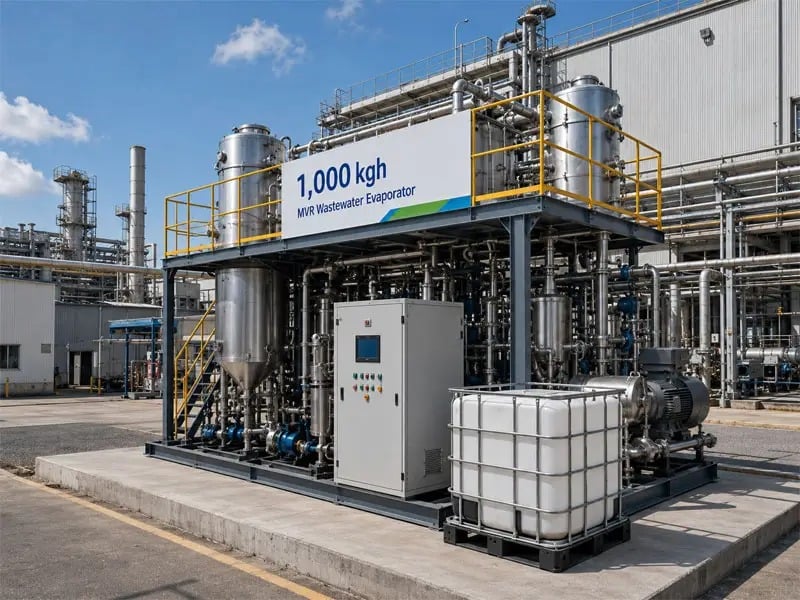
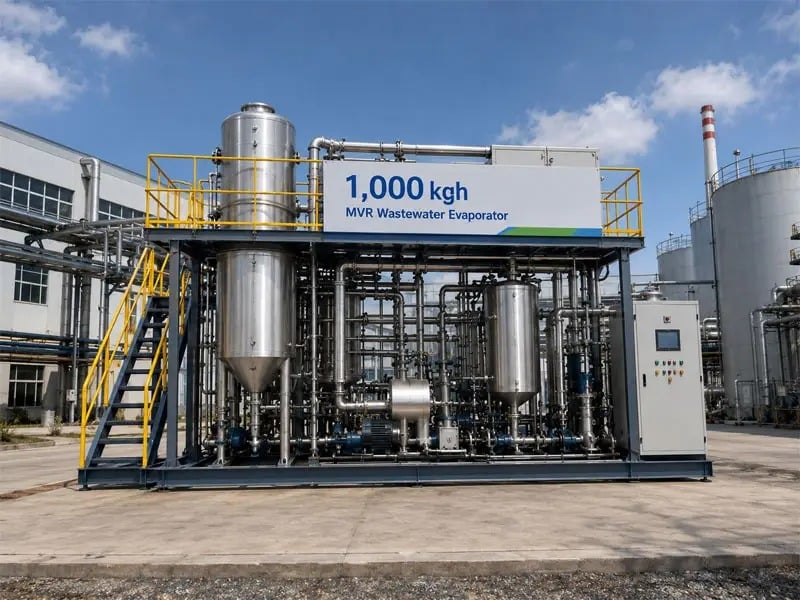
Thermal load drives both equipment sizing and operational expense. The design basis must specify evaporation rate in kilograms per hour and crystallization throughput to determine heat transfer area requirements. Vendors often propose different approaches—falling film, forced circulation, or MVR (mechanical vapor recompression) configurations—each with distinct thermal profiles. Comparing thermal load specifications ensures the proposed evaporator crystallizer can achieve target production volumes without continuous operation near maximum capacity, which shortens equipment life and increases maintenance frequency.
Energy Consumption and Operational Economics
Evaluating Energy Efficiency Performance
Energy represents the largest ongoing operational cost in evaporator crystallizer systems. Procurement teams should compare specific energy consumption, typically expressed in kilowatt-hours per kilogram of product or steam equivalents per kilogram evaporated. Modern MVR-based evaporator crystallizer designs recover latent heat through mechanical vapor recompression, reducing external energy demand compared to traditional single-effect or multi-effect configurations. Request vendor data on energy performance under realistic operating conditions, not just theoretical peak efficiency. Energy consumption varies with feed concentration, ambient temperature, and product specifications, so understanding how performance changes across your operational range is critical for accurate cost projection.
Lifecycle Operating Cost Impact
A lower capital cost paired with high energy consumption becomes uneconomical within three to five years of operation. Develop a simple levelized cost model comparing initial purchase price, installation costs, and projected annual energy expense. This reveals which design basis produces superior lifecycle economics. Vendors with transparent energy performance data demonstrate confidence in their designs; those reluctant to share specific energy benchmarks warrant additional scrutiny. Also assess utility costs in your region—locations with high electricity rates favor designs emphasizing heat recovery, while steam-abundant operations may prioritize different efficiency metrics.
Materials of Construction and Maintenance Planning
Corrosion Resistance and Long-Term Durability
The materials you select for your evaporator crystallizer directly determine service life and maintenance intensity. Concentrated salt solutions, acidic or alkaline streams, and high-temperature conditions accelerate corrosion in vulnerable materials. Compare material specifications across vendors: titanium, duplex stainless steel, and specialty alloys each offer different corrosion profiles and cost positions. Materials of construction impact both equipment cost and downtime risk; a lower-cost carbon steel design may require replacement within seven years if corrosion penetration exceeds design thickness, whereas a titanium or duplex alternative serves fifteen years. Request metallurgical justification for each material choice in your specific application, including corrosion rate projections and expected service life assumptions.
Maintenance Access and Component Replacement
Maintenance requirements vary significantly across evaporator crystallizer designs. Some configurations feature accessible tube bundles for routine cleaning and inspection; others require partial disassembly for maintenance access. Evaluate maintenance frequency requirements, spare parts availability, and replacement labor complexity when comparing designs. A design basis that minimizes tube-side scaling through superior hydraulic design may justify higher capital cost by reducing chemical cleaning frequency and downtime. Conversely, robust mechanical designs compensating for higher fouling tendency may prove more practical in operations where specialized maintenance skills are unavailable. Procurement teams should factor maintenance labor cost and production disruption risk into the overall equipment selection decision.
Conclusion: Strategic Procurement Approach
Comprehensive evaporator crystallizer design comparison extends far beyond vendor quotations and delivery schedules. Procurement teams must systematically evaluate design basis alignment with operational requirements, energy efficiency implications for operational budgets, and materials of construction choices affecting service life and maintenance burden. This structured approach transforms equipment selection from a transactional purchase into a strategic capital decision anchored in lifecycle economics and operational reliability. By benchmarking designs against these criteria, procurement professionals protect plant operations while optimizing total cost of ownership.
FAQ
What is the typical service life of a well-maintained evaporator crystallizer?
With appropriate materials of construction, proper maintenance, and operation within design parameters, most evaporator crystallizer systems achieve 10–15 years of service life. Titanium and duplex stainless steel designs often reach 15 years or beyond, while carbon steel configurations in corrosive applications may require replacement within 7–10 years. Service life extends when thermal load remains below maximum capacity and preventive maintenance protocols are followed consistently.
How does design basis affect energy consumption in an evaporator crystallizer?
A design basis specifying higher evaporation rates drives larger heat transfer area requirements, which improves thermal efficiency but increases capital cost. Conversely, oversizing a design basis reduces the relative energy penalty per unit product but wastes equipment capacity. The optimal design basis balances capital investment with expected operational utilization, typically targeting 70–85% of maximum rated capacity during normal operation to preserve reliability and efficiency margins.
What materials of construction are best for high-salinity waste streams in an evaporator crystallizer?
Titanium and duplex stainless steel excel in high-salinity applications where chloride stress corrosion cracking threatens carbon or standard austenitic stainless steel. Titanium offers superior corrosion resistance but carries higher material cost; duplex stainless steel balances corrosion protection with more moderate pricing. The choice depends on specific chloride concentration, operating temperature, and lifecycle cost tolerance within your procurement budget and operational constraints.

 EN