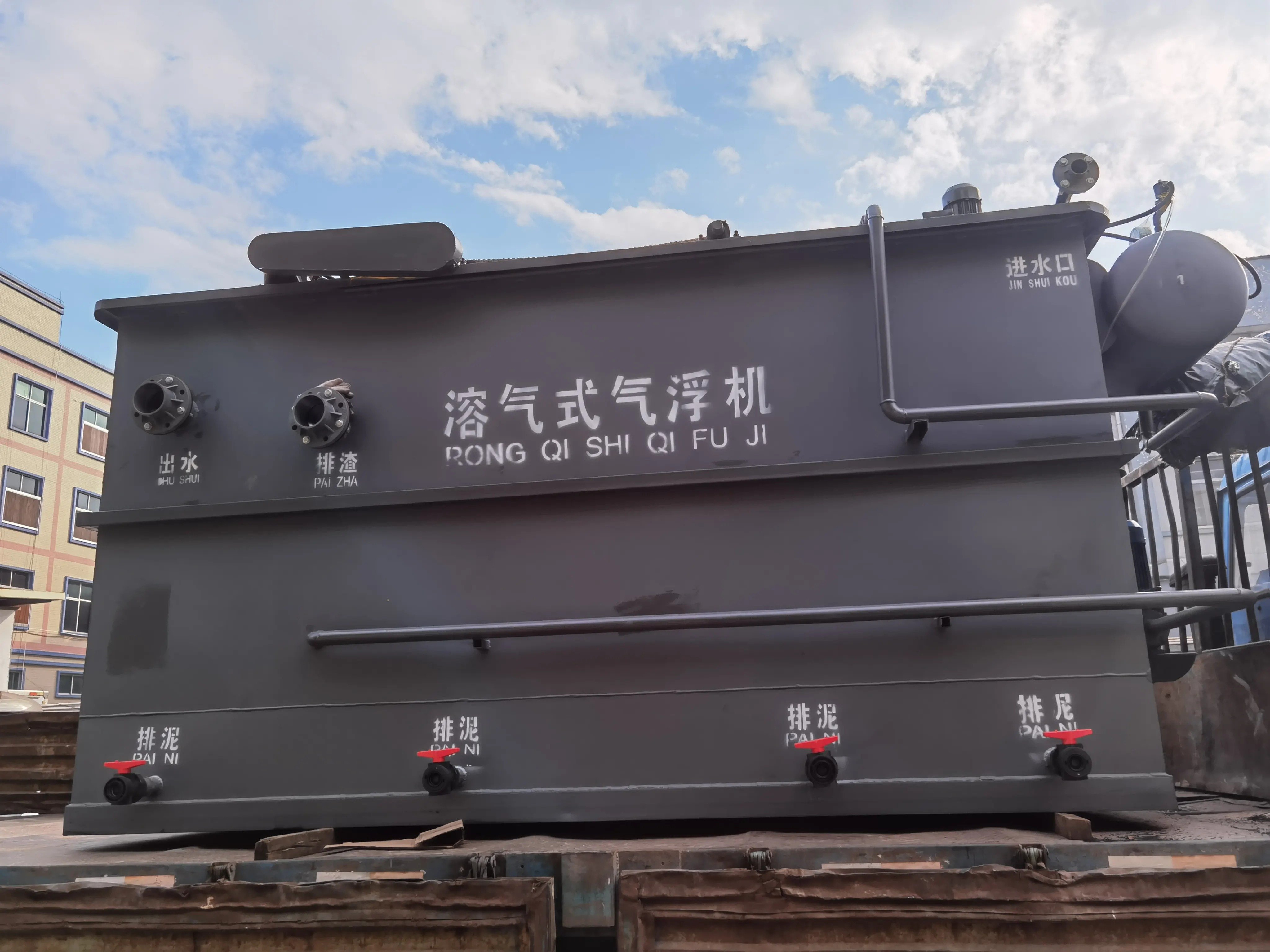
Dissolved air flotation equipment represents one of the most effective technologies for separating suspended solids and oils from industrial wastewater streams. The performance of this equipment depends critically on two interconnected design and operational parameters: bubble size and recycle flow rate. Understanding how these factors interact enables operators to optimize separation efficiency, reduce treatment costs, and meet increasingly stringent discharge standards. This article explores the mechanical principles behind these parameters and their direct impact on treatment outcomes.
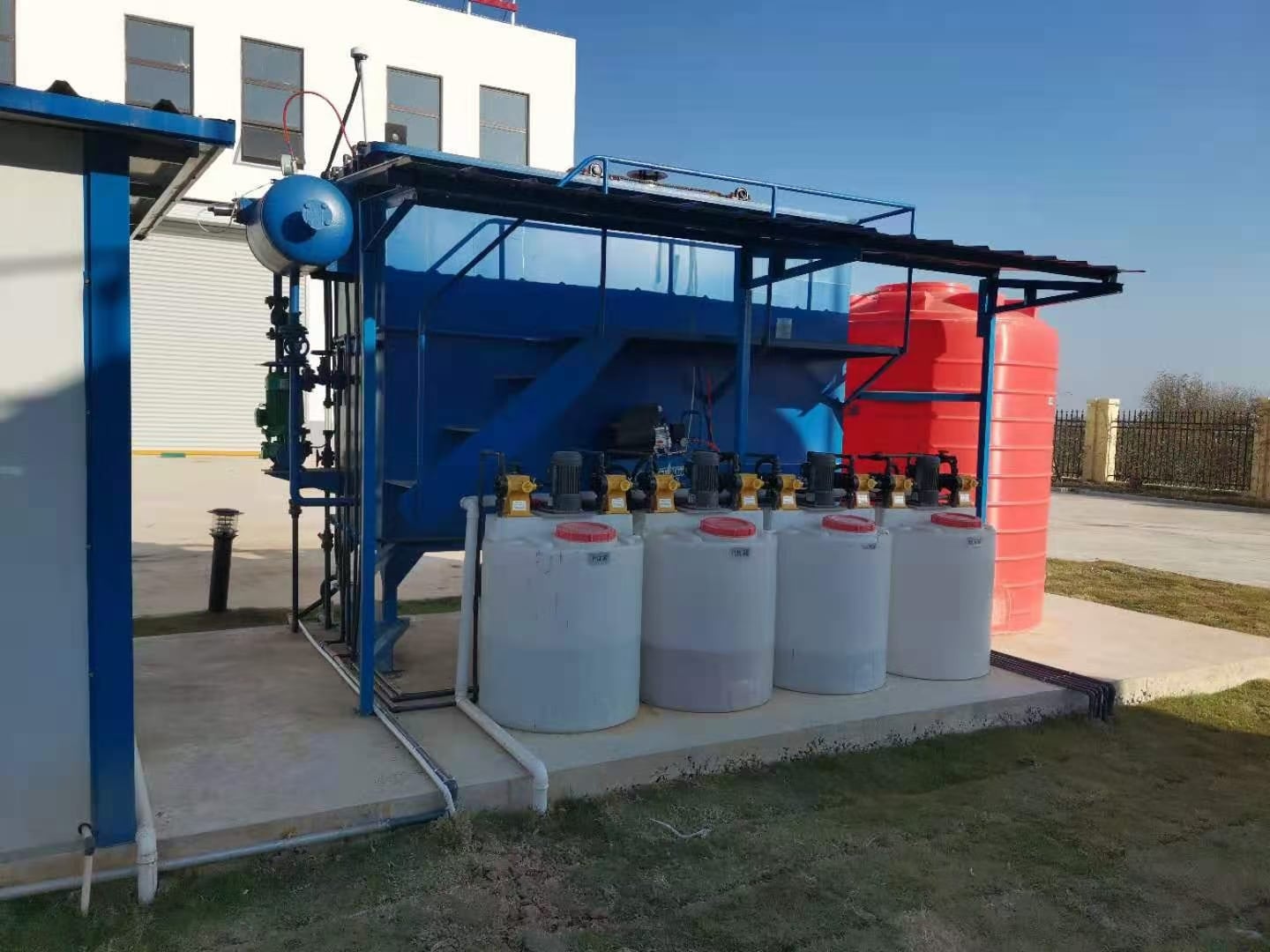
The fundamental principle of dissolved air flotation relies on air bubbles that attach to oil droplets, grease particles, and suspended solids, allowing them to rise to the surface where they can be removed. The size and density of these bubbles, combined with the volume of fluid recycled through the pressurization system, directly determine how effectively particles are captured and separated from the liquid phase. Industrial operators face daily decisions about pressure settings, recirculation percentages, and separator tank design—all of which hinge on understanding microbubbles and recycle flow dynamics.
The Role of Microbubbles in Separation Performance
How Bubble Size Affects Particle Capture
Microbubbles are the driving force behind effective oil removal and solids flotation in dissolved air flotation equipment. The smaller the bubble diameter, the greater the total surface area available for particle adhesion. A bubble measuring 50 micrometers in diameter offers significantly more attachment sites than a bubble of 200 micrometers, even when the total air volume remains constant. This surface area advantage allows microbubbles to make contact with and capture a much higher percentage of suspended contaminants as they rise through the treatment chamber.
The buoyant force on a single bubble is proportional to its volume, which scales with the cube of its diameter. Smaller microbubbles therefore rise more slowly than larger bubbles, giving them extended contact time with particles suspended in the liquid column. This slower ascent rate dramatically increases the probability of collision between bubbles and target contaminants, particularly fine oil droplets and clay-like solids that would otherwise settle slowly or remain in suspension. The gentle rise velocity also minimizes turbulence that could break apart fragile floc structures formed by coagulants or flocculants.
Microbubbles and the Adhesion Mechanism
Particle adhesion to microbubbles occurs through a combination of hydrophobic interactions and mechanical entrapment. Oil removal is inherently favorable because most oil and grease particles are hydrophobic—they naturally prefer the air-water interface of a bubble to remaining suspended in water. Solids capture depends partly on particle surface properties and partly on collision frequency. By generating millions of microbubbles per cubic meter of treated liquid, dissolved air flotation equipment dramatically increases the chance that every targeted particle will encounter a suitable bubble within the treatment residence time.
Equipment design directly influences microbubble generation. Pressure-saturated water is released through a restriction device—typically a valve or orifice—that causes instantaneous depressurization. As dissolved air comes out of solution, it forms tiny bubbles. The nucleation process and subsequent bubble coalescence dynamics are controlled by system pressure, flow rate, and orifice geometry. Higher system pressures allow more air to dissolve into the recycle stream, which means more microbubbles are generated when that pressurized water meets the treatment tank at atmospheric pressure.
Recycle Flow Optimization for Maximum Separation
Understanding Recycle Flow Rate and Its Limits
Recycle flow represents the portion of treated effluent that is pressurized, saturated with air, and returned to the flotation tank as the source of microbubbles. Typical recycle flow rates in industrial dissolved air flotation equipment range from 5 percent to 15 percent of the total incoming wastewater flow, though some applications run as high as 25 percent. The recycle flow controls the absolute volume of air bubbles introduced into the treatment chamber. Increasing recycle flow directly increases the number of microbubbles available to contact and carry away target solids and oil contaminants.
However, recycle flow optimization involves trade-offs. Higher recycle rates improve oil removal efficiency but consume more energy for pressurization and pumping. The relationship between recycle flow and separation performance is not linear—doubling the recycle flow does not necessarily double the separation rate. Physical limitations emerge as bubble-loading capacity is reached; once particles are fully coated with microbubbles, additional bubbles provide diminishing returns. Industrial operators must balance separation goals against electrical power consumption and chemical dosing requirements.
Bubble-to-Solids Ratio and Loading Capacity
The concept of bubble-to-solids ratio explains why recycle flow matters beyond simple volume addition. When oil removal or solids processing increases suddenly, the existing recycle flow may become insufficient to generate enough microbubbles for complete particle flotation. A typical target bubble-to-solids ratio ranges from 20:1 to 50:1 by mass, depending on particle size and density. Achieving this ratio ensures that nearly every suspended particle or oil droplet finds bubble attachment before settling back to the tank bottom.
Dissolved air flotation equipment operators monitor solids loading by tracking influent concentration and adjusting recycle flow accordingly. When incoming solids concentration rises due to production changes or process upset, operators increase the recycle flow percentage to maintain the required bubble supply. Conversely, when solids loading drops, operators reduce recycle flow to conserve energy. Real-time clarifier turbidity measurement systems allow this dynamic adjustment, ensuring consistent treatment performance across varying inlet conditions.
Integration of Bubble Size and Recycle Flow Parameters
System Pressure and Its Effect on Both Parameters
System pressure unifies bubble size and recycle flow control in modern dissolved air flotation equipment design. Pressure directly affects how much dissolved oxygen and nitrogen the recycle water can hold. At 4 bar (60 psi), water can dissolve approximately 7 milligrams of air per liter. At 7 bar (100 psi), that capacity increases to nearly 12 milligrams per liter. Higher pressure means more dissolved gas is available, which translates to more numerous and smaller microbubbles when depressurization occurs in the flotation tank.
The pressure setting also influences bubble coalescence rate—the tendency of microbubbles to combine into larger, less effective bubbles. High pressure maintains better microbubble integrity by limiting coalescence time in the pressurization vessel. Equipment manufacturers design saturation columns and holding vessels to balance air dissolution time against bubble stability, ensuring that pressure release generates optimal bubble size distributions rather than coarse, rapidly coalescing bubbles that defeat the purpose of the dissolved air flotation process.
Practical Tuning for Industrial Operations
Operators of dissolved air flotation equipment typically approach optimization through a structured procedure. First, they establish baseline performance at current settings by measuring outlet clarity, oil content, and solids concentration over a full production shift. Next, they increment the recycle flow percentage by 2 to 5 percent while monitoring the clarity improvement rate. When clarity improvement plateaus—indicating that bubble-loading capacity has been reached—they hold recycle flow constant and increase system pressure by 1 to 2 bar if the compressor capacity allows. This pressure increase generates smaller, more numerous microbubbles that often improve separation without proportional energy cost increases.
Fine-tuning continues by observing sludge bed depth and scum layer thickness. Excessive sludge accumulation suggests either insufficient oil removal or inadequate solids capture, prompting another recycle flow increase. Overly thin scum layers combined with high energy consumption suggest oversaturation and warrant pressure reduction. This iterative approach maintains dissolved air flotation equipment within its optimal operating window while responding to seasonal variations in influent composition and temperature, which affect both air solubility and particle flotation characteristics.
FAQ
What is the typical microbubble size in dissolved air flotation equipment?
Microbubbles in modern dissolved air flotation equipment typically range from 10 to 100 micrometers in diameter, with most bubbles clustering between 20 and 60 micrometers. This size range provides optimal balance between surface area for particle adhesion and buoyancy characteristics that allow extended contact time with suspended contaminants. Bubble size is controlled primarily by system pressure, restriction orifice design, and the depressurization dynamics within the flotation tank.
Can recycle flow be increased indefinitely to improve separation?
No, recycle flow reaches practical and economic limits. While increasing recycle flow initially improves solids and oil removal, this benefit plateaus as the bubble-to-solids ratio reaches saturation. Beyond the optimal point, additional recycle flow wastes energy without meaningful treatment improvement. Most dissolved air flotation equipment operates efficiently at recycle flow rates between 8 and 12 percent of influent flow, with higher rates reserved for extremely high solids loads or unusually oily influents.
How do temperature changes affect dissolved air flotation equipment performance?
Temperature significantly impacts both air solubility and flotation dynamics. Warm water dissolves less air than cold water, reducing microbubble generation at the same pressure setting. Additionally, warm particles have reduced density differences compared to cold particles, affecting buoyancy. Operators compensate for seasonal temperature variations by adjusting system pressure upward during warm months and monitoring influent temperature continuously to maintain consistent dissolved air flotation equipment performance year-round.

 EN