Choosing between a decentralized wastewater treatment system and centralized treatment requires understanding more than just upfront costs. The lifecycle cost analysis reveals critical differences in capital investment, operation expenses, maintenance burden, and long-term financial performance that directly affect your bottom line.
A complete lifecycle cost comparison examines all expenses from design and construction through decades of operation, including treatment efficiency, energy consumption, staffing requirements, replacement cycles, and regulatory compliance. This comprehensive view helps industrial facilities, municipalities, and commercial operators make decisions aligned with their actual financial and operational capacity.
Understanding the Capital Investment Difference
Centralized Treatment Infrastructure Costs
Centralized treatment plants require significant upfront infrastructure investment. Your facility must fund construction of collection networks, main treatment buildings, sludge handling systems, and discharge infrastructure connecting multiple sources to a single central location. For municipalities and large districts, this translates to millions in construction capital, extended project timelines, and coordination complexity across multiple properties.
The centralized model demands extensive site preparation, foundation work, and long-distance piping systems. When treatment capacity must be expanded, the entire facility often requires retrofitting or rebuilding, magnifying future capital requirements. These upfront costs are typically spread across service areas through capital bonds or municipal taxes, delaying financial benefit realization.
Decentralized System Capital Requirements
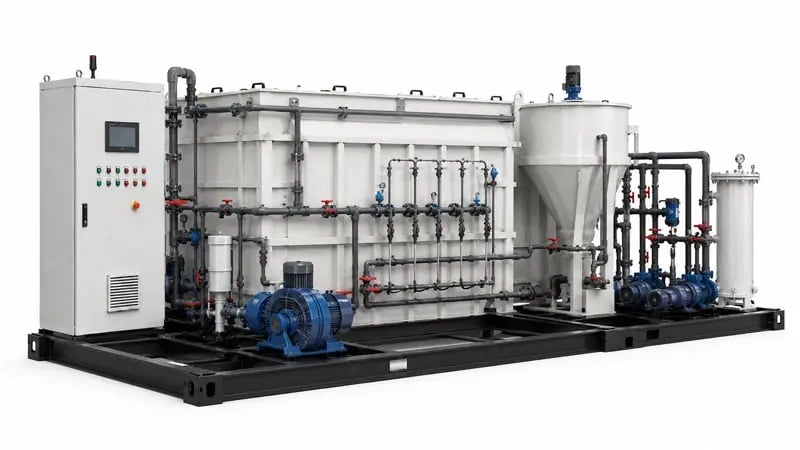
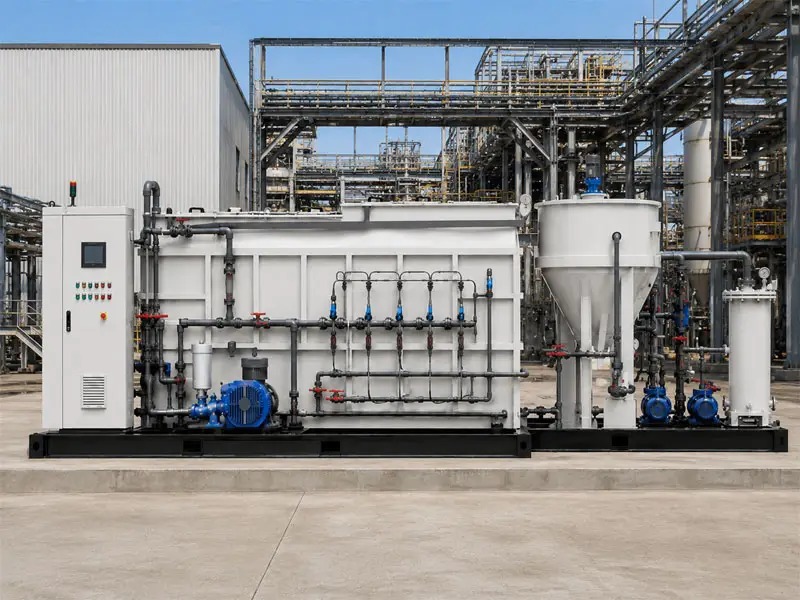
A decentralized wastewater treatment system distributes treatment capacity across multiple smaller units positioned near generation points. Capital investment concentrates on modular, skid-mounted treatment equipment that deploys at individual facilities, neighborhoods, or district clusters. This approach allows phased expansion, reducing initial capital burden and enabling investment matching actual demand growth.
Decentralized systems avoid the extensive network infrastructure that centralized treatment demands. Installation typically requires less site preparation, shorter construction schedules, and lower coordination overhead. Facilities can implement treatment incrementally, purchasing additional capacity as operations scale rather than building oversize central infrastructure upfront.
Operation and Maintenance Cost Analysis
Energy and Treatment Operation Expenses
Centralized treatment incurs substantial energy costs moving wastewater through extensive collection networks via lift stations and force mains. Treatment processes concentrate all influent at one location, requiring significant pumping energy to move large volumes through treatment stages. Sludge handling and disposal at a centralized location generates additional transport and processing costs.
Decentralized systems minimize transport energy through localized treatment. Wastewater moves shorter distances, requiring less pumping capacity and lower electricity consumption during operation. Treatment volumes remain distributed, allowing right-sized equipment selection and reduced energy intensity per unit treated. Many decentralized systems achieve superior operation efficiency through modular design optimization.
Staffing and Maintenance Requirements
Centralized treatment plants require dedicated on-site operational staff, supervisory personnel, laboratory technicians, and maintenance teams. Larger facilities justify full-time employees managing multiple treatment processes, monitoring complex automated systems, and responding to operational incidents. Staff training, benefits, and management overhead represent substantial annual operation costs.
Decentralized wastewater treatment systems often operate with minimal on-site staffing through remote monitoring and predictable maintenance protocols. Modular treatment units feature simpler process control, standardized component replacement cycles, and reduced troubleshooting complexity. Regional technicians can service multiple locations, distributing labor costs across a wider service base and reducing per-facility staffing expense.
Lifecycle Cost Horizon and Financial Realization
Total Cost of Ownership Over Time
Lifecycle cost compares the complete financial burden over a typical 20 to 40-year planning horizon. Centralized treatment spreads massive upfront capital across many years of operation, while early years may not fully recover investment through service revenues. Maintenance costs often escalate as centralized infrastructure ages, with major component replacement becoming necessary after 15 to 20 years of continuous operation.
Decentralized systems distribute costs across capital deployment phases aligned with revenue generation. Early-stage operation begins cost recovery sooner through more efficient unit economics. When individual treatment modules reach end-of-life, replacement occurs modularly without disrupting remaining treatment capacity, avoiding the catastrophic lifecycle renewal costs that centralized plants face.
Regulatory Compliance and Lifecycle Risks
Environmental regulations continue evolving toward more stringent effluent standards. Centralized plants built to current standards may require expensive upgrades to meet future regulations, concentrated at single high-cost locations. Decentralized systems enable incremental compliance upgrades as regulations change, implementing improvements modularly without complete facility overhauls.
Wastewater composition changes over time as industries evolve or new sources connect. Centralized treatment designed for specific influent characteristics may struggle when composition shifts, requiring operational adjustments or chemical additions increasing operation costs. Decentralized systems adapt through modular treatment process adjustments, maintaining cost-effective operation under changing conditions.
Practical Comparison Framework
When Centralized Treatment Remains Cost-Effective
Centralized treatment justifies lifecycle cost investment in high-density urban areas where collection infrastructure already exists or serves multiple large industrial sources generating consistent wastewater volumes. When economies of scale substantially reduce per-unit treatment costs through massive volume concentration, centralized capital and operation expenses may prove competitive over decades.
Long-established municipalities with existing centralized infrastructure should evaluate lifecycle costs including infrastructure sunk costs. Incremental improvements to existing central plants often cost less than parallel decentralized system deployment, though this advantage disappears during major replacement cycles.
Decentralized System Lifecycle Advantages
Growing communities and rural areas benefit significantly from decentralized systems' lower capital requirements and phased implementation. Industrial parks, institutional campuses, and commercial districts achieve superior lifecycle economics through modular treatment aligned with their specific spatial and operational characteristics.
Organizations prioritizing operational flexibility, climate resilience, and adaptation to changing regulations find decentralized systems' lifecycle cost advantage compelling. Lower staffing requirements, reduced energy intensity, and modular upgrading capability translate to measurable financial benefits over 20 to 30-year planning horizons.
FAQ
What is the typical capital cost difference between decentralized and centralized treatment?
Centralized treatment infrastructure typically requires 40 to 60 percent higher upfront capital investment per treated volume due to extensive collection networks and centralized facility construction. A decentralized wastewater treatment system spreads investment across multiple smaller units, reducing initial burden. Actual cost differences depend heavily on site density, existing infrastructure, and treatment requirements specific to your location and wastewater characteristics.
How do operation costs compare over a 20-year period?
Decentralized systems generally achieve 25 to 35 percent lower operation costs through reduced energy consumption, minimal staffing needs, and predictable maintenance cycles. Lifecycle cost analysis over 20 years frequently shows decentralized models recovering their lower capital investment within 10 to 12 years, then generating superior financial returns. Centralized treatment faces escalating operation costs as infrastructure ages, potentially offsetting capital cost advantages.
Can decentralized treatment handle changing wastewater volumes?
Decentralized wastewater treatment systems excel at accommodating volume changes through modular capacity expansion. Adding treatment modules directly addresses growth without oversizing existing equipment or requiring facility-wide rebuilds. Centralized systems often operate inefficiently when volumes fluctuate significantly from design capacity, increasing per-unit operation costs and complicating lifecycle cost recovery projections.

 EN