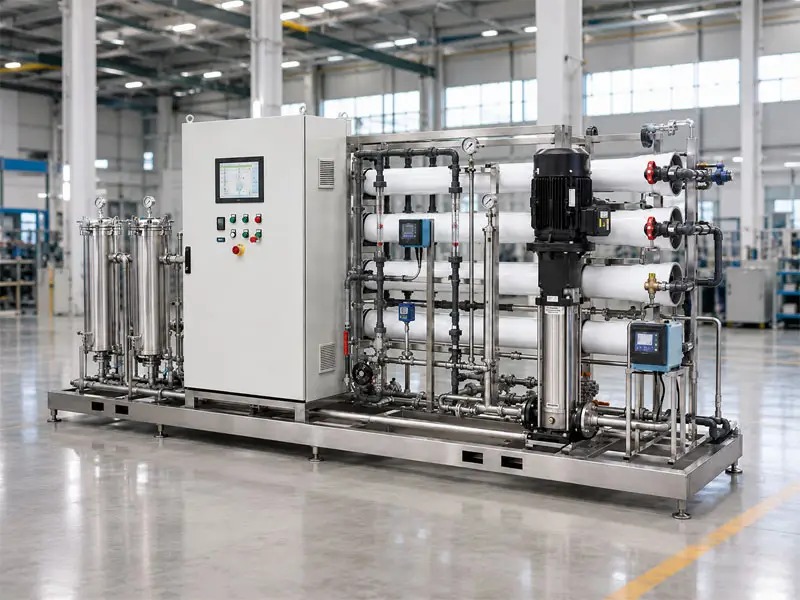
A custom water treatment system represents a tailored engineering solution designed to address specific contamination challenges, flow requirements, and quality standards unique to each industrial or municipal application. Unlike off-the-shelf generic systems, a custom water treatment system integrates precise water analysis findings, targeted process design, optimal equipment layout, and full customization of materials and performance specifications. This approach ensures that your facility receives treatment capacity and contaminant removal exactly matched to operational demands, regulatory requirements, and budget constraints.

Designing a custom water treatment system involves multiple interconnected phases beginning with comprehensive water analysis and ending with validated equipment layout and operational protocols. The transition from concept to operational system depends on rigorous data collection, informed process design decisions, strategic layout planning, and intelligent customization of each treatment stage. This guide walks through the complete design pathway, explaining how professional water analysis informs process selection, how process design translates findings into unit operations, and how layout optimization ensures reliability, maintainability, and cost efficiency across the system lifecycle.
Water Analysis Foundation for Process Design
Characterizing Source Water and Contaminant Profile
The first critical step in designing any custom water treatment system is conducting thorough water analysis of your source water. This analysis determines which contaminants are present, their concentrations, their behavior under different pH and temperature conditions, and their removal difficulty. Water analysis typically measures parameters including total suspended solids, turbidity, hardness, dissolved minerals, organic content, microbiological load, pH, and industry-specific contaminants such as iron, manganese, oils, or synthetic chemicals. Without accurate water analysis, process design decisions are guesswork, leading to undersized equipment, inadequate treatment performance, or wasted capital on unnecessary treatment stages.
Establishing Treatment Goals and Regulatory Requirements
Water analysis results must be compared against your facility's operational requirements and applicable discharge or reuse standards. Process design for a custom water treatment system must account for final water quality targets, permitted discharge limits, reuse applications, and industry-specific regulations. For example, water analysis showing high suspended solids may trigger a different process design path if the water will be recycled for cooling versus discharged to surface waters. This alignment between water analysis findings and regulatory or operational constraints forms the backbone of sound process design logic.
Process Design Strategy and Unit Operation Selection
Matching Treatment Processes to Contaminant Characteristics
Once water analysis is complete, process design becomes the exercise of selecting and sequencing unit operations that collectively achieve your water quality targets. Process design for a custom water treatment system might include coagulation and flocculation to remove particles, sedimentation or lamella clarification for gravity separation, multimedia filtration or sand filtration for polishing, activated carbon adsorption for organic removal, ion exchange for hardness reduction, ultraviolet disinfection, or reverse osmosis for advanced treatment. Each process design decision rests directly on water analysis data, ensuring that selected technologies address the actual contaminant challenge rather than theoretical concerns.
Sequencing and Integration of Treatment Stages
Process design logic dictates that treatment stages must be sequenced to maximize removal efficiency while minimizing chemical consumption, waste generation, and capital cost. For instance, process design typically positions pretreatment—such as screening or preliminary coagulation—before fine filtration to reduce fouling and extend filter run times. A well-engineered process design prevents cascade failures where inadequate upstream treatment overloads downstream equipment. The customization of this sequence depends directly on your water analysis profile, facility hydraulics, space availability, and maintenance resources available on-site.
Layout Optimization and Equipment Placement Strategy
Spatial Configuration and Hydraulic Flow Path
After process design selections are finalized, layout planning translates the treatment sequence into a physical arrangement of equipment within your facility. Layout decisions directly affect system performance, operational safety, maintenance access, and scalability. An effective layout minimizes pumping head requirements by maximizing gravity-fed treatment stages, positions equipment to enable operator visibility and routine maintenance, and reserves space for future process modifications or equipment replacement. Layout considerations also account for chemical storage proximity, sludge disposal routing, and utility connections such as electrical, compressed air, and wastewater discharge points. Customization of layout depends on your site's existing infrastructure, building footprint constraints, and operational workflow.
Accessibility, Maintenance, and Monitoring Integration
A robust layout ensures that all equipment remains accessible for inspection, media replacement, valve servicing, and emergency repairs without requiring system shutdown or extensive scaffolding. Layout planning must position control instrumentation, sampling ports, and parameter monitoring devices for convenient operator access and data collection. The layout also accommodates chemical feed systems, sludge dewatering equipment, and waste residual management in positions that minimize cross-contamination and spill risk. Customization of monitoring and maintenance accessibility often requires compromises between space efficiency and operational safety; professional layout design balances these competing priorities through careful equipment staging and pathway clearance planning.
Customization, Material Selection, and System Integration
Material Compatibility and Corrosion Management
Customization of your treatment system extends to material selection for pipes, tanks, valves, and internal components based on water chemistry, temperature, and operational flow velocities identified during water analysis. Corrosive water high in chlorides may require stainless steel or epoxy-coated carbon steel rather than bare carbon steel, adding cost but preventing premature equipment failure. Customization decisions such as tank liner materials, gasket compounds, and valve seals must align with the actual water composition and operational chemistry determined through rigorous water analysis. This level of customization prevents costly corrosion-related downtime and extends equipment asset life significantly.
Automation, Control Logic, and Performance Monitoring
Modern custom water treatment system designs incorporate automated control logic, real-time parameter monitoring, and feedback mechanisms that maintain performance consistency and enable predictive maintenance. Customization in the control system architecture—such as selecting real-time turbidity monitoring, automated coagulant dosing, or filter backwash sequencing—directly improves treatment reliability while reducing operator burden. These customization choices are informed by water analysis variability, process design margins, and facility staffing availability. Integration of SCADA systems, alarm thresholds, and data logging transforms a static process design into an adaptive, responsive treatment asset aligned with actual facility operational dynamics.
FAQ
What is the typical timeline for designing and commissioning a custom water treatment system?
A complete custom water treatment system design project typically spans 8 to 16 weeks from initial water analysis through equipment installation and commissioning. Water analysis and characterization often require 2 to 4 weeks if multiple samples and seasonal variations are considered. Process design and equipment selection take 3 to 6 weeks, followed by layout finalization, procurement, and fabrication lasting 4 to 8 weeks depending on equipment complexity and supply chain factors. Commissioning and performance validation add another 1 to 3 weeks. Customization scope, site-specific constraints, and regulatory approval requirements can extend this timeline significantly.
How does water analysis accuracy affect the reliability of the final custom water treatment system?
Water analysis forms the technical foundation of every downstream design decision, making accuracy critical to system success. Incomplete or unrepresentative water analysis can lead to undersized equipment that fails to meet peak demand, inadequate treatment stages that fail to achieve discharge compliance, or oversized systems that waste capital and operational resources. Professional water analysis includes seasonal sampling, multiple grab samples, and comprehensive parameter testing to capture contaminant variability that process design and layout must accommodate. This investment in thorough water analysis directly reduces the risk of costly process redesign, equipment replacement, or regulatory non-compliance after the system becomes operational.
Can layout and customization be modified after the custom water treatment system is installed?
Minor customization adjustments such as control setpoints, chemical dosing rates, and monitoring configurations can typically be modified post-commissioning without major disruption. However, significant layout changes or process design modifications often require equipment replacement, structural modifications, or operational downtime that increases costs substantially. This reality underscores the importance of investing in comprehensive water analysis and professional process design upfront, ensuring that layout decisions account for anticipated future needs such as capacity growth or influent quality changes. Designing with flexibility in mind—such as oversizing key equipment slightly or reserving future expansion space—allows customization and process refinement over time without major capital reinvestment.

 EN