Deploying wastewater management infrastructure at remote industrial sites demands careful planning and precise equipment selection. A containerized sewage treatment plant offers a practical solution for facilities where traditional brick-and-mortar treatment infrastructure is economically unfeasible or logistically impossible. Remote operations, mining camps, offshore platforms, construction sites, and temporary industrial zones all benefit from this modular approach, but selecting the right system requires evaluating multiple technical and operational dimensions before making a purchasing decision.
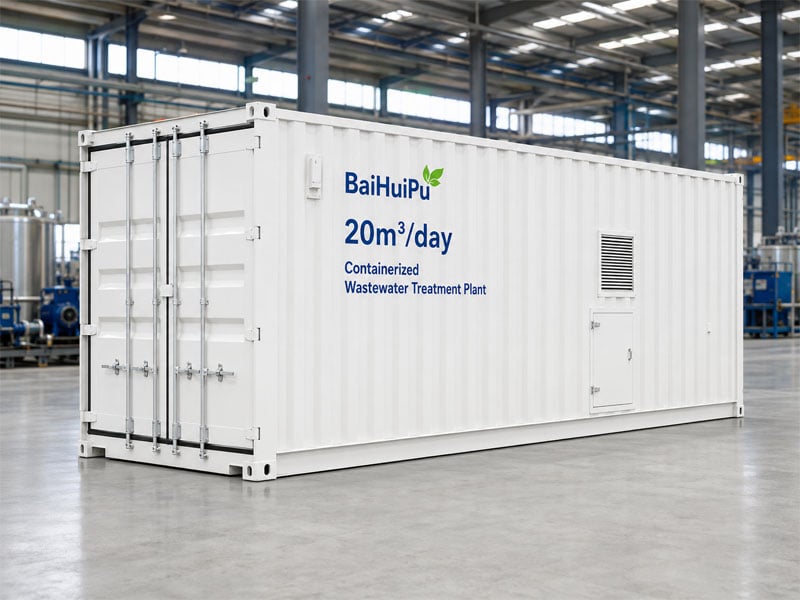
This buyer's checklist guides facility managers, procurement teams, and environmental compliance officers through the critical assessment process. Understanding treatment capacity, utilities infrastructure requirements, service logistics, regulatory alignment, and total cost of ownership ensures that your containerized solution performs reliably while minimizing downtime and operational friction. The following sections walk through each evaluation dimension systematically so your organization can confidently select and deploy the right system for your remote site.
Understanding Treatment Capacity and Flow Requirements
Sizing Your Containerized Treatment System
The first and most fundamental decision involves matching your daily wastewater volume to the treatment capacity of a containerized unit. Treatment plants are rated in cubic meters per day or gallons per day, and oversizing or undersizing directly affects operational cost, compliance risk, and equipment lifespan. Remote sites often have unpredictable seasonal demand fluctuations, so evaluate both average daily flow and peak flow scenarios before purchase. A containerized system designed for 20 cubic meters per day will struggle under peak loads if your site experiences regular flow spikes, leading to treatment failures and regulatory violations.
Influent Water Quality Factors
Beyond volume, the chemical and biological composition of incoming wastewater determines whether a standard containerized treatment system will work or whether you need specialized pretreatment or enhanced purification stages. Industrial sites generate effluent with high suspended solids, oil content, heavy metals, or organic loads that differ significantly from domestic wastewater. Containerized plants vary in their treatment technology—some use membrane bioreactors, others use sequential batch reactors or extended aeration systems. Testing your raw wastewater chemistry before selecting a containerized unit prevents costly retrofitting or inadequate treatment performance later.
Critical Utilities and Infrastructure Assessment
Electrical Power Requirements and Backup Options
Containerized sewage treatment plants depend on reliable electrical power for aeration systems, pumping, control systems, and process monitoring. Remote sites frequently experience power interruptions, brownouts, or lack stable grid connection entirely. During your evaluation, document the site's available electrical capacity, voltage stability, and frequency of power outages. Many remote industrial operations require containerized systems with backup diesel generators or battery backup systems to maintain treatment during power disruptions. Factoring generator rental, fuel logistics, and maintenance costs into your utilities budget ensures realistic long-term operating expenses beyond the containerized unit's purchase price.
Water Supply and Utility Infrastructure Dependencies
Treatment efficacy, cleaning operations, and equipment maintenance all require fresh water availability. Some containerized designs require supplemental water for dilution or washdown procedures, compounding the challenge at truly remote sites with limited freshwater resources. Assess your site's utility infrastructure—available storage tanks, supply piping, and seasonal water stress—before committing to a specific containerized model. Additionally, consider whether your site has adequate space for the treatment plant footprint, access roads for delivery, and clearance for routine maintenance activities around the containerized unit.
Service Logistics, Maintenance Access, and Support Infrastructure
Proximity to Technical Support and Spare Parts Supply
Remote location introduces significant service delays if your containerized sewage treatment plant experiences mechanical failure, sensor malfunction, or membrane fouling. Before purchase, verify the supplier's service network coverage in your geographic region and average response times for emergency calls. Confirm availability of replacement parts—filters, pumps, membranes, sensors—through local distributors or whether parts must be shipped internationally with extended lead times. Some suppliers offer spare parts kits specifically designed for remote deployment, allowing site personnel to perform basic maintenance without waiting for technician arrival. Factoring service agreements, preventive maintenance schedules, and spare parts inventory into your operating budget prevents costly downtime.
Operator Training and Remote Monitoring Capabilities
Containerized treatment plants at remote sites often operate with limited on-site technical expertise. Evaluate whether the supplier provides comprehensive operator training—both initial certification and ongoing support—to ensure your site team can troubleshoot common issues independently. Remote monitoring systems enable real-time data transmission to the supplier's support center, allowing technicians to identify emerging problems before system failure occurs. Internet connectivity at remote sites varies dramatically, so confirm that remote monitoring integrates with your available communications infrastructure. This capability significantly reduces emergency response times and unplanned maintenance costs, particularly valuable when your remote site operates continuously.
Regulatory Compliance and Environmental Standards
Permitting and Discharge Standard Alignment
Environmental regulations governing wastewater discharge vary by jurisdiction, and your containerized system must consistently achieve required treatment standards. Before purchase, verify that your selected containerized unit's treatment capability matches or exceeds local or national discharge limits for BOD, suspended solids, nitrogen, phosphorus, and pathogen levels. Some remote locations fall under jurisdiction with minimal wastewater standards, while others must comply with stringent environmental protection rules. Requesting third-party testing certificates and performance data from your supplier demonstrates that the containerized system meets published standards reliably. Regulatory non-compliance carries significant fines, operational shutdowns, and reputational damage, justifying thorough pre-purchase verification.
Sludge Management and Disposal Logistics
All containerized treatment systems generate sludge during wastewater treatment, and your facility must have a management plan for sludge handling, storage, transport, and final disposal. Remote sites typically lack on-site sludge treatment or dewatering infrastructure, requiring periodic removal and off-site processing. Evaluate the containerized unit's sludge production rate, storage capacity, and compatibility with available sludge transport logistics in your region. Some suppliers offer integrated sludge management services as part of their service agreement, while others leave disposal responsibility entirely to the site operator. Understanding these economics before purchase prevents surprise disposal costs that inflate operating expenses substantially.
FAQ
What is the typical lifespan of a containerized sewage treatment plant at a remote site?
A well-maintained containerized system typically operates reliably for 10 to 15 years, though membrane or aeration components may require replacement every 3 to 7 years depending on water quality and operational intensity. Remote site environments with extreme temperature fluctuations, high dust loads, or aggressive wastewater chemistry can accelerate equipment degradation. Preventive maintenance schedules and timely component replacement significantly extend the overall containerized plant's functional life, making service accessibility and spare parts availability critical purchase considerations.
Can a containerized treatment plant handle industrial effluent with oils or heavy metals?
Standard containerized units are designed primarily for domestic-strength wastewater and may not adequately treat industrial effluent containing oils, heavy metals, or toxic compounds. However, specialized containerized systems with pretreatment stages, chemical precipitation, or activated carbon filtration can handle many industrial applications. You must test your specific wastewater composition and work with suppliers who offer containerized configurations matched to your industrial discharge profile. Undersized or inadequate treatment leads to permit violations and regulatory penalties, so this evaluation directly influences your system selection and total cost.
How often does sludge require removal from a remote site containerized plant?
Sludge accumulation depends on wastewater volume, influent suspended solids concentration, and the specific treatment technology used in your containerized unit. Typical intervals range from monthly to quarterly removal cycles at moderately loaded remote sites, though high-flow operations may require weekly or more frequent sludge extraction. Your supplier should provide sludge production rate estimates based on your site's wastewater profile, enabling realistic budgeting for transport contractors and disposal fees. Planning sludge removal logistics before deployment prevents storage overflows and treatment system shutdowns.

 EN






