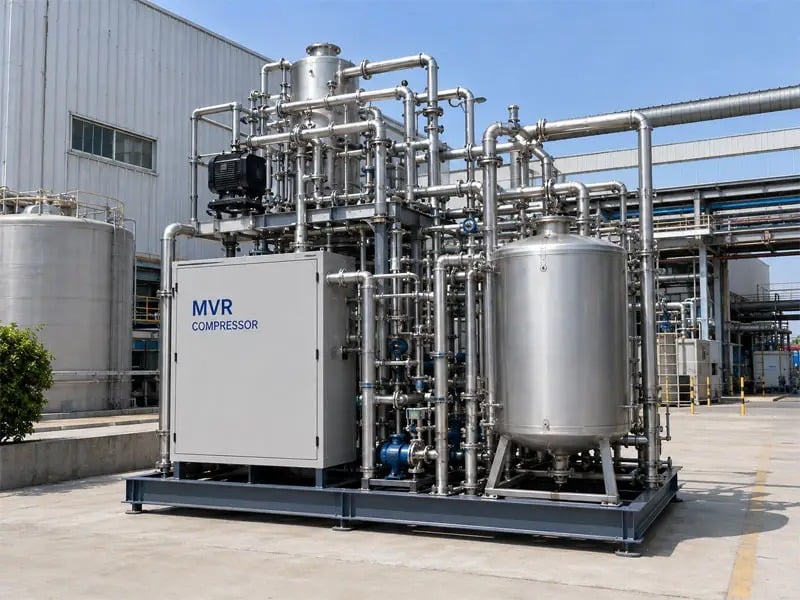
Selecting the right circulation evaporator begins with understanding which wastewater properties have the greatest impact on system performance and longevity. Industrial facilities often overlook critical wastewater characteristics during the design phase, leading to premature equipment failure, reduced thermal efficiency, and unexpected maintenance costs. The success of any evaporation system depends on matching the equipment design to the specific physical and chemical properties of the fluid being treated.
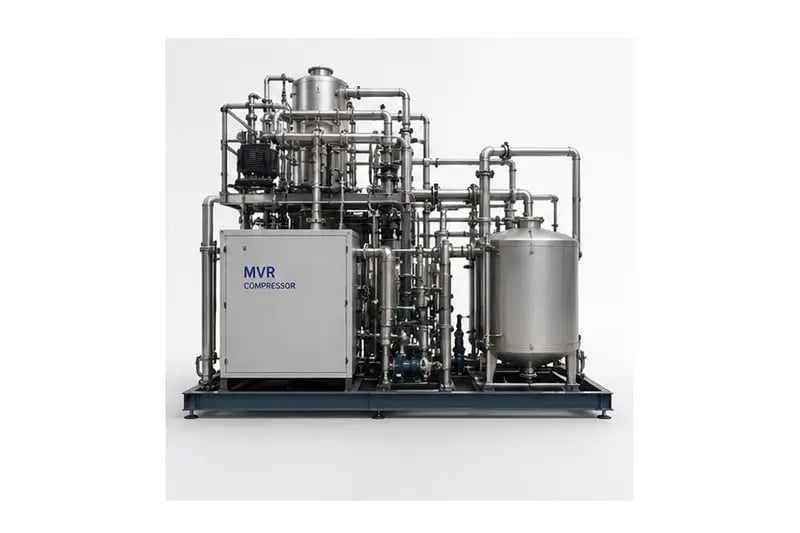
A circulation evaporator operates by continuously recirculating heated wastewater through an evaporation chamber, allowing volatile components to separate from dissolved and suspended solids. The design must account for multiple wastewater properties that directly influence heat transfer efficiency, equipment wear, and operational stability. Understanding these properties before specifying equipment ensures you select a system that can handle your specific waste stream without compromise.
Viscosity and Its Effect on Heat Transfer
Understanding Wastewater Viscosity
Viscosity measures how resistant a fluid is to flow, and it plays a dominant role in circulation evaporator performance. High-viscosity wastewater flows more slowly through the heat exchanger tubes and circulation lines, which directly reduces the heat transfer rate and increases pumping energy requirements. When viscosity is not properly considered during design, the system may fail to achieve target evaporation rates or require oversized pumps that drive up capital and operating costs.
Temperature-dependent viscosity changes are especially critical in evaporation processes. As wastewater is heated, its viscosity typically decreases, but concentrated brines and organic-rich streams may exhibit non-linear viscosity behavior. A circulation evaporator designed without accounting for these viscosity transitions may struggle during startup or face heat transfer bottlenecks as concentration increases. Engineers must select tubing diameters, flow velocities, and heating surface areas based on viscosity profiles across the expected operating range.
Design Adjustments for Viscosity Control
Effective circulation evaporator designs incorporate heat tracing or preheating stages to manage viscosity before the main evaporation chamber. By reducing incoming wastewater viscosity through preheating, the system achieves faster circulation, more uniform heat distribution, and improved heat transfer coefficients. Some applications also benefit from mixing additives or mechanical shear devices upstream to further optimize flow characteristics and prevent accumulation of high-viscosity material zones.
Suspended Solids and Solids Loading Challenges
Impact of Suspended Solids on Equipment
Suspended solids represent one of the most damaging wastewater properties affecting circulation evaporator longevity and reliability. Fine solids particles can accumulate on heat transfer surfaces, creating insulating deposits that progressively reduce thermal efficiency and force operators to increase steam pressure to maintain evaporation rates. Over time, these deposits become scale formations that are difficult to remove and may require chemical cleaning cycles that interrupt production.
Coarse solids pose different challenges by potentially blocking circulation lines, straining pump mechanisms, and accumulating in sump areas where they settle and create stagnant zones. A circulation evaporator must be designed with adequate straining, settling chambers, or filtration pre-treatment to remove solids before they enter the main evaporation circuit. The acceptable solids loading threshold depends on particle size distribution, material composition, and whether the solids are inert or reactive with the heating surfaces.
Solids Management in Circulation Evaporator Systems
Industrial circulation evaporator designs often include underflow lines, sump discharge mechanisms, and intermittent blowdown cycles specifically engineered to manage solids buildup. Engineers must size these solids removal pathways based on the expected solids concentration and settling rate. Applications with high solids loads may require staged filtration or centrifugal pre-treatment before wastewater enters the circulation evaporator, adding cost but preventing catastrophic performance degradation.
Total Dissolved Solids and Concentration Limits
TDS as a Key Design Parameter
Total dissolved solids, or TDS, refers to all inorganic and organic compounds dissolved in the wastewater that remain after water evaporates. The initial TDS concentration and the maximum allowable TDS at which the circulation evaporator must cease operation directly determine equipment sizing, cycle time, and concentrate disposal requirements. High-TDS streams concentrate rapidly in the evaporator circuit, increasing osmotic pressure and requiring stronger pumps and more robust materials resistant to salt crystallization and corrosion.
TDS levels influence boiling point elevation, which means higher TDS concentrations require proportionally higher steam temperatures to achieve the same evaporation rate as lower-TDS feeds. A circulation evaporator specified without accounting for TDS concentration trajectory may become undersized as the process progresses, failing to meet production targets during longer operating runs. Understanding the TDS inlet concentration, acceptable final TDS concentration, and crystallization point prevents costly underperformance and material compatibility failures.
Crystallization and Saturation Management
As TDS concentrations approach saturation levels within a circulation evaporator, dissolved salts begin to crystallize, creating scale formations on heat transfer surfaces and circulation line walls. This crystallization reduces heat transfer efficiency and increases system pressure drop, forcing the pump to work harder and consuming more energy. Design specifications must include limits on maximum TDS concentration and define blowdown or concentrate removal intervals that prevent crystallization from reaching critical levels.
Heat Transfer Mechanisms and Efficiency
Optimizing Heat Transfer in Circulation Evaporators
Heat transfer performance directly drives the economic viability and energy efficiency of any circulation evaporator installation. The overall heat transfer coefficient depends on multiple factors including the thermal properties of the wastewater, the surface material and condition, fluid velocity through heat exchanger tubes, and the temperature difference between steam and wastewater. Poor heat transfer design results in excessive steam consumption, longer residence times, and reduced throughput per unit of capital equipment.
Circulation evaporator designs must balance competing requirements: sufficient fluid velocity to maintain turbulent flow and high heat transfer coefficients, but not so high that erosion or pressure drop becomes problematic. The tube material selection, internal tube geometry, and steam-side pressure all influence the achievable heat transfer rate for a given wastewater composition. Engineers typically calculate the required heating surface area by estimating the overall heat transfer coefficient based on representative wastewater samples and viscosity data.
Performance Prediction and Testing
Accurate performance prediction for a circulation evaporator requires either pilot-scale testing or theoretical calculations based on established correlations for similar wastewater types. Laboratory analysis of viscosity across the expected temperature range, TDS concentration behavior, scale formation tendency, and solids settling rates provides the essential input data for design. Without this characterization, designers must make conservative assumptions that often result in oversized and expensive equipment.
FAQ
What wastewater properties are most critical for circulation evaporator design?
Viscosity, solids concentration, TDS levels, and heat transfer characteristics are the most critical wastewater properties. Viscosity affects flow and thermal efficiency; suspended solids cause scaling and fouling; TDS determines concentration limits and crystallization risk; and heat transfer potential influences steam consumption and equipment sizing. Each property requires specific design accommodation to ensure reliable long-term operation.
How does TDS concentration affect circulation evaporator performance?
As TDS concentration increases in a circulation evaporator, the boiling point elevation increases, requiring higher steam temperatures to achieve the same evaporation rate. Higher TDS also increases the risk of crystallization and salt deposition on heat transfer surfaces, reducing efficiency and forcing more frequent cleaning cycles. Design must establish maximum allowable TDS limits and include blowdown provisions to manage concentration buildup safely.
Why is pre-treatment necessary before a circulation evaporator?
Pre-treatment removes suspended solids and high-viscosity material before they enter the circulation evaporator, preventing scale formation, line blockages, and pump strain. By filtering or settling coarse solids upstream and preheating to reduce viscosity, the main evaporation circuit operates more efficiently with longer equipment life and lower maintenance costs. Pre-treatment is especially important for waste streams with high solids loads or variable viscosity.

 EN