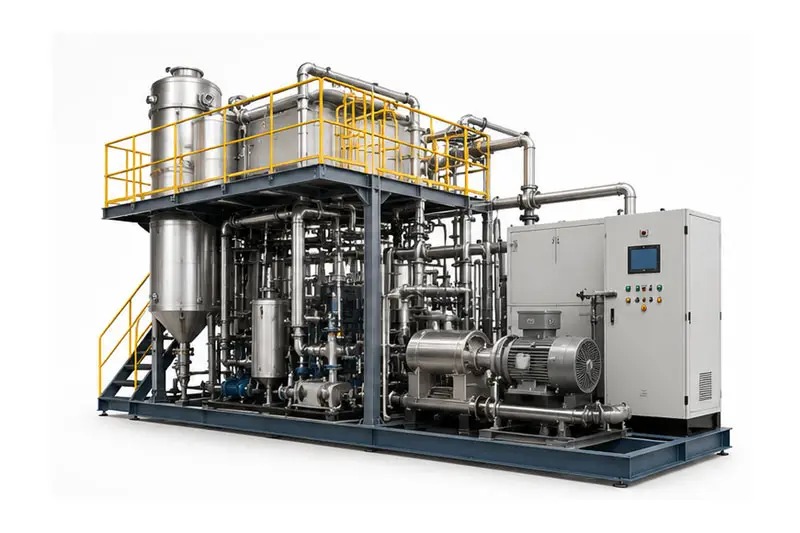
Operating a brine evaporator efficiently requires understanding the interplay between thermal dynamics, chemical behavior, and equipment maintenance. Industrial facilities handling high-salinity wastewater face persistent operational challenges that directly impact treatment costs, equipment longevity, and regulatory compliance. The three most common complications—scaling, foaming, and feed variation—demand proactive management strategies grounded in operational best practices and real-time monitoring.
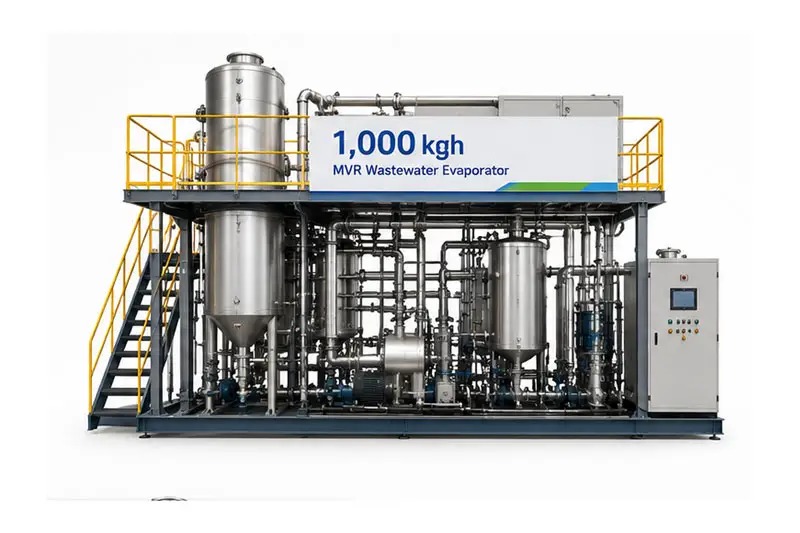
A brine evaporator operates by removing water from concentrated salt solutions through evaporation, leaving behind crystalline salts for disposal or recovery. When operational parameters drift from design specifications, scaling deposits build on heat transfer surfaces, foaming occurs in the evaporation chamber, and feed composition variability disrupts process stability. Mastering these three critical operational domains transforms a brine evaporator from a liability into a reliable, cost-effective treatment solution.
Understanding Scaling in Brine Evaporator Systems
Mechanisms and Root Causes of Scaling
Scaling develops when dissolved minerals precipitate onto heat transfer surfaces inside the brine evaporator chamber. As water evaporates, the concentration of salts increases locally along the heated surfaces, exceeding saturation thresholds. Common scalants include calcium sulfate, silica compounds, and magnesium hydroxide, which form hard, adherent deposits that reduce heat transfer efficiency and restrict flow paths. The brine evaporator's performance degrades rapidly once scaling deposits establish themselves, requiring immediate intervention to prevent equipment damage and operational shutdown.
Prevention and Removal Strategies
Preventing scaling begins with feed pretreatment and chemical conditioning. Softening the incoming brine reduces hardness cations, while antiscalant additives interfere with crystal nucleation and growth on heated surfaces. Operating the brine evaporator at controlled temperature differentials—typically 10 to 15 degrees Celsius below saturation—maintains a safety margin that suppresses precipitation. When scaling does occur, chemical cleaning with mild acids dissolves most deposits, though mechanical cleaning may be necessary for stubborn, calcified layers. Regular scheduled cleaning intervals, informed by trending heat transfer efficiency data, minimize downtime and preserve long-term equipment integrity.
Managing Foaming in Brine Evaporator Operations
Causes and Detection of Foaming
Foaming in a brine evaporator occurs when gas bubbles become trapped in the liquid phase, creating a stable foam matrix that reduces liquid surface area and impairs mass transfer. Organic contaminants, surfactants, and proteins in the feed stabilize foam structure, while high evaporation rates and turbulent conditions accelerate bubble formation. Visible foam carryover into vapor outlet lines signals imminent foaming problems; dense, persistent foam reduces effective evaporator capacity and degrades product quality by allowing liquid droplets to escape with vapor discharge. Early detection through observation and vapor quality monitoring prevents cascade failures.
Foam Control and Chemical Management
Dosing antifoaming agents into the brine evaporator feed is the primary control method. Silicone-based and oil-based antifoamers break foam surface tension, allowing bubbles to collapse and merge into the bulk liquid phase. Maintaining optimal chemical concentrations—typically 5 to 20 parts per million—balances cost against effectiveness; excess antifoamer can itself become a contaminant, while insufficient dosage leaves foaming uncontrolled. Feed pretreatment to remove organic compounds and reducing vapor velocity through larger diameter outlet lines both reduce foaming tendency and support antifoamer effectiveness in the brine evaporator.
Addressing Feed Variation in Brine Evaporator Performance
Impact of Composition and Flow Rate Changes
Feed variation—fluctuations in salt concentration, mineral content, flow rate, and temperature—disrupts the steady-state operating envelope that a brine evaporator requires. When inlet flow increases suddenly, residence time shortens, reducing evaporation efficiency and allowing more liquid to exit as concentrate rather than vapor. Conversely, high-salinity spikes accelerate scaling risk and may overwhelm chemical conditioning systems. Temperature swings alter saturation thresholds and vapor pressure relationships, destabilizing the evaporation balance and forcing the brine evaporator to hunt for equilibrium through continuous control adjustments.
Feed Buffering and Process Control
Installing a holding tank upstream of the brine evaporator smooths feed variability by allowing incoming wastewater to equilibrate before entering the evaporator. This buffer tank provides time for suspended solids to settle, temperature to stabilize, and composition to average across multiple source streams. Real-time monitoring of feed parameters—salinity, flow rate, temperature, and turbidity—enables predictive control adjustments, triggering alarms when values exceed design ranges. Automated valve adjustments, setpoint modifications to heating systems, and antifoamant dosing adjustments respond dynamically to feed variation, keeping the brine evaporator within optimal operating windows.
The Role of Cleaning and Preventive Maintenance
Scheduled Cleaning Impact
Routine cleaning of a brine evaporator extends equipment life and maintains heat transfer efficiency. Chemical cleaning typically uses dilute hydrochloric or citric acid to dissolve mineral deposits without damaging stainless steel or other materials. Cleaning frequency depends on feed quality, operating temperature, and scaling rate; monthly or quarterly intervals are common in high-fouling applications. Between cleaning cycles, gentle backflushing and thermal shocking—rapid temperature swings—help dislodge loose deposits and restore surface area. Preventive cleaning is far more cost-effective than emergency unscheduled maintenance triggered by performance collapse.
Equipment Inspection and Component Replacement
During cleaning intervals, thorough inspection of the brine evaporator heat exchanger, vapor lines, and condensing surfaces identifies emerging corrosion, erosion, or mechanical wear. Gaskets, seals, and valve components degrade over time; replacing them during routine maintenance prevents mid-cycle failures and leaks. Monitoring vapor discharge for liquid carryover indicates that separation efficiency has declined, signaling the need for internal inspection and possible mist eliminator cleaning or replacement. A documented maintenance log tracking chemical usage, cleaning duration, equipment condition observations, and operational performance metrics guides long-term asset management decisions for the brine evaporator.
FAQ
What causes scaling in a brine evaporator and how is it prevented?
Scaling forms when dissolved minerals precipitate on hot surfaces as water evaporates, increasing salt concentration beyond saturation limits. Prevention relies on feed softening, antiscalant chemical additives, controlled temperature differentials below saturation points, and regular scheduled cleaning. Monitoring heat transfer efficiency trends helps operators detect early scaling development and schedule cleaning before deposits severely degrade performance.
How does foaming affect brine evaporator performance and operation?
Foaming reduces evaporative capacity by creating a stable bubble layer that blocks liquid-vapor contact and allows liquid carryover into vapor discharge lines. Antifoaming chemical agents break bubble surface tension, while feed pretreatment to remove organic contaminants and design adjustments like larger outlet diameter reduce foaming tendency. Early detection through visual inspection and vapor quality monitoring allows timely corrective action before performance collapse.
Why does feed variation disrupt brine evaporator operations?
Feed composition and flow rate changes alter saturation thresholds, residence time, and scaling risk, forcing continuous control adjustments that reduce operational stability and efficiency. Upstream buffer tanks smooth variability by allowing source streams to equilibrate, while real-time monitoring of salinity, flow, temperature, and turbidity enables predictive control responses. Maintaining stable inlet conditions keeps the brine evaporator within design parameters and maximizes treatment reliability.

 EN