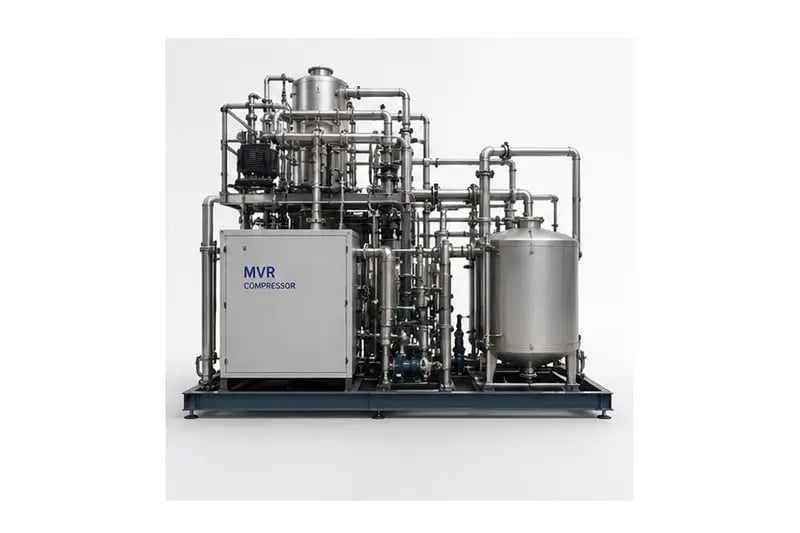
Industrial facilities managing high-salinity wastewater face mounting regulatory pressure and disposal costs. Brine evaporation has emerged as a proven technology for converting concentrated brine into manageable solid salt residue while recovering clean water. This approach aligns directly with zero liquid discharge (ZLD) mandates and reduces the environmental footprint of desalination plants, oil refineries, food processing facilities, and chemical manufacturers.
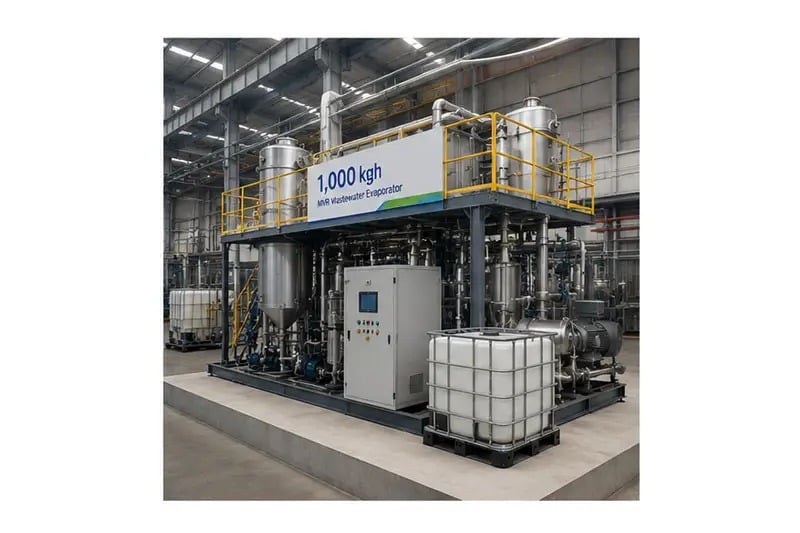
Unlike conventional disposal methods that transfer liability to landfills or deep injection wells, brine evaporation transforms waste into a concentrated salt byproduct that may be reused or disposed responsibly. This practical process overview examines the core principles, equipment configurations, operational challenges, and real-world deployment scenarios that make brine evaporation a cornerstone of modern industrial wastewater treatment strategy.
Understanding Brine Evaporation Technology
Core Operating Principle
Brine evaporation removes water from saline solutions by applying heat energy to boil off water molecules while leaving dissolved salts behind. The technology leverages multiple-effect evaporation (MEE) or mechanical vapor recompression (MVR) to minimize thermal energy consumption. In MEE systems, vapor from one effect stage heats the next stage, while MVR systems recompress low-pressure vapor to provide the heat source. Both methods concentrate brine toward crystallization limits, where salt begins precipitating as solid mineral matter.
Physical and Chemical Transformation
During the brine evaporation process, dissolved minerals like sodium chloride, magnesium sulfate, and potassium salts become increasingly concentrated as water volume decreases. Once brine concentration reaches saturation levels, further evaporation drives crystallization, physically separating salt solids from remaining liquid mother liquor. The recovered vapor condenses into distilled or nearly salt-free water suitable for discharge, recycling, or further treatment. This dual-product outcome—solid salt and recovered water—represents the fundamental appeal of ZLD technology for industrial operators managing high-salinity waste streams.
Equipment and Process Configuration
Evaporator Selection and Design
Industrial sites choose from several evaporator styles depending on flow rate, feed salinity, heat availability, and capital constraints. Falling film evaporators suit high throughput applications with minimal scaling risk. Forced circulation evaporators handle particularly problematic brines containing hardness minerals or silica. Scraped-surface and wiped-film units manage viscous, crystalline-prone concentrations. Each configuration balances energy efficiency, footprint, maintenance burden, and concentration capability. The choice directly influences operating costs, salt recovery purity, and system reliability across the equipment lifecycle.
Auxiliary Equipment and Integration
Complete brine evaporation systems include pretreatment stages to soften feed water, scale inhibitor injection, crystallizer vessels to accumulate salt solids, centrifugal separators to dewater crystals, and condensers to recover and cool distillate water. Feed preparation removes hardness minerals and suspended solids that would otherwise foul evaporator surfaces and reduce concentration capability. Crystallizer design determines salt product quality and ease of mechanical salt removal. Modern systems feature automated controls, real-time density monitoring, and vibration-based fouling detection to optimize performance and extend maintenance intervals. Integration quality determines whether the entire system operates as a cohesive process or becomes a collection of underutilized components.
Operational Challenges and Performance Factors
Scaling and Fouling Management
Mineral precipitation and biofilm growth inside heat exchange surfaces remain primary operational threats to brine evaporation systems. Calcium sulfate, calcium carbonate, and magnesium hydroxide precipitate as brine concentrates, creating hard scale deposits that reduce heat transfer efficiency and eventually block circulation pathways. Scale deposits increase energy consumption, reduce system capacity, and force costly descaling operations. Effective scale control requires precise feed water softening, acidification, or addition of chelating inhibitors. Without proactive scale prevention, even well-designed systems underperform within months of startup.
Energy Consumption and Thermal Efficiency
Brine evaporation remains energy-intensive because transforming liquid to vapor requires substantial latent heat input regardless of equipment type. Single-effect systems consume 4 to 8 kilograms of steam per kilogram of water evaporated. Multiple-effect designs reduce this to 0.5 to 2 kilograms of steam per kilogram of water by cascading vapor through successive effect stages. MVR systems compress vapor mechanically, providing superior energy efficiency but requiring significant electrical power. Site economics demand careful matching of thermal energy source—waste heat from industrial processes, steam surplus capacity, or purchased utility power—to the chosen evaporation method. Underestimating energy cost at the design stage frequently leads to operational disappointment and facility underutilization.
Industrial Applications and ZLD Context
Desalination Brine Concentration
Reverse osmosis and membrane-based desalination plants generate concentrated brine containing 3 to 8 times the original feedwater salinity. Without treatment, disposal of these concentrated brines overwhelms municipal sewer systems and marine environments. Brine evaporation reduces discharge volume by 90 percent or more, transforming a liability into manageable salt cake that occupies minimal landfill space. Coastal desalination facilities increasingly deploy brine evaporation to achieve ZLD compliance and reduce coastal environmental impact. The economic recovery value of salt byproduct varies regionally but enhances project economics in industrial clusters where salt has legitimate end-use markets.
Chemical Manufacturing and Refinery Applications
Oil refining produces hypersaline wastewater from cooling tower blowdown, produced water treatment, and process water cleanup. Chemical manufacturers handling salt-rich waste streams from chlor-alkali production, food salt processing, and mineral extraction face similar concentration challenges. These facilities deploy brine evaporation to achieve ZLD targets while recovering water for internal process recycling or reuse. Concentration of brine also reduces the financial and environmental burden of alternative disposal routes like deep injection wells or incineration. Strategic deployment of brine evaporation technology transforms wastewater management from a pure cost center into a resource recovery operation that strengthens facility sustainability credentials.
FAQ
What is the difference between brine evaporation and conventional wastewater treatment?
Conventional wastewater treatment removes contaminants but discharges remaining water to rivers, oceans, or municipal systems. Brine evaporation eliminates discharge altogether by concentrating brine into solid salt residue and recovering clean water for reuse or recycling. This ZLD approach eliminates regulatory discharge permits, reduces environmental liability, and recovers valuable water resources in water-constrained regions. The fundamental difference lies in the end goal: conventional treatment accepts discharge as inevitable, while brine evaporation redesigns the process to achieve zero liquid discharge.
How much salt can brine evaporation recover from wastewater?
Salt recovery depends on initial brine concentration and evaporation system design. Typical industrial brines range from 5 to 25 percent total dissolved solids (TDS). Complete evaporation of such brines recovers between 50 and 250 kilograms of salt per 1,000 liters of feed, depending on feed salinity. Most commercial evaporator systems concentrate brine to 40 to 50 percent TDS, after which crystallization begins, leaving minimal salt in the remaining mother liquor. Recovery purity varies; industrial salt cakes are typically 90 to 99 percent pure sodium chloride, with minor amounts of magnesium, calcium, and potassium salts depending on feed water composition.
Is brine evaporation economically viable for small or medium industrial facilities?
Viability depends on facility size, local water scarcity, disposal cost alternatives, and regulatory requirements. Facilities generating more than 10 cubic meters per day of high-salinity waste often justify brine evaporation based on disposal cost avoidance alone. Where water is scarce or regulatory penalties for discharge are steep, even smaller facilities find economic justification. Capital cost for complete brine evaporation systems ranges from $500,000 to several million dollars depending on capacity and complexity. Payback periods of 5 to 10 years are achievable in water-stressed regions or facilities facing steep disposal surcharges. Smaller facilities may defer investment until discharge regulation tightens or waste volumes exceed local disposal infrastructure capacity.

 EN