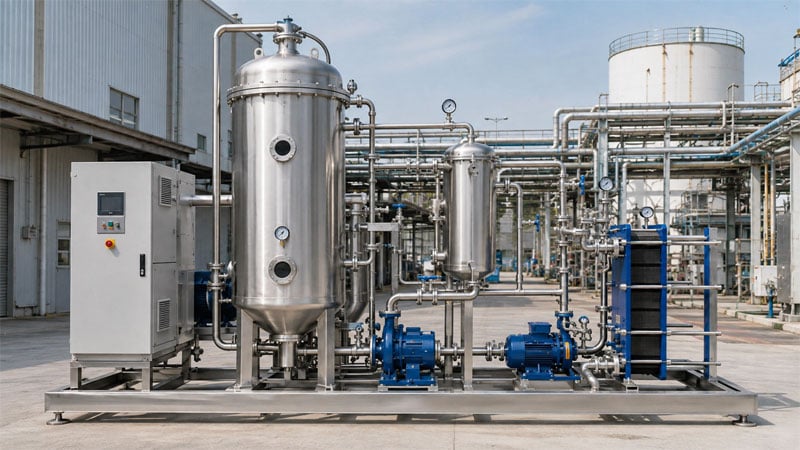
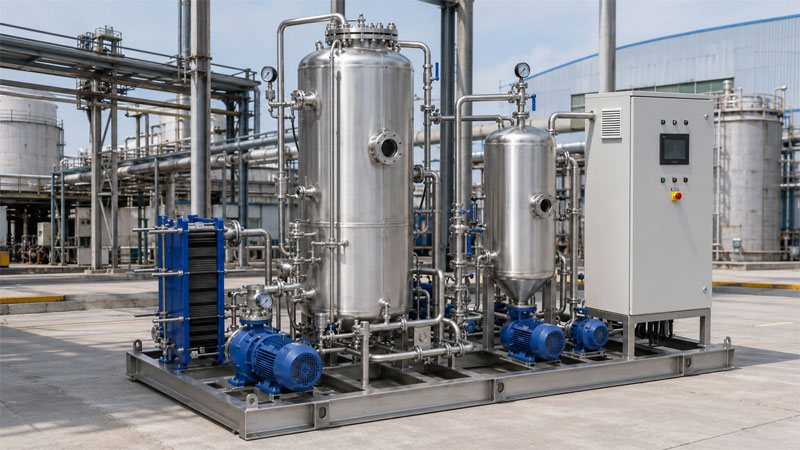
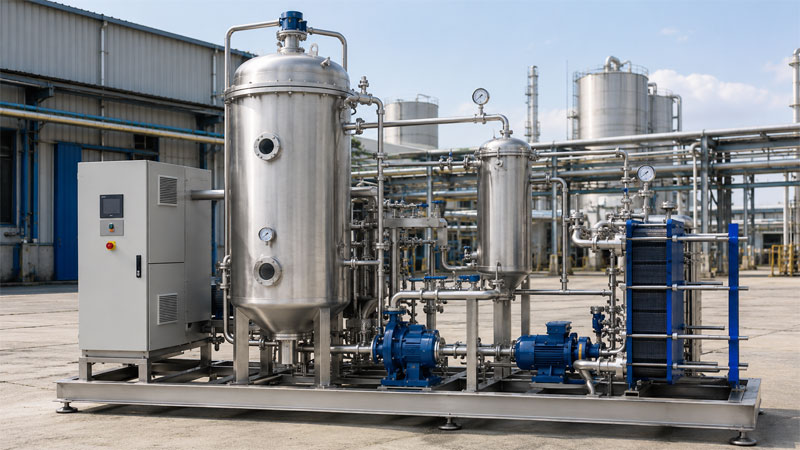
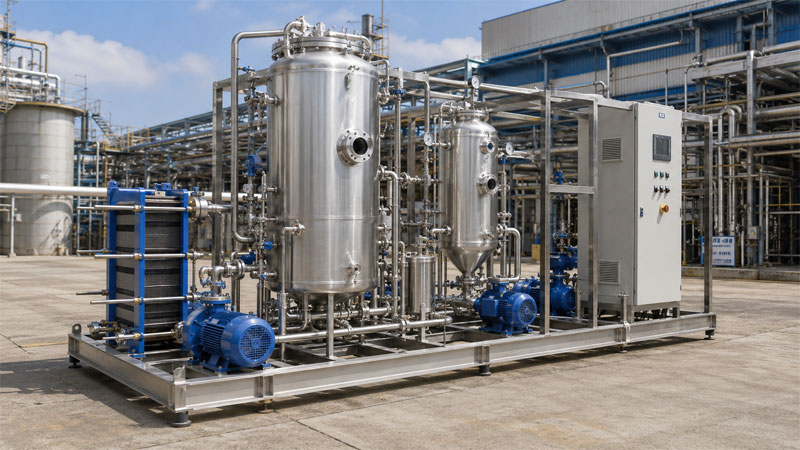
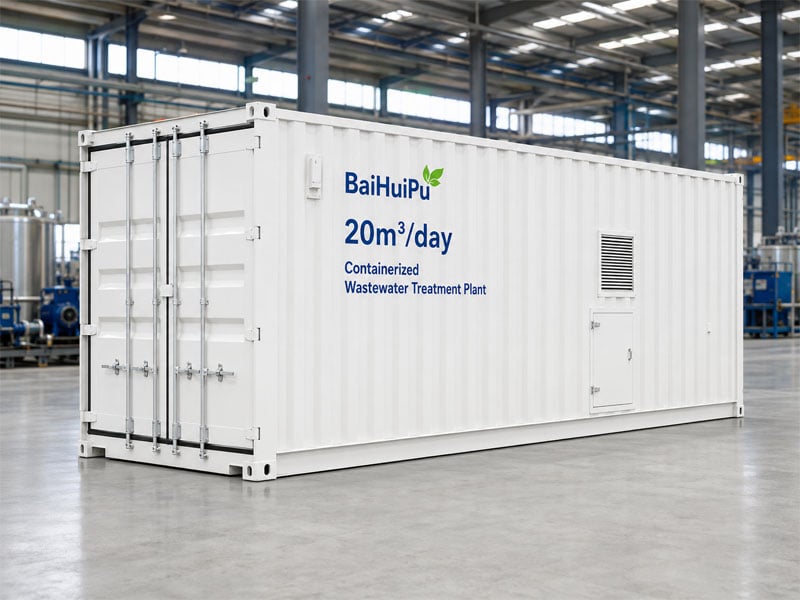
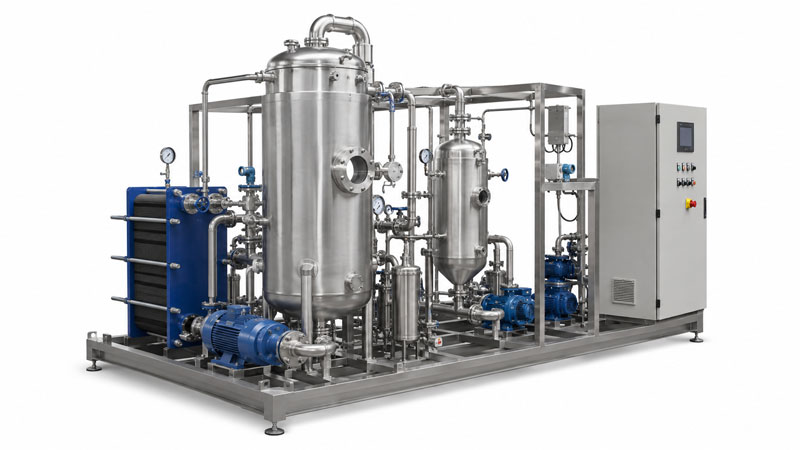
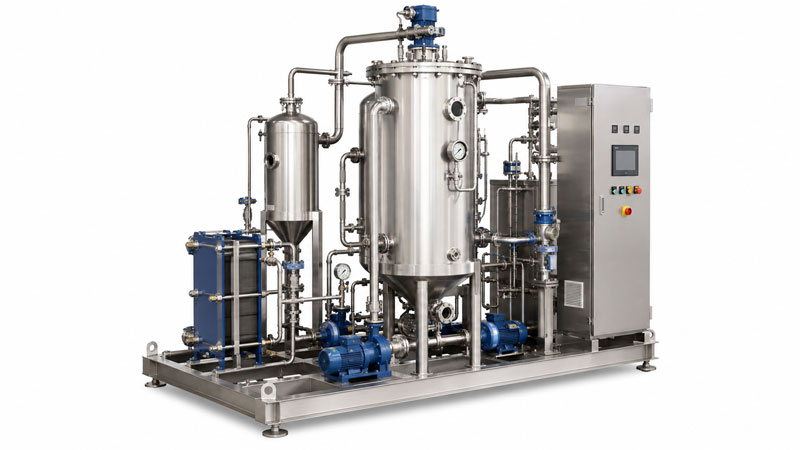
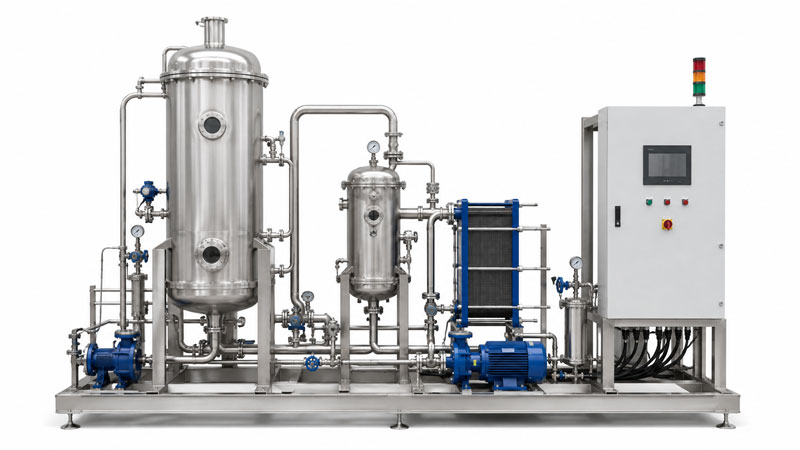
500 kg/h Industrial Wastewater Evaporator
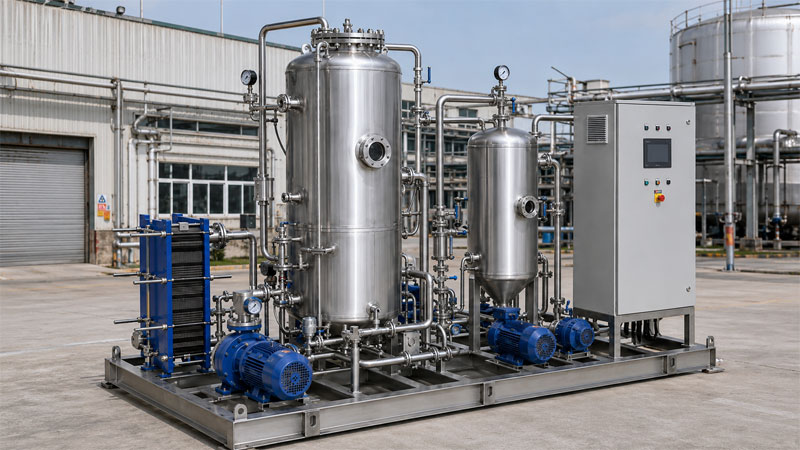
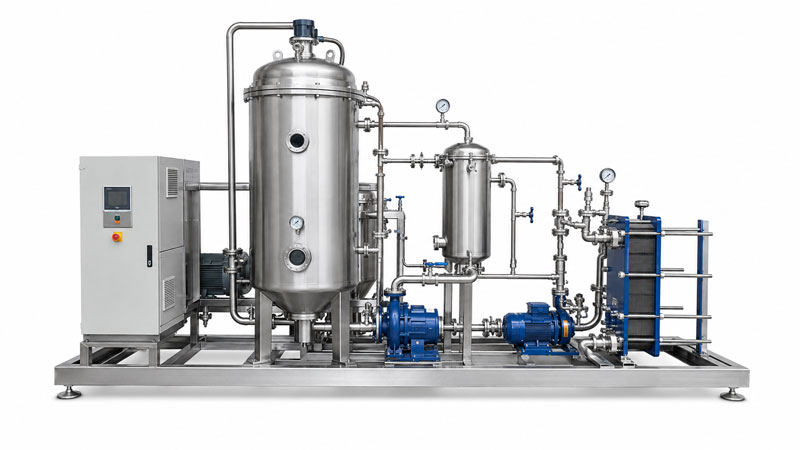
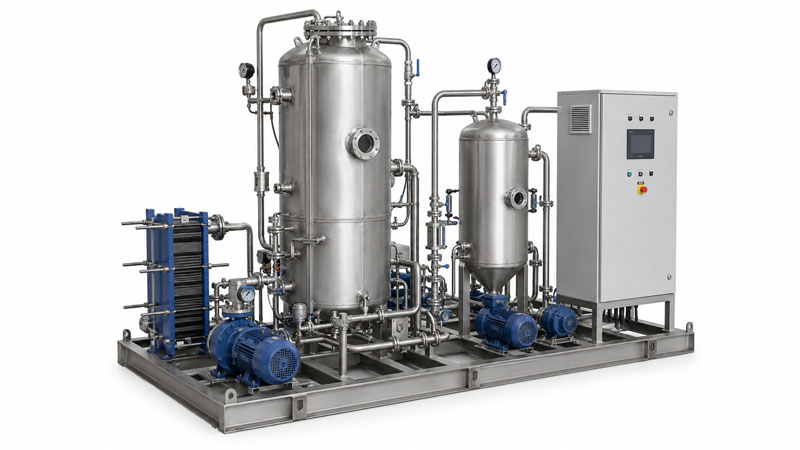
The 500 kg/h Industrial Wastewater Evaporator is designed for factories that need practical industrial wastewater treatment when conventional biological or membrane methods are not enough on their own. This evaporation system is suited to small and medium wastewater streams that contain high levels of salts, dissolved organics, or other non-volatile contaminants, and it helps reduce the volume that must be stored, transported, or disposed of off site. For many projects, this MVR evaporator concept, or a related vacuum, steam, electric, or heat-pump design, offers a more manageable route to wastewater concentration.
By removing water through controlled evaporation and condensation, the system turns difficult wastewater concentration duties into a smaller and more predictable concentrate handling process. The 500 kg/h Industrial Wastewater Evaporator can be configured for continuous or batch operation, depending on the plant layout and treatment goal. In industrial wastewater treatment projects, this kind of evaporation system is often selected when the daily wastewater flow is not large enough to justify a very large installation, but the water quality is too complex for simple discharge or reuse. The result is a compact process that supports wastewater concentration while recovering a portion of the water as condensate.
The 500 kg/h Industrial Wastewater Evaporator may be built with vacuum evaporation for lower-temperature operation, or with steam heating, electric heating, heat-pump evaporation, or customized MVR evaporator-related technology according to the project conditions. Material selection can also be adjusted to suit chloride level, pH, temperature, and corrosion risk, with SS304, SS316L, duplex stainless steel, titanium, or special alloy components available as needed. This flexibility makes the evaporation system suitable for demanding industrial wastewater treatment tasks where scaling, foaming, and corrosion must be considered from the start of the wastewater concentration design.
For buyers planning industrial wastewater treatment upgrades, the 500 kg/h Industrial Wastewater Evaporator is especially useful when a process must reduce hauling frequency and lower the load on downstream treatment. The evaporator can help convert a variable wastewater stream into a smaller concentrate volume, which makes storage and further handling easier. In many wastewater concentration projects, a well-selected MVR evaporator or alternative evaporation system also helps stabilize operation by separating water vapor from dissolved contaminants in a controlled way. That is why the 500 kg/h Industrial Wastewater Evaporator is often evaluated alongside pretreatment, condensate recovery, and final disposal or reuse planning.
Typical process integration begins with a wastewater tank, then pretreatment, feed pumping, evaporation, vapor-liquid separation, condensation, and condensate collection. Depending on the wastewater, filtration, pH adjustment, oil separation, anti-foaming dosing, or anti-scaling dosing may be added before the 500 kg/h Industrial Wastewater Evaporator. These steps improve stability and help the evaporation system operate more consistently during industrial wastewater treatment. When the concentrate becomes denser, it can be discharged automatically or in batch mode for crystallization, recycling, or off-site disposal. For plants that need wastewater concentration but also want to recover usable water, the condensate may be polished further by activated carbon treatment or RO treatment before reuse.
From a control standpoint, the 500 kg/h Industrial Wastewater Evaporator is commonly equipped with PLC/HMI automation, which can manage feeding, heating, pressure, temperature, liquid level, alarms, and concentrate discharge. Remote monitoring can also be added when operational visibility is important. For industrial wastewater treatment teams, this makes the evaporation system easier to supervise, especially when multiple waste streams are handled in one plant. The MVR evaporator style arrangement, or another heat-recovery or vacuum-based design, can also be coordinated with CIP cleaning to support maintenance and reduce downtime. These options make wastewater concentration more practical for routine production environments that need dependable operation.
Typical applications include electroplating wastewater, metal-finishing wastewater, CNC machining wastewater, cutting-fluid wastewater, chemical wastewater, high-salinity rinse water, cleaning wastewater, small battery-material plants, pharmaceutical wastewater concentration, and industrial wastewater disposal reduction. In each case, the 500 kg/h Industrial Wastewater Evaporator is evaluated against the feed composition, daily volume, and target concentration ratio. Some wastewater streams can be handled with standard industrial wastewater treatment pretreatment, while others require a more tailored evaporation system. If the project needs stronger condensate quality or a higher recovery target, the MVR evaporator concept may be combined with polishing and reuse options to better fit the plant’s wastewater concentration objective.
Key Features
- 500 kg/h nominal evaporation capacity
- Significant wastewater volume reduction
- Suitable for high-salinity wastewater
- Compact modular construction
- Vacuum evaporation options
- Automatic PLC control
- Condensate recovery
- Corrosion-resistant materials available
- Anti-scaling design options
- Suitable for integration with ZLD systems
Typical Applications
- Electroplating wastewater
- Metal-finishing wastewater
- CNC machining wastewater
- Cutting-fluid wastewater
- Chemical wastewater
- High-salinity rinse water
- Cleaning wastewater
- Small battery-material plants
- Pharmaceutical wastewater concentration
- Industrial wastewater disposal reduction
Reference Technical Parameters
| Parameter |
Reference Specification |
| Evaporation Capacity |
500 kg/h |
| Wastewater Type |
Project‑specific |
| Operating Mode |
Continuous / batch optional |
| Evaporation Method |
Vacuum / steam / electric / heat pump / customized |
| Operating Pressure |
Atmospheric / vacuum according to design |
| Heat Source |
Steam / electricity / hot water / project‑specific |
| Main Material |
SS304 / SS316L / duplex / special alloy optional |
| Condensate Recovery |
Available |
| Automatic Control |
PLC/HMI |
| CIP Cleaning |
Optional |
| Anti‑Foaming System |
Optional |
| Pretreatment |
Optional |
| Concentrate Discharge |
Automatic / batch optional |
| Remote Monitoring |
Optional |
How It Works
Step 1 — Wastewater Feed and Pretreatment
Wastewater is transferred into the evaporator feed system. Depending on composition, filtration, pH adjustment, oil separation or other pretreatment may be applied.
Step 2 — Heating and Evaporation
Heat is introduced into the wastewater under atmospheric or vacuum conditions. Water is converted into vapor while most salts and non‑volatile contaminants remain in the liquid phase.
Step 3 — Vapor Separation
A vapor‑liquid separator reduces entrained droplets and helps prevent contaminants from entering the condensate stream.
Step 4 — Condensation
Generated vapor is condensed back into liquid water.
Step 5 — Concentrate Discharge
The remaining wastewater becomes progressively more concentrated and is discharged for further treatment, crystallization, recycling or off‑site disposal.
Typical Process Flow
Wastewater Tank → Pretreatment → Feed Pump → Evaporator → Vapor‑Liquid Separation → Condenser → Condensate Tank
Concentrated wastewater:
Evaporator Concentrate → Concentrate Tank → Further Treatment / Disposal
Customization Options
- Vacuum evaporation
- Electric heating
- Steam heating
- Heat‑pump evaporation
- SS304 construction
- SS316L construction
- Duplex stainless steel
- Titanium or special alloy components
- Oil separation pretreatment
- Bag/cartridge filtration
- pH adjustment
- Anti‑foaming dosing
- Anti‑scaling dosing
- Automatic concentrate discharge
- CIP cleaning system
- Condensate polishing
- Activated carbon treatment
- RO treatment for condensate reuse
- PLC/HMI control
- Remote monitoring
Why Choose This Model?
Many factories generate only a few cubic meters of concentrated wastewater per day.
For these projects, a very large evaporation system may be unnecessary.
The 500 kg/h model provides a practical solution for reducing difficult wastewater into a smaller concentrate volume while recovering a portion of the water as condensate.
This can help reduce:
- Wastewater transport volume
- Off‑site disposal frequency
- Hazardous‑liquid storage demand
- Downstream treatment load
- Overall wastewater management cost
Actual savings depend on wastewater characteristics, energy source and local disposal costs.
Wastewater Evaluation Factors
Before selecting an evaporator, the following information should be evaluated:
- Daily wastewater volume
- TDS or total dissolved solids
- Chloride concentration
- Sulfate concentration
- COD
- Oil content
- Suspended solids
- pH
- Heavy metals
- Organic solvents
- Foaming tendency
- Scaling tendency
- Desired concentration ratio
- Required condensate quality
FAQ
What type of wastewater can this evaporator treat?
It can be engineered for many high‑salinity and difficult industrial wastewater streams. Final suitability depends on corrosion, scaling, foaming and volatile contaminants.
Does the evaporator produce clean water?
The evaporation process produces condensate, but condensate quality depends strongly on wastewater composition. Additional polishing may be required before reuse or discharge.
Can oily wastewater be evaporated?
Some oily wastewater can be treated, but free oil or emulsified oil may require pretreatment to improve evaporation stability.
What happens to the salts?
Most non‑volatile dissolved salts remain in the concentrated liquid. If further concentration is required, crystallization or additional ZLD treatment can be added.
What material should be used?
SS304, SS316L, duplex stainless steel or special alloys may be selected according to chloride concentration, temperature, pH and corrosion risk.
Can this unit operate automatically?
Yes. PLC/HMI automation can control feeding, heating, temperatures, pressures, liquid levels, concentrate discharge and alarms.
How do you calculate the required evaporation capacity?
Capacity should be calculated from daily wastewater volume, operating hours, target concentration ratio and the amount of water that must be removed.
Recommended CTA
Need to reduce high‑concentration wastewater volume?
Send us your wastewater analysis, daily wastewater volume and disposal or reuse target. Our engineers can evaluate the suitable evaporation technology and material configuration.
CTA Button: Get Evaporator Selection Proposal

 EN